12.10.2026 11:23
YouTube Turkey announced that after the social media regulation for children under 15 enters into force on November 1, it may have to close accounts belonging to users in this age group. With the regulation published in the Official Gazette, platforms will be obliged to establish an age verification system and prevent children from accessing content unsuitable for their development.
The regulation limiting social media use by children under 15 comes into force on November 1. Following the regulation, the fate of children's accounts on YouTube also became a matter of curiosity.
YOUTUBE: WE MAY BE FORCED TO CLOSE ACCOUNTS
YouTube Türkiye announced that after the new regulation it may be forced to close accounts belonging to those under 15. The regulation, accepted in April at the General Assembly of the Grand National Assembly of Turkey (TBMM), will enter into force on November 1 with the decision published in the Official Gazette.
Under the regulation, platforms will be obliged to establish age verification systems and prevent children's access to content unsuitable for their development. For users over 15, age-appropriate, differentiated services will need to be offered.
MINISTER GÖKTAŞ: THE AIM IS TO PROTECT CHILDREN
Minister of Family and Social Services Mahinur Özdemir Göktaş, in a CNN Türk broadcast she joined on March 28, said that by introducing social media restrictions for children under 15, they “aimed to protect children from all kinds of risks and harmful content.”
Göktaş, stating that the regulation was the product of about 1.5 years of work, said that during this process consultations were held with experts, families, children, and social media companies.
“A PROTECTION MECHANISM RATHER THAN A BAN”
Speaking to BBC Turkish, Prof. Dr. Selman Tunay Kamer, Coordinator of Artificial Intelligence Studies at Kastamonu University Faculty of Education and an educational sociologist, said the regulation should be evaluated as “a protection mechanism rather than a ban.”
Drawing attention to the fact that children's neurological development is not yet complete, especially during adolescence, Kamer said, “Scientific studies show that processes such as risk-taking and decision-making mature around the age of 16. Therefore, age limits are not random, but based on scientific data.” Regarding freedom debates, Kamer also said, “Of course this is a restriction. However, the main purpose is to protect children from neglect and abuse in the digital environment.”
“PLATFORMS MUST TAKE RESPONSIBILITY”
According to Kamer, the success of the regulation largely depends on platforms taking responsibility. “Age verification and content filtering are not technically difficult. The real issue is that these systems are actually implemented and audited,” said Kamer, arguing that otherwise sanctions should be imposed on companies.
Emphasizing that parental supervision alone will not be sufficient, Kamer said, “Today families have serious shortcomings in establishing digital communication with their children. Therefore, leaving responsibility entirely to parents is not right.”
“IT COULD PAVE THE WAY FOR A MUCH BROADER CONTROL MECHANISM”
Lawyer and academic Yaman Akdeniz, who works in the field of cyber rights and freedom of expression, stated in his assessment for BBC Turkish that there are serious questions about the scope and effects of the practice. Akdeniz argued that although the regulation is presented to the public with the aim of “protecting children,” in practice it could pave the way for a much broader control mechanism.
Recalling that age verification is planned to be done through e-Government, Akdeniz suggested that this could mean matching all users' identity information with their social media accounts.
MINISTER GÜRLEK: A VERIFICATION CODE WILL BE OBTAINED THROUGH E-GOVERNMENT
Minister of Justice Akın Gürlek, in a program he joined on CNN Türk on April 22, said that those who want to use a social media account will enter social media by obtaining a verification code through e-Government. Stating that an account could also be opened with a pseudonym, but that providing a T.C. identity number would be mandatory, Gürlek said, “The catalog crimes are clear. We created these. They will be sent to the platform where that account is, and if a crime is committed, the information will be requested.”
“FUNCTION CREEP MAY OCCUR”
Akdeniz said, “A system established today for social media can be used tomorrow for other digital services. This brings with it the risk that the system will expand over time, which we call ‘function creep.’” Function creep means that a system, technology, or data begins to be used over time for new purposes beyond the limits originally intended.
ACCESS TO YOUTUBE AND PINTEREST MAY ALSO BE RESTRICTED
Another point Akdeniz drew attention to was that access to education- or content-focused platforms such as YouTube and Pinterest could also be restricted. Akdeniz argued that this could limit children's right to access information and that the process is not proceeding transparently enough: “In other countries, such regulations take shape after long debates. In Turkey, however, the process proceeded quite quickly.”
AUSTRALIA TOOK THE FIRST STEP
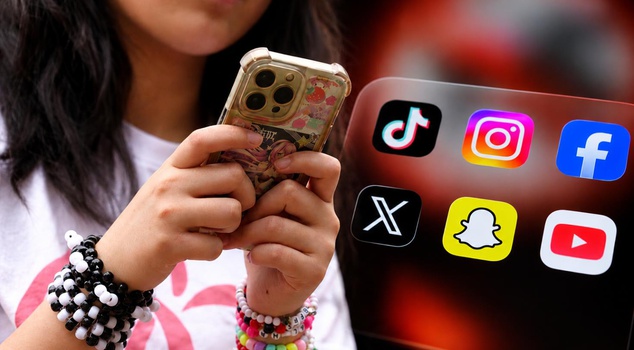
Turkey is not the only country introducing social media restrictions for children. Australia was the first country in the world to implement a similar ban. In December 2025, the Australian government blocked children under 16 from accessing platforms such as TikTok, Instagram, Snapchat, X, and Facebook.
Messenger Kids, WhatsApp, Google Classroom, and YouTube Kids were left outside the scope of the ban. Australia, which leaves responsibility to social media companies, can impose fines of up to approximately 50 million dollars on companies that do not comply with the rules.
ALSO DEBATED IN EUROPE AND THE UK
With its decision on November 26, 2025, the European Parliament supported introducing an age limit of 16 across the European Union for social media, video-sharing platforms, and artificial intelligence applications. Malaysia also announced in December 2025 that it planned to implement a similar practice for children under 16.
UK Prime Minister Keir Starmer, in an interview with the Sunday Mirror newspaper on March 28, claimed that social media companies aim to keep children on their platforms longer. Starmer said, “That is why I think we will have to take action.” While the government in the UK is seeking expert opinion on the issue, the House of Commons rejected for the third time in a vote on April 22 a proposal envisaging a social media ban for under-16s.
IN AUSTRALIA, 61 PERCENT OF CHILDREN KEEP THEIR ACCOUNT
According to a survey by the Molly Rose Foundation and YouthInsight with 1,050 children aged 12-15, 61 percent of children who had accounts before the law came into force continue to access at least one social media account. The Molly Rose Foundation argued that the practice does not function as an urgent and definitive “safety barrier,” warning, “On the contrary, it may give parents a false sense of security.”
The Age Verification Providers Association (AVPA), which represents age verification companies, argues that the problems stem not from technological inadequacy but from platforms not using existing tools sufficiently. Companies, meanwhile, argue that the approach is flawed, while stating that they do everything they can to comply with the rules.
YOUTUBE IS ALSO UNDER INVESTIGATION
Australia's online safety regulator, the eSafety Commissioner, is conducting an investigation into Meta (Facebook and Instagram), Google (YouTube), TikTok, and Snap on suspicion of law violations.
In its first report published since the law came into force, the agency reported that “a series of weak practices” had been identified on 5 major platforms. The regulatory authority had announced in a January statement that 4.7 million accounts had been restricted or removed in the first month.
The Australian government also announced that it was gathering evidence to initiate Federal Court proceedings if compliance did not increase.
.