13.08.2026 21:50
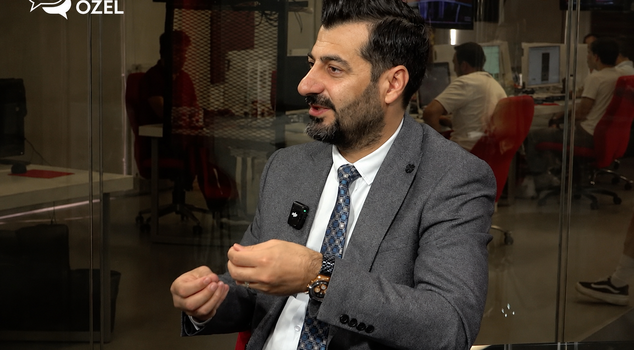
Clinical Psychologist Metin Aydın, who was a guest of Melis Yaşar at Haberler.com Studio, explained how unnoticed manipulation in relationships can be recognized and which methods can be used against it. Aydın drew attention to the fact that manipulative people can feed on the emotional reactions of the other party, and stated that with the “gray rock method,” one can establish calm, unresponsive, and clearly bounded communication.
Clinical Psychologist Metin Aydın, who was the guest of Melis Yaşar at Haberler.com Studio, explained how manipulation, which can be encountered in many areas of daily life, can be recognized. Aydın made striking assessments about guilt, inability to set boundaries, gaslighting, inability to say no, and ways out of manipulative relationships.
Manipulation can cause a person to act under someone else's guidance without realizing it, not only in romantic relationships but also in family, friendship, and business life. Clinical Psychologist Metin Aydın, who answered Melis Yaşar's questions at Haberler.com Studio, defined manipulation as a person acting in line with options created by someone else while thinking they are making decisions with their own free will.
Aydın, while explaining manipulation, used the expression, "You are the one on stage, but in fact, your strings are in someone else's hands."
"THEY GIVE YOU THE COMPASS BUT TAMPER WITH ITS SETTINGS"
Aydın, stating that the basis of manipulation is the person's belief that they are acting with their free will, explained this with the compass analogy.
Aydın said, "They put the compass in your hand, but they have tampered with the compass settings. You act according to the compass, you think you are going to the right place, in the right direction. But you find yourself walking on the path they want."
Psychologist Aydın stated that the manipulative person can make the other person believe they made their own decision, instead of applying direct coercion.
BEWARE OF THE WORDS "AM I NOT YOUR FRIEND?"
Aydın, stating that some expressions frequently used in daily life can exceed the limits of good intentions and turn into manipulation, drew attention to the fact that words like "Am I not your true friend?" can create a sense of emotional indebtedness in the person.
Aydın, stating that in healthy relationships a person should not be forced to constantly prove their friendship or love, said that such discourses sometimes create an "emotional credit system."
Aydın, stating that using a previously given support later to demand a price from the other party can also turn into a manipulative attitude, emphasized that true generosity is giving without expecting anything in return.
"NOT BEING ABLE TO SAY NO OPENS THE DOOR TO MANIPULATION"
The topic of setting boundaries and being able to say "no" was also discussed in the program.
Aydın stated that a person's childhood habit of feeling responsible for another person's emotions can make it difficult to set boundaries in later years. He said that reactions such as a parent's face falling when the child says "no" can create the thought in the person that "I am responsible for how the person in front of me feels."
However, according to Aydın, refusing a request does not mean the person is a bad person.
Aydın, stating that instead of directly saying "no," a person can express their boundary more softly, said expressions like "Yes, you want to meet with me in the evening. However, I had another plan" can be used.
"IF BOUNDARIES ARE BROKEN, NERVES ARE ALSO BROKEN"
Aydın, emphasizing that boundaries are critical for healthy relationships, drew attention to the importance of the concept of boundaries.
Aydın said, "If a person's nerves get frayed in a relationship, then the boundaries in that relationship are already broken. Because the nerves of a being with broken boundaries get frayed."
Aydın, stating that protecting one's own boundaries does not mean punishing the other party, stated that boundaries are necessary for a person to protect themselves.
"HOW DO YOU FEEL AFTER TALKING TO A MANIPULATIVE PERSON?"
Aydın, stating that one of the ways to recognize manipulation is the emotions a person feels after a meeting, said that people who constantly feel guilty, worthless, inadequate, or ashamed should re-evaluate their relationships.
Aydın stated that a person may forget the topic discussed over time, but will not easily forget the feeling they have after meeting that person.
In contrast, he stated that in a healthy relationship, a person can feel more autonomous, valuable, and relaxed.
GASLIGHTING CAUSES A PERSON TO DOUBT THEIR OWN REALITY
The concept of "gaslighting," which has been frequently used recently, was also discussed in the program.
Aydın stated that a person subjected to gaslighting may begin to doubt their own memory, perception, and decisions over time. Explaining the origin of the concept through the gas lamp scene in a theater play, Aydın said that the manipulative person can systematically make the other person doubt what they see and feel.
Aydın, stating that in this process the person may begin to question themselves, thinking "Is there a problem with me?", stated that it is important for the person to establish a reliable external "anchor of truth" to get out of the manipulative relationship.
He stated that this person could be a friend, a trusted family elder, a therapist, or a source of trust in the person's faith.
"SOMETIMES WE NEED A DETECTIVE"
Aydın, stating that if manipulation continues for a long time, the person may lose trust in their own reality, said that a healthy external perspective is important at this point.
Aydın used the expressions, "We need a detective. This detective can be a friend, an elder who is good for us, or a therapist."
Aydın, stating that the effects of manipulation can vary from person to person, said that it is important for recovery for the person to realize that the situation they are experiencing stems not from their own personal inadequacy, but from the manipulative relationship they are exposed to.
WHY MANIPULATIVE RELATIONSHIPS ARE SUSTAINED
In the program, the question of why a person cannot leave a manipulative relationship even though they know they are being harmed was also discussed.
Aydın, drawing attention to the concept of "intermittent reinforcement," said that the manipulative person occasionally exhibiting positive behaviors can cause the other party to hold on to the relationship.
Comparing this to gambling, Aydın stated that the occasional "reward" can keep a person in the relationship.
Aydın also noted that the person having invested years in the relationship can make it difficult to leave, and said that the situation called "sunk cost" in psychology can lead the person to think, "Will all these years go to waste?"
"TRUE LOVE ALLOWS THE PERSON TO LEAVE"
Aydın, emphasizing that manipulation and true love must be distinguished from each other, stated that in a healthy relationship, the person is accepted with their own identity and flaws.
Aydın stated that in a manipulative relationship, the person often continues the relationship to avoid problems, while in true love, the person continues by being nourished and growing from the relationship.
REMAINING UNRESPONSIVE WITH THE "GRAY ROCK" METHOD
Since manipulative people can feed off the emotional reactions of the person in front of them, Aydın said that the approach known as the "gray rock method" can be used in some situations.
Aydın, who recommends that the person give calm, short, and unresponsive answers to manipulative statements, stated that boundaries can be set without unnecessary explanations with expressions such as "That's your opinion" and "You have the right to feel that way."
According to Aydın, the aim is not to win an argument with the other party, but to not give the emotional reaction that manipulation needs.
FIRST STEP AGAINST MANIPULATION: NOT MAKING DECISIONS DURING A CRISIS
At the end of the program, Aydın also offered a roadmap to people who think they have been subjected to manipulation, emphasizing the importance of staying calm first.
Stating that "one should not make any decisions during a fight, crisis, or chaos," Aydın said that instead of getting defensive, the person can ask open-ended questions.
He noted that questions such as "What made you think that way?" and "What specific behavior of mine led you to say that?" can concretize the other party's general and judgmental statements.
Aydın also recommended that the person get support from people they trust, obtain information from reliable sources on the subject, and consult a specialist if necessary.
Clinical Psychologist Metin Aydın emphasized that the first step in recognizing manipulation is for the person to take their own feelings and boundaries seriously. Aydın pointed out that in healthy relationships, a person will feel freer, safer, and more valuable instead of constantly feeling guilty, worthless, and inadequate.