20.10.2026 10:42
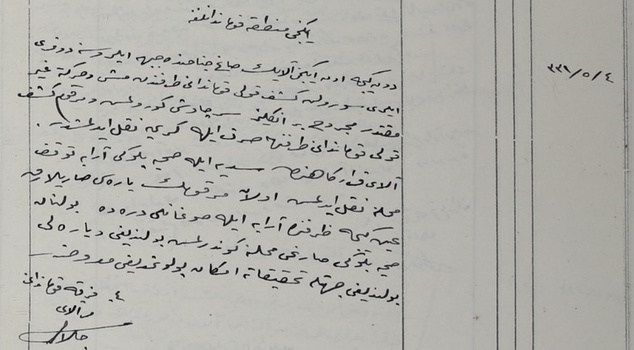
In Çanakkale Onsekiz Mart University AÇASAM's study on war diaries, it was documented that during the Second Kerevizdere Battle, British Navy Chief Sergeant Arthur Hunt, who was found wounded, was carried on the back of the commander of the Turkish reconnaissance unit and brought to Turkish positions. It was determined that Hunt was transferred by stretcher to the dressing station and treated, and then sent to the prisoner camp in Yozgat.
ÇANAKKALE Onsekiz Mart University (ÇOMÜ) Atatürk and Çanakkale Wars Research Center (AÇASAM) has brought to light a document showing that a British soldier wounded during the Çanakkale Wars was carried on the back of a Turkish soldier, in studies conducted on war journals. Director of AÇASAM Dr. İsmail Sabah said, 'This story reflected in the war journal stands before us as a highly important and valuable document in terms of showing the mercy of the Turkish soldier toward the enemy soldier he came across wounded during the Çanakkale Battles.'
Although 111 years have passed since the Çanakkale Wars, new facts about the war continue to come to light. In research conducted by AÇASAM in war journals, a document has been brought to light regarding British Navy Chief Petty Officer Arthur Hunt, who was found wounded by a Turkish reconnaissance patrol on 13 July 1915 during the 2nd Kerevizdere Battles and was carried on the back of the reconnaissance patrol commander to the treatment area.
HE CARRIED THE WOUNDED BRITISH SOLDIER ON HIS BACK
AÇASAM Director Dr. İsmail Sabah, stating that in the offensive known in the literature as the 2nd Kerevizdere Battle, the attack on the British line of the front was carried out by the 52nd Division, said, 'In the offensive that took place at 17:00 on 13 July 1915, the Nelson Battalion, attacking on the far left flank, could not reach the desired target in this offensive and the attack was ended as a result of heavy losses. After this offensive, the British decided to fortify the line they had obtained and stopped the attack. However, 3 days after this offensive, on the night of 15 July, a reconnaissance patrol that left the Turkish trenches came across a British soldier in the battle line, that is, between the two trench lines. The commander of the reconnaissance patrol carried this British soldier, whom he saw wounded and unable to walk, on his back all the way to the Turkish positions.'
HE REMAINED UNCONSCIOUS ON THE BATTLE LINE FOR 2 DAYS
Dr. Sabah, who stated that they evaluated the situation by comparing both Turkish and British documents, spoke as follows:
'We determined that the British soldier encountered by the Turkish reconnaissance patrol was British Navy Chief Petty Officer Arthur Hunt. When we look at the statement Arthur Hunt gave during the interrogation that took place later, we see that after the battle he remained wounded on the battle line and in the darkness of night, thinking he was returning to the British trenches, he headed toward the Turkish trenches, but due to his wound he remained unconscious on the battle line for 2 days. When we continued to examine subsequent documents, we see that British Navy Chief Petty Officer Arthur Hunt was first transferred to Soğanlıdere, then to Tekirdağ Hospital, from there to Istanbul, and finally sent to a prisoner-of-war camp in Yozgat. This story reflected in the war journal stands before us as a highly important and valuable document in terms of showing the mercy of the Turkish soldier toward the enemy soldier he came across wounded during the Çanakkale Battles. While the Turkish soldier was carrying out the defense of the homeland in 1915, he showed mercy even to his enemy, carried him on his back to the dressing station, and thus ensured that he was treated.'
IT WILL BE TOLD TO FUTURE GENERATIONS
ÇOMÜ Rector Prof. Dr. Cüneyt Erenoğlu said that their main purpose was to pass on the Çanakkale War and the heroism brought by the war to future generations, and stated, 'It is important for us that they have spiritual feelings. Our Research Center Director Dr. İsmail Sabah and his team are conducting a scan, especially from state archives. Through detailed research, they reach the war journals. One of these journals revealed that a British naval chief petty officer, after being wounded in these bloody battles, was carried on the back of a Turkish soldier to the Turkish position, and then, because there was no stretcher there, he was carried on a stretcher brought from the regimental headquarters and transferred to the dressing station, where his treatment continued.'
Prof. Dr. Erenoğlu said, 'The aspect that concerns us is that Turkish Muslim soldiers had mercy even in the war environment, and that these soldiers of ours, who had a sense of mercy, approached prisoners with mercy and protected and saved their lives at the expense of their own lives. We will elaborate on this further. We will tell these outputs through symposia, papers, and panels to different age groups and to our people within the Council of Higher Education. We attach great importance to our university's research, development, education, training, and indispensable social and societal contribution activities.'