03.08.2026 13:19
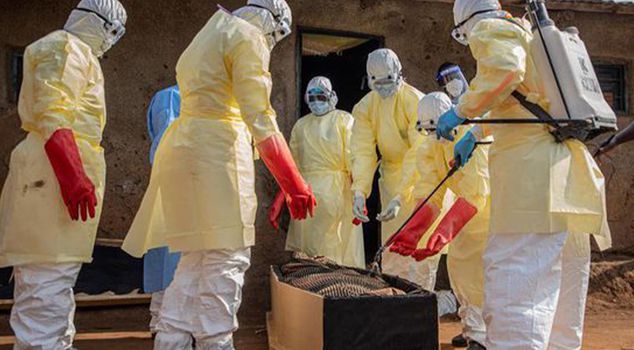
In the Ebola outbreak that has affected the Democratic Republic of the Congo and rapidly spread to five provinces, the death toll has exceeded 1,500. The outbreak, caused by the rare 'Bundibugyo' variant, for which there is no approved vaccine or treatment, has reached 3,532 cases. With 807 people held in quarantine, authorities in the country are struggling to contain the spread of the virus.
The death toll is rising in the Ebola outbreak declared in May in the Democratic Republic of Congo (DRC). According to the latest data announced by health officials, the number of cases in the country has risen to 3,532, while the number of deaths has reached 1,556.
According to the latest situation report published by the Ministry of Health of the Democratic Republic of Congo and health officials, the toll of the virus in the outbreak declared on May 15 continues to become clearer. While the number of confirmed cases nationwide has risen to 3,532, so far 1,556 people have died, and 626 patients have recovered. It was reported that 807 people are currently being kept in isolation.
OUTBREAK SPREAD TO 5 PROVINCES
The outbreak first emerged in the Ituri province in the east of the DRC with the detection of 246 suspected cases and 65 deaths. The virus, which spread rapidly, affected 5 provinces of the country: Ituri, North Kivu, South Kivu, Haut-Uele, and Tshopo.
The World Health Organization (WHO) also declared a global "public health emergency of international concern" on May 17 following these developments.
NO APPROVED VACCINE OR TREATMENT
Health officials stated that the current outbreak is caused by the "Bundibugyo" virus, a rare variant of Ebola. The lack of an approved medical treatment or vaccine for this specific variant makes the fight against the outbreak difficult.
CAUSED THE DEATHS OF MORE THAN 11,000 PEOPLE
The Ebola virus, which causes a type of hemorrhagic fever, first emerged in 1976 with simultaneous outbreaks in Nzara, Sudan, and Yambuku, DRC, and was named after the Ebola River in the DRC. The virus caused its greatest devastation in West Africa in December 2013; between 2014 and 2017, it infected 30,000 people in Guinea, Liberia, and Sierra Leone, leading to the deaths of more than 11,000 people.