21.11.2026 11:41
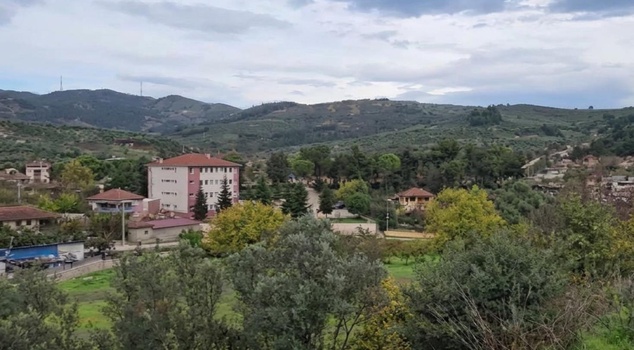
In Dereköy Neighborhood, an old Greek village with a population of 525 in the Mudanya district of Bursa, women play an active role in every area of life. The neighborhood's first female mukhtar, 38-year-old Meral Yener, visits shopkeepers and the elderly one by one on her ATV, while 54-year-old Fatma Yiğit has taken over the coffeehouse that men ran for years. Saniye Durgut, 57, who does beekeeping with 20 hives, produces 350 kilograms of honey a year.
In Dereköy, known for its Greek Orthodox church, its history of population exchange and its century-old olive trees, women stand out in every field, from the mukhtar’s office to running a coffeehouse, from beekeeping to production. Mukhtar Yener made women’s direct participation in economic life her top priority.
THE FIRST WOMAN MUKHTAR OF THE 356-YEAR-OLD VILLAGE
Founded in the 17th century, Dereköy appears in the 1670 tax records in the Kadi Registers as “Kafir Yenicesi, also known as Dere,” and in a 1692 archival document as “Karye-i Dere.” The neighborhood’s first woman mukhtar, Meral Yener, after finishing her work, gets on her ATV and visits shopkeepers, producers and elderly people one by one.
Yener, who deals with infrastructure problems such as roads, water and electricity as well as the neighborhood’s social needs, has a phone that never stops ringing all day. Yener is working so that women producers can bring their products directly to consumers without intermediaries.
MOSQUE RENOVATION BEGAN WITH COMMUNAL EFFORT
Yener, who also serves as head of the mosque association, started the renovation of the neighborhood mosque through communal labor. Thanks to the bread outlet she brought to the neighborhood, people from surrounding neighborhoods can also access affordable basic food.
Meral Yener said, “One of the finest things I have done for my village was bringing a BESAŞ outlet. Here people have the chance to access many foods, from cheap bread to cheese, milk and yogurt. All the nearby villages come here to shop as the central village. There is only one outlet in the villages of Mudanya, in Dereköy. Let’s say that is our difference.”
The wheelchair that Yener keeps constantly ready in the mukhtar’s office building is made available to elderly people who have difficulty walking and need to go to the hospital.
SHE BECAME THE COFFEEHOUSE KEEPER OF THE NEIGHBORHOOD WHERE SHE SOLD MILK AND CHEESE
Fatma Yiğit took over the neighborhood coffeehouse, which had been run by men for years, through Mukhtar Yener’s initiatives. Yiğit, who lives in Mirzaoba Neighborhood of Mudanya, gets on her ATV at sunrise every morning and covers about 4 kilometers to come to Dereköy. Yiğit opens the coffeehouse, lights the stove and brews the tea.
Yiğit, who serves the locals natural drinks such as black mulberry, sage, thyme and lemon alongside tea during the day, is helped by her husband Hasan Yiğit (55). Yiğit, who previously sold the milk, cheese and yogurt she produced in the village, is a familiar name to the locals.
“DO NOT DEPEND ON ANYONE”
Fatma Yiğit, saying that she experiences the happiness of earning through her own labor, stated that her biggest supporter was Mukhtar Meral Yener. Yiğit said, “We used to raise livestock in the mountains. Both sheep and cows. We brought the milk and sold it here in Dereköy. I also made cheese, and we sold it here. We were thinking of a business; they said the coffeehouse was for sale. Ms. Meral called us and said she would back us in every way. I came here with Meral’s support. All the workers who come from outside come here and always eat and drink. All with Meral’s support. I tell this to all the women who come. Do not depend on anyone; if you do not want to be a burden on your husband, work and earn your own money with the sweat of your brow. Let them not say, ‘The man works, so I’ll sit at home.’ Let them not say, ‘Let my husband bring it and I’ll eat.’ If she works herself, she can buy whatever she wants.”
“I POUR THE TEA, MY HUSBAND CARRIES IT”
Describing one of her days, Fatma Yiğit said:
“We come at 6 in the morning, sometimes it becomes 6:30. We light the stove and brew our tea. I heat my milk. It becomes ready for the customer. Some have already arrived when I get here, the early-morning milk drinkers. I serve them. Saturdays and Sundays are very busy. There are cycling groups. On weekdays we also have many foreign customers. It wasn’t that crowded before, but this time, because there is a woman mukhtar and also a woman coffeehouse keeper, it is busier. Most of those who come pay attention to cleanliness. I work with my husband. I pour the teas, he carries them. Where he can’t keep up, I also serve. I also deliver to the shopkeepers outside.”
THEY BROKE THE PERCEPTION THAT “IT IS SHAMEFUL”
Mukhtar Yener, stating that she will always support women entrepreneurs, said, “Especially as a woman business owner and a woman mukhtar, it is important that women always stand on their own feet, trust themselves and work. In village areas, women used to be unable even to pass through the coffeehouse square; as the first woman mukhtar elected in its history, we tackled a number of things. A woman coffeehouse keeper is first in our village among the villages. They are surprised when they see a woman coffeehouse keeper and a woman mukhtar. Now our women from outside also come with their husbands, drink tea and chat. We broke the perception of ‘it is shameful.’ It is our duty to pioneer even better things for our women.”
SHE STARTED WITH ONE HIVE AND REACHED 20 HIVES
Another name who sets out early in the morning in Dereköy is Saniye Durgut. Durgut, a mother of three girls whose husband is involved in olive growing, carries out beekeeping on her own. Durgut, who started beekeeping with one hive and today has reached 20 hives, rides her ATV at first light, goes to her apiary 2 kilometers from the neighborhood center, puts on her protective clothing and maintains her hives.
350 KILOGRAMS OF HONEY A YEAR
Durgut, who harvests twice a year, obtains an average of 350 kilograms of honey depending on the season. Durgut sells the honey she produces both to her close circle and directly to consumers at stands set up at the Hıdırellez festivals held in Dereköy.
“DEALING WITH BEES FEELS LIKE A HOBBY TO ME”
Durgut, drawing attention to the importance of state support for the sustainability of production, stated that the marketing support provided by the mukhtar’s office also gives them strength. Durgut said, “My husband is an olive farmer. He does not deal with my bees; I take care of them by myself. I deal with them myself. I started with one hive, now I have 20 hives. I love the bees very much; dealing with them feels like a hobby to me. I do it with love. I produce honey. I get honey twice a year. It yields 300–350 kilograms of honey. I sell to friends and acquaintances. May God bless my mukhtar. My mukhtar also supports me. She supports the marketing and makes sales. There are festivals, like the Hıdırellez festival; I set up a stand there and make sales there too.”
“AS A WOMAN, SUPPORTING WOMEN IS VERY IMPORTANT”
Mukhtar Yener, stating that Saniye Durgut is the only person in the neighborhood engaged in beekeeping, emphasized that Dereköy is the voice of women. Yener spoke as follows:
"My sister Saniye is a sister of ours in our village who is both a farmer and a worker. She is the only person in this village engaged in beekeeping. She is also an active person in many matters. We hold consultations with her. I personally am proud of her. When I say the voice of women, the power of women, she is truly one of the first names that come to mind in my village. As a woman, supporting a woman is very important. She produces and puts in effort. We announce it so that there are sales. We contribute to supporting women."