24.10.2026 11:00
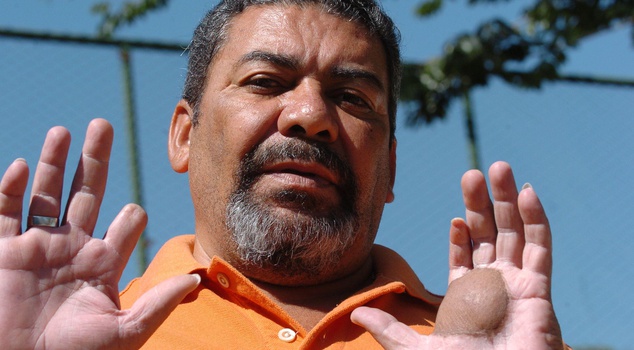
A cesium-137 capsule sold to a scrap yard in Goiânia, Brazil, and emitting blue light in the dark, led to the country's largest radiation accident. Odesson, who lost family members including his six-year-old niece and sister-in-law, says that 56 people in his extended family were exposed to radiation and were stigmatized for years. Odesson, in his seventies, is writing about what they experienced after nearly 40 years.
“On one side of the device, there was a tiny opening emitting a very fascinating, very attractive light...”
When news spread about the strange, glowing blue capsule found in Devair Ferreira's scrapyard, neighbors, family and friends gathered to see it with their own eyes. Some had tiny, glittering fragments in their hands. Others took the pieces home to show their families.
No one knew they were dealing with cesium-137, a highly radioactive substance that would trigger Brazil's largest radiation accident.
Devair had bought the capsule from two waste collectors who had found it a few days earlier in an abandoned medical clinic. His brother Odesson told him to throw it away, thinking it was 'useless,' while Devair was fascinated by it—he had even considered turning it into a precious stone to use in a ring for his wife. He would later say he had fallen in love with the “glow of death.”
THE SUBSTANCE THEY TOUCHED AT HOME TURNED OUT TO BE RADIOACTIVE
A week later, a large number of people came down with a mysterious illness. A close friend of the family linked the timing of the illness to the arrival of the strange, glowing container; so Devair's wife, Maria Gabriela, took the container to a health facility.
The device remained unattended on a chair in the yard for the rest of the day and through the night, until a doctor finally brought a radiation detector. The readings were so high that the doctor first thought the device was faulty. Then a second device confirmed the same result.
Shortly afterwards, Odesson received a message from his brother: “Get help. The substance you touched at home is radioactive.” Odesson says that by then 56 people in his extended family had been exposed to radiation.
Odesson remembered the Chernobyl disaster that had occurred in Ukraine a year earlier: “When we heard the words radioactive material, I thought, ‘This is it, we're all in big trouble, we're all going to die.’”
THE FIRST TO DIE WAS HIS 6-YEAR-OLD NIECE
The first person to lose her life was Odesson's six-year-old niece Leide. She had played with a piece of cesium-137 that her father had brought home in a matchbox; he had turned off the lights to show how it glowed in the dark.
“Her mother had just prepared dinner,” says Odesson. “Leide took an egg and, with her little hand that was clearly still exposed to radiation, ate the egg.”
Leide died about a month later, on the day her aunt Maria Gabriela (Devair's wife) died of the same illness. Two young men who worked at the scrapyard also died.
More than 100,000 people in Goiania who may have been exposed to radiation, including Odesson, were called to the Olympic Stadium for screening. Those affected were scrubbed with disinfectant liquid and brushes and then hosed down. Their clothes were destroyed and they were told to consume plenty of fluids to cleanse their bodies.
“They told me that if I liked beer, I could drink plenty of it,” says Odesson. He followed the advice and went to a bar owned by a friend. “But they didn't warn me that the place where I urinated would become contaminated, so the toilet in my friend's bar was demolished.”
PEOPLE BEGAN TO AVOID HIM
Although it was announced that the radiation was not contagious, Odesson was later hospitalized and isolated in a cell on the third floor. His wife could only speak to him from the street below: “The fact that his face was completely deformed and covered in swellings worried me very much.”
The doctor later determined that the strange formations on his face were stress-related, but as fear spread, people began to keep away from him. “Every time he got on the bus, people recognized him and got off.”
Odesson eventually recovered, but because the family home contaminated with radiation was partially demolished, he returned to a shelter. People he had known all his life began to distance themselves from him. He recalls the moment he ordered a drink at a bar belonging to an acquaintance: “When I finished my work, I put the glass on the counter. He took it with a napkin and threw it in the trash. That upset me very much.”
After the disaster, the government launched a campaign using the phrase “Eu amo Goiania,” meaning “I love you, Goiania.” Broadcast daily on national radio and television, the campaign was a sign of national solidarity with a city in crisis.
After the accident, laws regarding the monitoring, supervision and disposal of radioactive materials were changed in Brazil and other countries. However, for the survivors of the accident, the struggle continued for years due to compensation claims, health problems and lasting stigma.
Odesson was determined to help. He gave up his beloved job as a bus driver, began campaigning for the rights of victims and served as president of the Victims' Association: “We must fight for people and ensure that this never happens again anywhere in the world. No one, anywhere in the world, should have to go through what we went through.”
Today, almost 40 years later and in his seventies, Odesson is writing in his own words about the disaster that changed his life forever. At a small farm 220 kilometers from Goiania, surrounded by animals and nature, he has found peace: “Despite everything I have been through, I am a healthy person at peace with everything. Thank God.”
For a man who once believed he would die, this is no small thing.
This article is based on an episode of the Outlook program broadcast on the BBC World Service. Artificial intelligence was used in the translation of the article, the original of which is in English. A BBC journalist checked the translation before publication.