27.11.2026 18:10
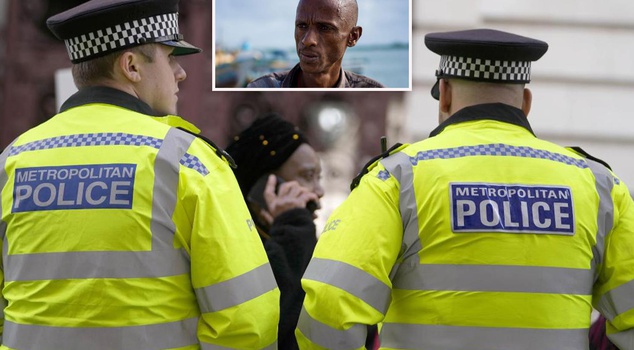
Ali Kololo, a woodcutter who was sentenced to death in Kenya in 2011 in connection with an attack on a British couple and was released after being found innocent following 11 years in prison, said that his life had been ruined because of the Metropolitan Police's conduct in the investigation. Speaking to the BBC for the first time, Kololo filed a compensation lawsuit against a former British detective and the London police.
The armed attack on a British couple on Kenya's Lamu coast in 2011 continues to make headlines with new developments 15 years later. Ali Kololo, who was arrested for alleged links to the attack and sentenced to death in 2013, regained his freedom after his conviction was overturned following 11 years in prison.
Speaking to the BBC for the first time, Kololo argued that the role of British police in the investigation was decisive in his conviction. Claiming that former detective Neil Hibberd presented misleading information to the court and concealed important forensic findings, Kololo filed a compensation lawsuit against the Metropolitan Police. The police force is contesting the lawsuit.
A DREAM HOLIDAY ENDED IN A BLOODY ATTACK
In 2011, Somali gunmen raided the beach bungalow of British couple David and Judith Tebbutt, who were holidaying on Kenya's Lamu coast. The attackers shot and killed David Tebbutt and abducted his wife Judith, taking her to Somalia. The woman, held hostage for six months, was released after a ransom was paid.
Kenyan police detained Ali Kololo within 24 hours after the attack. Kololo, who had previously worked as a gardener at the resort where the couple stayed, was at the time making a living by cutting trees in the forest and selling firewood.
Kololo claimed that while in detention he was beaten with sticks for days, burned with cigarettes, and forced to confess. Stating that he could not read or write, Kololo said his fingerprint was pressed onto a statement without its contents being explained to him.
"I did not understand what was happening. It contained a huge mountain of lies. I signed without knowing what was happening while under the influence of what they had done to me," Kololo said, arguing that the statement claiming he had directed the attackers to the couple did not reflect the truth.
Kenyan police, in a statement to the BBC, said it has always taken care to work within the framework of the law.
BRITISH DETECTIVE'S SHOE PRINT CLAIM IN COURT
The Metropolitan Police team that went to Kenya to support the investigation was instructed not to accept information obtained by Kenyan authorities through interrogating detainees.
However, Neil Hibberd, then a detective chief inspector leading the investigation team, requested Kololo's statement and later relied on it in court.
Hibberd also claimed that the type of shoes Kololo wore matched footprints found in the sand at the scene. However, the Kenyan police who arrested Kololo had stated that the suspect was barefoot when he was detained.
Even more striking was that London police's own forensic examination had not been able to determine conclusively whether the shoe in question had made the prints in the sand. It emerged that this important finding was not included in the statement presented to the court.
"DEATH" WRITTEN AS RELEASE DATE IN PRISON FILE
During the trial, Kololo initially did not receive legal support. Forced to cross-examine the prosecution's witnesses himself, Kololo communicated in court through an interpreter who spoke Swahili. However, Swahili was not his native language.
Convicted in 2013 of kidnapping and armed robbery, Kololo was sentenced to death for robbery. This sentence was later commuted to life imprisonment. Kololo, the only person convicted in connection with the attack, spent three years on death row.
Kololo said that when he saw his prison file, the release date section said "death," and he thought he could be executed at any moment.
"I believed I could be executed at any moment. I thought I would never see my family and children again," Kololo said, describing how deeply the experience affected him.
NEGLIGENCE IDENTIFIED IN INVESTIGATION
The debate over Kololo's conviction took on a new dimension with an examination conducted by the UK's Independent Office for Police Conduct (IOPC).
As a result of the investigation launched in 2018, it was determined that former detective Hibberd omitted important forensic findings regarding the shoe prints from the statement he presented to the court and violated established instructions by using Kololo's statement.
The IOPC concluded that if Hibberd were still serving, he might have to answer for gross misconduct. However, because he retired in 2017, disciplinary proceedings could not be brought against him. The body also stated that the available findings were not sufficient to require referral to prosecutors for a criminal investigation.
In April 2023, Kenya's High Court overturned Kololo's conviction due to serious doubts about the evidence presented by the prosecution. Thus Kololo, who had spent 11 years in prison, regained his freedom.
Judith Tebbutt, the abducted member of the British couple, had also previously stated that she believed Kololo was innocent and said he had been made a scapegoat with no connection to the incident.
HIS WIFE DIVORCED HIM, HIS CHILDREN DROPPED OUT OF SCHOOL
Kololo, who contracted tuberculosis twice in prison, is struggling to rebuild his life despite regaining his freedom. Stating that he can no longer work as before, Kololo said his family was also severely affected by his years-long imprisonment.
Kololo's wife divorced him while he was in prison, and his three children had to drop out of school because their education costs could not be covered. While his children moved in with their mother, Kololo today lives alone in a small mud hut in Lamu.
Saying that his children could not see him for a long time and that when he was released, especially his youngest child had difficulty recognizing him, Kololo stated that what he went through was not easy to make up for.
LONDON POLICE CONTEST COMPENSATION CLAIM
Kololo is seeking compensation from the Metropolitan Police, arguing that the evidence former detective Neil Hibberd presented to the court ruined his life and his children's future.
Speaking to the BBC, Kololo asked for recompense for what he suffered, saying, "These people slandered me. Don't I deserve something?"
London police, however, did not apologize to Kololo and did not admit to acting unlawfully. The force said it would not comment on Kololo's claims due to the ongoing case. In its statement, it expressed sorrow for the family of David and Judith Tebbutt and for everyone affected by what Kololo went through, and said it would continue to support the Kenyan authorities.
It is said that the legal battle by the police force contesting the compensation claim could last for years.