18.10.2026 00:11
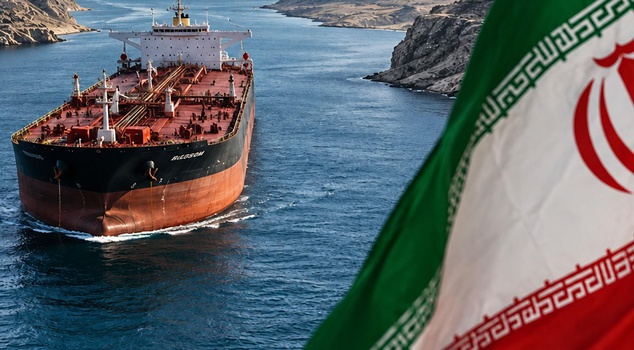
Iranian Foreign Minister Abbas Araghchi announced that they presented a 7-day plan to the US through Qatar for the reopening of the Strait of Hormuz. Stating that if the necessary conditions are met, maritime traffic could return to normal within a week, Araghchi said, "The decision now belongs to the US." Arguing that US attacks have disrupted diplomatic efforts, the Iranian minister also said they are ready for negotiations if reliable guarantees are provided.
Iranian Foreign Minister Abbas Araghchi spoke at the 52nd Session of the Council of Foreign Ministers of the Organization of Islamic Cooperation held in Iraq’s capital, Baghdad. In his speech, Araghchi drew attention to the importance of unity and dialogue in the Islamic world and reacted to the selective application of international law. Stating that unity and dialogue in the Islamic world are needed more than ever, Abbas Araghchi said, “The Organization of Islamic Cooperation was established to be the common voice of the Islamic ummah, strengthen solidarity and cooperation, and defend common interests. Keeping the channels of dialogue between us open is not a sign of weakness, but rather a responsibility.”
Emphasizing that the organization's founding principles overlap with the United Nations (UN) Charter, Iranian Minister Araghchi said, “The sovereign equality of states, territorial integrity, non-interference in internal affairs, peaceful settlement of disputes, and refraining from the threat or use of force are fundamental principles. These principles do not belong to any country or group of countries. These principles, which protect us all, lose their value if they are applied selectively.”
“PEACE CANNOT BE BUILT ON THREATS OF ANNIHILATION”
Emphasizing that Iran will continue to defend its sovereignty and legitimate interests, Iranian Foreign Minister Abbas Araghchi said, “Iran will defend its people, sovereignty, and legitimate interests. However, there is no contradiction between defending our rights and continuing the pursuit of peace. We know the destruction caused by war, and that is precisely why we value peace. Iran is not asking for any privilege. It only wants rights and responsibilities to be applied equally to everyone. This matter cannot be resolved on the battlefield. Peace cannot be built on threats of annihilation.”
“THE US AND ISRAEL ARE RESPONSIBLE FOR INSECURITY IN THE STRAIT OF HORMUZ”
Stating that they favor safe maritime transportation in the Strait of Hormuz, Araghchi said, “The Strait of Hormuz is of vital importance for energy shipments and trade for many of our member countries. The strait was completely open and secure until February 28. The security problems and disruptions in maritime transportation since that date are the direct result of attacks by the US and Israel. Security cannot be restored by repeating past mistakes and crimes. You cannot bomb and threaten to annihilate a country and impose a blockade on it, and then expect maritime transportation to return to normal.”
“MARITIME TRAFFIC REACHED 60 PERCENT OF PRE-WAR LEVELS IN TWO WEEKS”
Referring to the diplomatic initiatives carried out between Iran and the US, the Iranian minister said, “In fact, the diplomatic initiatives had begun to yield results. With the mediation efforts of Pakistan, which is also a member of this organization, and Qatar's support, Iran and the US signed the Islamabad Memorandum on June 17. Under Article 5 of the memorandum, Iran committed to making the necessary arrangements to facilitate the safe passage of ships. We immediately began technical talks with Oman to implement this commitment. Within two weeks, maritime traffic reached about 60 percent of pre-war levels, but the US's unilateral steps and military attacks prevented the implementation of the memorandum. The mechanisms envisaged in the memorandum for resolving disputes were also ignored.”
“THE STRAIT OF HORMUZ CAN REOPEN WITHIN 7 DAYS; THE DECISION NOW BELONGS TO THE US”
Stating that Iran has negotiated in good faith over the past two years but has faced military attacks each time, Abbas Araghchi said, “This situation has created serious distrust. We have deep concerns about sitting at the negotiating table again without reliable guarantees that similar attacks will not recur. Nevertheless, Iran continues to keep the door to diplomacy open. Through Qatar, we conveyed a seven-day plan to the US side. We announced that if the necessary conditions are met, the Strait of Hormuz can be reopened and maritime traffic can return to normal within seven days. The decision now belongs to the US.”
“THE ONLY SOLUTION TO THE CRISIS IN YEMEN IS A POLITICAL PROCESS”
Also referring to the clashes between Saudi Arabia and the Houthis, Araghchi said, “We support the sovereignty, independence, unity, and territorial integrity of Yemen and Saudi Arabia. The only realistic and lasting solution to the problem in Yemen is a comprehensive political process involving all parties. Lasting peace cannot be achieved by increasing military tension, resorting to pressure and threats, or excluding Yemeni parties from the process.”
Emphasizing that crises in the region cannot be resolved through military methods, Abbas Araghchi said, “Insisting on military methods while ignoring political solutions does nothing but make problems even more complicated. Iran is deeply concerned about developments in the Arabian Peninsula. We are ready to provide all kinds of support to ensure dialogue within the framework of the peace roadmap previously agreed upon by the parties. The people of Yemen have the right to live with human dignity, without being subjected to pressure, sanctions, and blockade.”
“NO COUNTRY CAN PROVIDE LASTING SECURITY FOR ITSELF BY ENDANGERING THE SECURITY OF OTHERS”
Stating that regional security can be ensured through joint effort, Iranian Foreign Minister Araghchi said, “No country can provide lasting security for itself by endangering the security of others. The problems in our region must be resolved by regional countries before they become a pretext for power struggles by distant countries.”
Calling on regional countries, the Iranian minister said, “The territory, airspace, and infrastructure of every country must serve only regional security and must never be used in attacks against neighboring countries. We say this in a spirit of brotherhood and good neighborliness. We all share the same geography and the same future. We have two options before us: either we ensure security together or we bear the consequences of insecurity together. Iran is ready to cooperate with all brotherly and neighboring countries to ensure security together.”
“IRAN WILL NOT GIVE UP ITS SOVEREIGN RIGHTS UNDER PRESSURE”
Once again emphasizing that Iran will not bow to threats and pressure, Araghchi said, “Iran will not accept pressure, threats, and attempts at intimidation, and will not give up its sovereign rights under pressure. However, we are ready for dialogue on the basis of mutual respect and reliable guarantees.”