15.04.2026 15:44
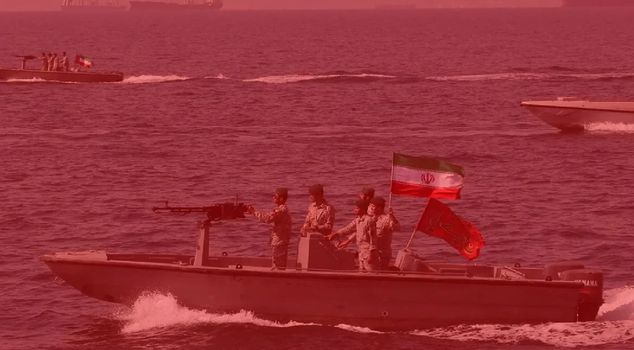
Iran has threatened to halt trade flow in the Red Sea, the Persian Gulf, and the Gulf of Oman if the U.S. continues its naval blockade. Tehran emphasized that in such a case, no trade route in the region would be safe, while tensions rapidly escalated following the U.S. move. Experts warn that the routes through which a large portion of global energy shipments pass could be at risk.
Following the United States' implementation of a naval blockade targeting Iranian ports, a sharp countermove came from Tehran. The Iranian army warned that if the blockade continues, maritime trade in the region, primarily in the Red Sea, will be halted.
"WE WILL NOT ALLOW THE FLOW OF TRADE"
A statement from the Hatam al-Anbiya Headquarters, the joint command center of the Iranian Armed Forces, indicated that if the US continues its pressure on Iranian vessels, maritime trade in the region will be targeted. The command stated, "Under these conditions, we will not allow the trade flow to continue."
The statement specifically emphasized the Persian Gulf, the Gulf of Oman, and the Red Sea, expressing that if Iranian ports are targeted, no trade route in the region would be safe.
"NO PORT IN THE GULF WILL BE SAFE"
Iranian officials described the US naval blockade as "contrary to international law" and "piracy," while emphasizing that security would be "for everyone or for no one."
These statements came immediately after Washington began implementing a comprehensive naval blockade against Iranian ports. The US Navy has started to establish extensive control in the region as part of an operation aimed at halting commercial vessel traffic belonging to Iran.
US BLOCKADE BEGINS, SHIPS TURNED BACK
According to foreign press reports, US forces stopped and turned back commercial vessels attempting to leave Iranian ports. It is reported that thousands of troops and warships have been deployed to the region as part of the operation.
This move by the US came after ceasefire talks ended in failure. While the Washington administration increases pressure due to Iran's nuclear program and activities in the region, Tehran has signaled it could target sea lanes in response.
GLOBAL ENERGY ROUTES AT RISK
Experts point out that if tensions escalate, critical sea lanes through which approximately 20% of the world's oil passes could face serious risk. It was reported that oil prices rose rapidly following the blockade. While many countries, led by China, are concerned about the developments, the international community is calling on the parties to reduce tensions.
TENSION RISING IN THE REGION
Iran's "we will halt trade" statement has increased concerns that the conflict in the Middle East could spread to the seas. A potential crisis at critical chokepoints like the Red Sea and the Strait of Hormuz could directly impact global trade and energy markets.