24.08.2026 09:21
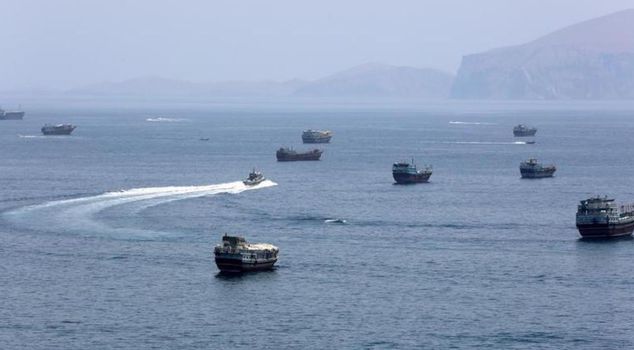
Iran's Parliament National Security and Foreign Policy Commission has approved an article stipulating the collection of fees in return for services from ships passing through the Strait of Hormuz. Spokesman Hassan Kashkavi announced that fees will be charged for navigation, security, fuel supply, and other services; these fees will be collected in Iranian rials or another currency. The bill emphasized that the rights of coastal states and international law will be respected.
Iran's Parliament National Security and Foreign Policy Commission approved the article stipulating fees for services provided to ships passing through the Strait of Hormuz.
FEES TO BE CHARGED AT HORMUZ
Hassan Kashkavi, spokesman for the Iranian Parliament's National Security and Foreign Policy Commission, announced that discussions continued on the draft titled 'Strategic Action Plan for Ensuring the Security and Development of the Strait of Hormuz' during yesterday's commission meeting.
Iranian media reported that Kashkavi announced the approval of the 3rd article, whose discussion was postponed in the previous meeting, and that according to this, fees would be charged for maritime services, environmental services, fuel supply in special circumstances, insurance, security, and other services provided in the Strait of Hormuz.
"RIGHTS OF COASTAL STATES PRESERVED"
Kashkavi noted that the fees would be collected from ships of countries permitted to pass through the Strait of Hormuz in Iranian rials or another currency determined by Tehran, and stated, "In the draft, attention was paid to the rights of countries bordering the Strait of Hormuz. Within the framework of international law and rules, the recognition of freedom of maritime navigation, as well as respect for the security and sovereignty of coastal states and the prevention of the violation of these rights, were emphasized."
Kashkavi stated that the Strait of Hormuz and the Persian Gulf have their own unique rules and conditions, and recounted that Oman immediately issued a political declaration after adopting the 1982 United Nations Convention on the Law of the Sea, emphasizing that the provisions of this convention should not violate its national sovereignty and national security.