27.04.2026 15:55
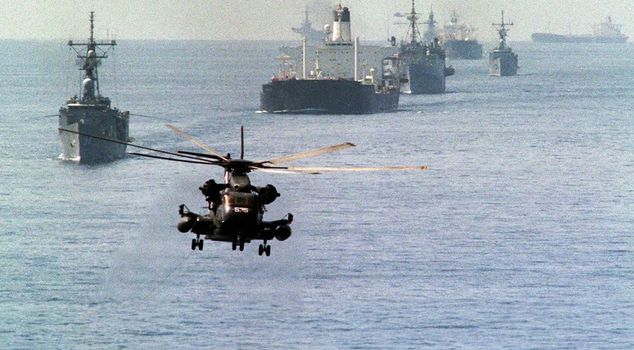
It has been revealed that Iran shipped at least 4.6 million barrels of crude oil despite the US naval blockade. Some tankers reportedly bypassed the blockade by turning off their tracking systems, alleviating concerns of an expected supply shock in global markets. While the likelihood of a sharp short-term rise in oil prices has diminished, escalating tensions in the region indicate that risks persist.
Despite the US naval blockade, Iran has reportedly maintained its oil exports. Recent data shows that Tehran has so far prevented a supply shock that could shake global energy markets.
MILLIONS OF BARRELS OF OIL SHIPPED
According to tanker tracking data and satellite imagery, Iran has loaded at least 4.6 million barrels of crude oil from its export terminals in recent days. In addition to this shipment worth approximately $400 million, it is stated that another 4 million barrels have bypassed the blockade and reached international waters.
It is also indicated that some tankers have evaded inspection by turning off their tracking systems ("blackout") and delivered their cargoes in this manner.
STRAIT OF HORMUZ ADVANTAGE
Iran's geographical location on the northern coast of the Strait of Hormuz facilitates such escape methods. While US pressure increases around the strait, one of the world's most critical oil transit points, Iran's flexible export network draws attention.
MARKETS RELIEVED
These developments have weakened fears of an expected sudden supply shock in global markets. While the likelihood of oil prices hitting record highs in the short term has decreased, investor expectations have also been revised downward.
According to experts, the blockade, which has not completely stopped Iran's exports, has created a perception of "partial but manageable risk" in the market.
IRAN'S OFFER: LIFT BLOCKADE IN EXCHANGE FOR HORMUZ
Meanwhile, Iran has made a new offer to the US through Pakistan. Accordingly, Tehran states it is ready to ease restrictions in the Strait of Hormuz, while demanding the lifting of the US naval blockade in return. However, the fact that the offer does not cover the nuclear program makes it difficult for Washington to accept it.
TENSIONS MAY ESCALATE
Iranian officials have warned of a harsh response to any potential attacks on oil infrastructure. The rhetoric of "four wells for one oil well" is interpreted as a signal of a possible escalation. Russia and Oman have called for diplomacy in the region, emphasizing the importance of keeping sea lanes open.
MARKET MESSAGE IS CLEAR
According to experts, a larger crisis is needed for oil prices to rise sharply in a short time. Without developments such as the complete closure of the Strait of Hormuz, direct attacks on infrastructure, or the collapse of the diplomatic process, a sudden spike in prices is not expected.