12.08.2026 06:50
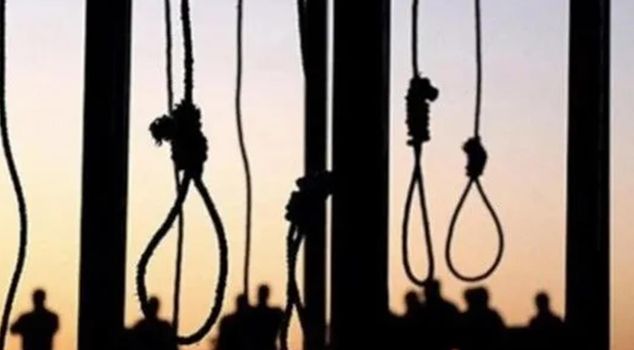
UN High Commissioner for Human Rights Volker Türk praised Lebanon's parliament for approving a law abolishing the death penalty. Describing this step, the first in the region, as a 'strong commitment to the right to life,' Türk called on other countries to follow Lebanon's example.
United Nations (UN) High Commissioner for Human Rights Volker Türk commended the Lebanese Parliament's approval of a draft law completely abolishing the death penalty in the country, describing it as a "strong and principled commitment to the right to life."
In a written statement, UN Commissioner Türk noted that Lebanon is the "first country" in the region to take this step, calling the decision "a significant advancement in the field of human rights."
SUPPORT CAME FROM THE UN
Drawing attention to the fact that Lebanon is going through a period marked by devastating attacks, heavy losses, and immense suffering, Türk stated, "This decision represents a strong and principled commitment to the right to life in such an environment."
Türk called for the law to be swiftly referred to the Presidency and ratified for its prompt implementation, while also recommending that other countries still practicing the death penalty follow Lebanon's example.
Emphasizing that the UN views the death penalty as "contrary to human dignity and the right to life," Türk noted their support for the decision.
According to Lebanon's official news agency NNA, the Lebanese Parliament accepted the bill during yesterday's session, which provides for the abolition of the death penalty in the country and its replacement with life imprisonment.
LAST EXECUTION WAS CARRIED OUT IN 2004
The last execution of the death penalty in Lebanon was carried out in 2004 during the term of former President Emile Lahoud.
An employee working at the Ministry of Education was executed after being found guilty of killing 11 colleagues with an automatic rifle due to a personal grudge arising after his supervisor rejected his leave request.
In 2008, the Lebanese Ministry of Justice, with the signatures of 10 deputies, submitted a draft law proposing the replacement of the death penalty with aggravated life imprisonment that is unforgivable and irreducible; however, the draft remained in parliamentary committees due to a lack of political consensus and never became law.