16.10.2026 15:10
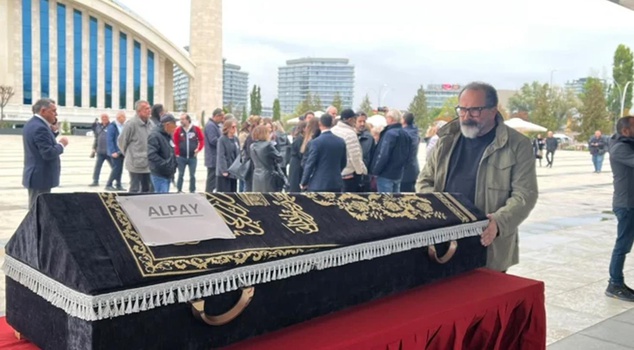
Alpay Nazikioğlu, the master name of Turkish pop and pop-rock music, who passed away at the age of 91 in Antalya, was sent off on his final journey after the funeral prayer held in Ankara. While the family of the master artist, his fans, and official dignitaries attended the ceremony held at the Ahmet Hamdi Akseki Mosque, the absence of attendance from the art world drew attention.
Ahmet Alpay Nazikioğlu, one of the master figures of Turkish music, a singer and composer who died at the age of 91 in Antalya, was sent off on his final journey in the capital Ankara.
The funeral prayer was performed at Ahmet Hamdi Akseki Mosque following the Friday prayer for the late artist. Alpay's family, relatives, fans, and Deputy Minister of Culture and Tourism Serdar Çam attended the ceremony. However, the absence of well-known names from the art and celebrity world at the funeral drew attention.
After the prayer was performed, Alpay Nazikioğlu's body was buried in the family cemetery at Cebeci Asri Cemetery.
WHO IS ALPAY NAZİKİOĞLU?
Born in Ankara on July 18, 1935, Ahmet Alpay Nazikioğlu became known as a successful athlete in his youth. The talented figure who played football for Ankara Demirspor and Gençlerbirliği clubs rose to the squad of the Youth National Football Team. After completing his education at Ankara University Faculty of Law, he decided to turn to music, his passion.
HE WAS ONE OF THE ARCHITECTS OF TURKISH POP MUSIC
Alpay, who stepped into his musical journey in the 1960s, founded his own orchestra in 1964 and pioneered works in Turkish pop, rock, romantic folk, and Anatolian pop genres. The master artist, who made popular French and Italian songs loved by broad masses by adapting them into Turkish, also made a name for himself with joint projects with Üç Hürel, one of the legendary groups of the era.
Throughout his career, Alpay released dozens of 45 rpm records and albums and received awards; with timeless works such as 'Come in September', 'Factory Girl', 'Don't Go', 'Black Train', and 'Wind of Separation', he left his mark on the history of Turkish music.