06.11.2026 17:45
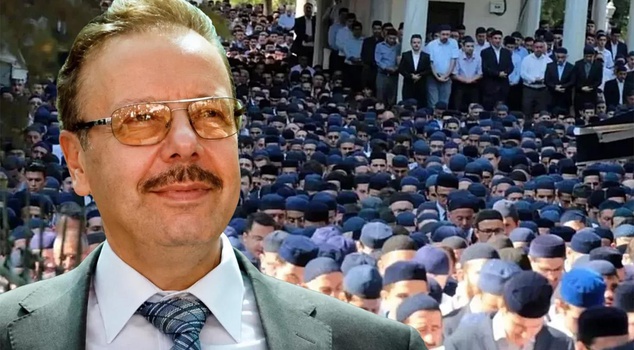
A striking development has occurred in the investigation into the death in 2016 of Arif Ahmet Denizolgun, leader of the Süleymancılar and former Minister of Transport. The Bakırköy Chief Public Prosecutor's Office requested an additional report from the Council of Forensic Medicine. The prosecutor's office questioned how determinations regarding the cause of death were made despite advanced decomposition in the body, and on what grounds Denizolgun was diagnosed with high blood pressure and cardiovascular disease even though no medical records were found.
The suspicious death of Süleymancılar leader and former Minister of Transport Arif Ahmet Denizolgun approximately 10 years ago is under review again. The prosecutor's office has taken action to clarify some findings in the existing autopsy reports.
PROSECUTOR'S OFFICE REQUESTED AN ADDITIONAL REPORT FROM THE FORENSIC MEDICINE INSTITUTE
The Bakırköy Chief Public Prosecutor's Office Organized Crimes Investigation Bureau took a new step to determine the exact cause of death of Arif Ahmet Denizolgun, who died at Beykoz Çiftliği on September 7, 2016. In its letter to the Forensic Medicine Institute 1st Specialization Board, the Chief Public Prosecutor's Office requested that the documents in the investigation file be re-examined and that some assessments in previous reports be explained in detail. Among the issues the prosecutor's office focused on are decomposition in the body, hemorrhages identified in the chest area, the cause of death, and findings regarding Denizolgun's medical history.
HIS GRAVE WAS OPENED 10 YEARS LATER
In the first autopsy performed on September 8, 2016, after the death of Süleymancılar leader and former Minister of Transport Arif Ahmet Denizolgun, no metallic object or bone fracture was found in radiological examinations. While no traumatic findings were identified in various parts of the body, findings in favor of a heart attack and blockages in the vessels feeding the heart were detected. Within the scope of the investigation, an exhumation was carried out on August 19, 2026. In the report prepared after the grave was opened, it was stated that there was no medical evidence showing that Denizolgun died as a result of his mouth and nose being covered, pressure being applied to his neck, or pressure being applied to his chest. The report also included the assessment that no medical findings indicating death due to traumatic effect or poisoning were found, and that the death occurred as a result of a brain hemorrhage due to high blood pressure.
A STRIKING QUESTION FROM THE PROSECUTOR'S OFFICE: HOW WERE THESE FINDINGS MADE?
The Chief Public Prosecutor's Office requested that the bases of some assessments in the report prepared after the exhumation be explained. Particular attention was paid to the detection of fresh bleeding in the area with color change on the anterior chest and the observation of severe autolysis in the examined tissues. The prosecutor's office requested a detailed explanation of how these findings could be made despite the presence of advanced tissue deterioration. In addition, the Forensic Medicine Institute was asked whether lesions would necessarily form inside the mouth in an act carried out by covering the mouth and nose, and whether the hemorrhages in the chest area can be considered traumatic evidence.
IF THERE ARE NO MEDICAL RECORDS, HOW WAS THE DISEASE DETERMINED?
Another issue that stood out in the investigation was the assessments regarding Denizolgun's health condition. Although there was no medical document belonging to Denizolgun, the prosecutor's office asked the Forensic Medicine Institute to explain how it was concluded that he had high blood pressure and cardiovascular disease. Detailed information was also requested regarding which diseases and conditions the active substance metoprolol detected in Denizolgun's blood is used to treat.
DID THE LATE REPORT AFFECT THE EVIDENCE?
The Chief Public Prosecutor's Office also requested an assessment of whether Denizolgun could have survived if emergency medical intervention had been performed at the farm at the first moment he became ill. In addition, it was requested that the question of whether the late notification increased decomposition in the body and prevented evidence from being obtained be answered. The prosecutor's office requested that all documents prepared by law enforcement units and relevant institutions be re-examined and that an additional report on the exact cause of death be prepared and sent to the investigation file.