23.11.2026 17:42
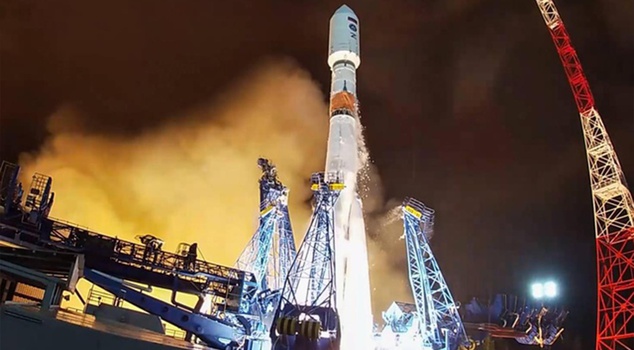
Western intelligence services, warning that Russia is preparing to launch a nuclear-armed satellite named "Sputnik-S" into space in December, put NATO countries on alert. It was stated that if the satellite, kept near Moscow, is detonated in orbit, thousands of satellites could be disabled; a major global collapse could occur in GPS, banking, electricity and communication networks.
Western intelligence services warned that Russia is preparing to send a satellite capable of carrying nuclear warheads into space. It is assessed that the satellite named "Sputnik-S", allegedly stored near Moscow for years, could be launched in December. It is noted that a possible nuclear explosion could disable thousands of satellites and cause global disruptions in GPS, banking, electricity and communication systems.
SECRET WARNING SENT TO NATO COUNTRIES
According to assessments by Western intelligence services, Russia is preparing to place a satellite with nuclear weapons-carrying capacity into Earth orbit. According to a report by the US-based New York Post and a joint investigation by German broadcasters WDR, NDR and Süddeutsche Zeitung, concerns about Russia's space weapons program were shared with NATO countries.
It was reported that information obtained by intelligence and military sources, including Germany's Federal Intelligence Service (BND) and the German army Bundeswehr, was passed to many NATO countries at the beginning of November.
Intelligence assessments indicate that the satellite called "Sputnik-S" could be launched within the next 60 days. It is conveyed that the Bundeswehr Space Command considers December as a possible date for the launch. It is claimed that the satellite could become operational shortly after being placed into orbit.
SATELLITE HAS BEEN KEPT NEAR MOSCOW FOR YEARS
According to intelligence sources, the production of Sputnik-S was completed years ago. It is stated that the satellite, which is alleged to have been designed to carry nuclear weapons, is being kept in a warehouse around Moscow.
It was reported that German military experts informed Defense Minister Boris Pistorius and other government officials about the possible threat in recent weeks.
A spokesperson for the German army avoided direct comment on the matter while stating that it is known that Russia has such a capability.
The US Defense Intelligence Agency (DIA) also reported in its space security assessment published in October that Russia was developing a satellite designed to carry nuclear weapons.
THE 1967 OUTER SPACE TREATY WILL BE VIOLATED
Russia's placement of a satellite carrying nuclear weapons into Earth orbit would mean a violation of the 1967 Outer Space Treaty.
The treaty prohibits the placement of nuclear weapons and other weapons of mass destruction into Earth orbit and their deployment on celestial bodies.
The placement of such a weapon in space poses a serious threat not only to NATO countries but also to satellite infrastructure and space security worldwide.
A NUCLEAR EXPLOSION IN SPACE COULD DISABLE THOUSANDS OF SATELLITES
General Stephen Whiting, Commander of US Space Command, made striking assessments regarding the consequences of a nuclear explosion that could occur in space.
According to Whiting, a nuclear explosion in low Earth orbit could disable about one-third of the satellites in that orbit within the first hours and days. It is assessed that the remaining satellites could also gradually lose function in the following months.
It is noted that the powerful electromagnetic pulse and radiation effect created by the explosion could affect satellites in space as well as technological systems on Earth.
It is stated that in this scenario serious interruptions could occur in GPS navigation, banking transactions, power grids and mobile phone networks. The disabling of satellite systems could also affect military communications, intelligence, weather forecasts and global internet infrastructure.
"THIS PRACTICALLY MEANS A RETURN TO THE STONE AGE"
Major General Armin Fleischmann of the German army drew attention to the effects of a possible nuclear explosion on Germany.
Fleischmann stated that in such a situation there could be power outages in the country, and communication and navigation systems could be seriously disrupted.
A Bundeswehr spokesperson summarized the scale of the possible consequences with the words, "This practically means a return to the Stone Age."
RUSSIA REJECTED THE CLAIMS
The Russian Embassy in Berlin announced that it had no information about the claims raised by Western intelligence services.
The embassy described the accusations regarding Russia's space activities as "baseless insinuations" and argued that they were part of a propaganda campaign. In the statement, it was stated that Russia's activities in space are carried out within the framework of international obligations and solely for peaceful purposes.
Kremlin Spokesperson Dmitry Peskov, in his assessment of the claims in the news, argued that such unverified reports based on various sources are not worth taking seriously.
Meanwhile, the US and Western countries had previously raised concerns about the possibility of Russia deploying nuclear weapons in space. Moscow, on the other hand, continues to reject accusations that it has plans to deploy nuclear weapons in space.