15.11.2026 07:50
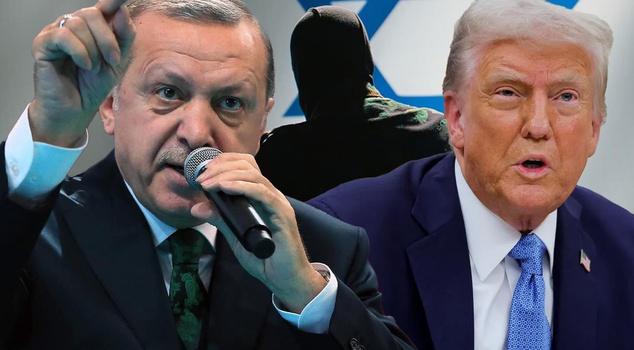
While it was stated that US President Donald Trump is considering postponing a possible attack on Iran, it was claimed that President Erdoğan and Saudi Crown Prince Mohammed bin Salman called on Trump not to restart the war. As Israel's military operation pressure continues, it was reported that Mossad Director Roman Gofman met with the CIA Director in Washington, while Netanyahu, citing the Iranian threat, called on Eisenkot for a national unity government.
US President Donald Trump has been reported to be considering postponing a possible military attack on Iran. According to Reuters, after intelligence briefings Trump conveyed to national security advisers that he could postpone the attack. It was stated that during this process the US President received the views of President Recep Tayyip Erdoğan and Saudi Crown Prince Mohammed bin Salman. While it was reported that both leaders oppose a new war, it was said that Israel's military operation pressure on Washington continues.
WAR WARNING FROM ERDOĞAN AND SALMAN TO TRUMP
According to Reuters, citing a senior official, Trump held phone calls with President Recep Tayyip Erdoğan and Saudi Crown Prince Mohammed bin Salman over the last two weeks.
It was stated that a possible military operation against Iran was discussed in the calls, and Erdoğan and Salman called on Trump not to restart attacks.
It was reported that both leaders want to prevent a new and comprehensive war in the Middle East, while it was noted that Trump made no commitment regarding these requests.
TRUMP IS CONSIDERING POSTPONING THE ATTACK
It was claimed that after a series of intelligence briefings, the US President put military options against Iran back under review.
It was stated that Trump told senior national security advisers he could postpone the attack, while it was said that the Washington administration is focusing on the option of maintaining diplomatic and economic pressure.
It was reported that US intelligence agencies assessed that the naval blockade and economic sanctions are harming Iran's economy and will continue to increase pressure on Tehran.
ELECTION RESULTS IN THE US ALSO AFFECTED THE DECISION
After the midterm elections in which Republicans suffered losses, the political consequences of an Iran war also began to be discussed.
While it was claimed that the election results were influential in the Trump administration's reassessment of its military strategy, it was stated that the US military continues preparations against a possible escalation.
According to sources close to US military planning, Washington is in a position to expand operations against Iran if needed.
ISRAEL'S ATTACK PRESSURE ON WASHINGTON
While the Trump administration evaluates military options, it was reported that Israel continues its pressure on the US to launch a new operation against Iran.
It was stated that Roman Gofman, Director of Israel's foreign intelligence service Mossad, went to Washington to discuss possible attacks.
According to Axios, a US outlet, Gofman met with CIA Director John Ratcliffe in Washington. It was reported that the Mossad Director is also expected to go to Miami to meet with Trump's special envoy Steve Witkoff.
In the Israeli opposition, assessments were made that Prime Minister Benjamin Netanyahu wants the war to continue in order to preserve his position in power, it was stated.
SURPRISE OFFER FROM NETANYAHU TO EISENKOT
While possible attacks on Iran are being discussed, a remarkable development also occurred in the government formation process in Israel.
In a video message released after a security meeting, interim Prime Minister Benjamin Netanyahu called on Yashar Party leader Gadi Eisenkot to form a national unity government.
Netanyahu invited Eisenkot to unconditional talks to form a broad-based government that would also include Likud and Ultra-Orthodox parties.
Unlike his previous statements, Netanyahu did not set the condition that he would lead the government to be formed, and argued that political disagreements should be set aside in the face of the Iranian threat.
Netanyahu said, "Let's sit at the table without preconditions. Let's set aside all disagreements and boycotts, and reach an agreement for Israel's security and future, including the issue of mandatory military service, which can be solved together with representatives of the Haredi community."
"WE MUST ELIMINATE THE IRANIAN THREAT"
Netanyahu, who claimed that Iran is trying to revive its nuclear weapons program, alleged that the Tehran government poses an existential threat to Israel.
Netanyahu said, "We must decisively and permanently remove this existential threat from us."
Netanyahu, who argued that a government to be formed with the support of Arab parties representing Palestinian citizens of Israel would be insufficient in fighting the Iranian threat, asserted that a broad-participation national unity government could ensure Israel's security for many years.
EISENKOT'S CONDITION FOR PREMIERSHIP
Channel 13 television in Israel claimed that Eisenkot was preparing to offer Netanyahu's Likud Party to join a government to be formed under his leadership.
According to the report, Eisenkot is open to compromise in coalition talks but does not consider giving up the post of prime minister.
People close to Eisenkot said, "We are ready to compromise, but never on the premiership."
It was stated that the Yashar Party is also expected to make contact with the Religious Zionism Party led by far-right Bezalel Smotrich.
GOVERNMENT FORMATION BARGAINING IN ISRAEL
In the elections held in Israel on October 27, the bloc led by Netanyahu won 53 seats in the 120-seat parliament. Jewish opposition parties won 48 seats, and Arab parties won 19 seats.
With President Isaac Herzog assigning the task of forming a government to Eisenkot on November 8, the 28-day coalition process began. This period can be extended once by 14 days if needed.
To form a government in Israel, at least 61 deputies in the 120-seat Knesset need to vote confidence.
While Jewish and Arab opposition parties hold a majority in parliament with a total of 67 deputies, Netanyahu's call for national unity came at a time when military options against Iran were being discussed.