11.11.2026 10:33
Selçuk University faculty member Prof. Dr. Fatma Hümeyra Yerlikaya Aydemir said at a pickle workshop in Eskişehir that Queen Cleopatra of Egypt's beauty secret was not milk baths but regular pickle consumption. Noting that pickles carry prebiotic, probiotic, and postbiotic properties together, Aydemir explained that for healthy pickles, 30-50 grams of rock salt should be used per 1 liter of water, and that vinegar is not added in the traditional method.
Professor Dr. Fatma Hümeyra Yerlikaya Aydemir, a faculty member in the Department of Medical Biochemistry at Selçuk University Faculty of Medicine, stated that pickles, a favorite of leaders and civilizations throughout history, were also an indispensable part of the diet of Cleopatra, the Queen of Egypt, known for her beauty and splendor.
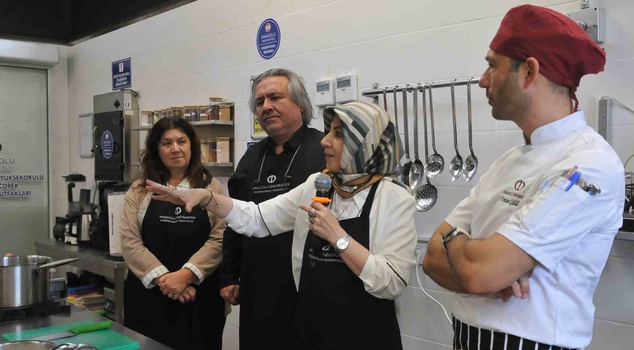
At the “Pickle Making Workshop from Tradition to Science” program organized by Anadolu University Eskişehir Vocational School (EMYO), Prof. Dr. Fatma Hümeyra Aydemir stated that pickles are a magical trio combining prebiotic, probiotic, and postbiotic properties. Aydemir said, “With this triple shield, when we consume that food, we will have taken a wonderful immune booster, intestinal repairer, and a kind of miracle drug that regulates our general functions.”
CLEOPATRA’S LITTLE-KNOWN SECRET: PICKLES
Aydemir, noting that preserving the integrity of the intestinal wall suppresses systemic inflammation in the body according to medical biochemistry data, said, “The regression of inflammatory processes directly enables tissues to become smoother and acquire a vibrant appearance by increasing the cellular-level absorption of essential nutrients. When ancient sources and today’s medical literature are brought side by side, this scientific fact is confirmed. Indeed, the aesthetic secret of Cleopatra, the Queen of Egypt, who left her mark on history with her legendary beauty, stems not from the milk baths she applied to her skin, contrary to what is known, but from the regular consumption of fermented foods that support the digestive system and have tissue-repairing properties, especially pickles. Pickles, also a favorite of leaders and civilizations throughout history, were an indispensable part of even the diet of Cleopatra, the Queen of Egypt, known for her beauty and splendor. Historical sources and legends record that Cleopatra owed her flawless skin health and vitality to the abundant fermented foods and pickles in her diet. This ancient fermentation habit, placed at the center of the daily nutritional routine in the Egyptian palace, reveals the millennia-old unwavering influence of our deep-rooted culinary heritage on human aesthetics,” she said.
THE ORIGIN OF PICKLES EXTENDS BACK TO MESOPOTAMIA
Prof. Dr. Aydemir, touching on the historical process and biological importance of fermentation, said, “Fermentation is one of the oldest food preservation and biotechnological methods in human history. According to the oldest records of written history, the origin of pickles first began in Mesopotamia and the Indus Valley 4,000 years ago with the salting and preservation of wild cucumbers. Over time, this method, which spread to China, ancient Rome, and the world, is not only a preservation method but also a revolutionary process that increases the bioavailability of foods. Because the fermentation products of that period were full of powerful antioxidants and organic acids that slow cellular aging.”
NO VINEGAR, 30-50 GRAMS OF ROCK SALT PER 1 LITER OF WATER
Prof. Dr. Aydemir, explaining the finer points and biochemical balance of healthy pickles, said, “A truly healthy and healing pickle is completely distinguished from products industrially accelerated with vinegar and chemicals. The most valuable and biologically active pickles are those made using the traditional brine method with the correct salt ratio. For traditional lactic acid fermentation to occur healthily and for harmful bacteria to be suppressed and beneficial bacteria to multiply, the ideal rock salt ratio generally ranges between 3 and 5 percent. That is, an average of 30 to 50 grams of additive-free rock salt should be used per 1 liter of water. In ancient Turkish pickle-making and authentic fermentation, no vinegar is added from outside. The sourness comes not from externally added substances but from the natural lactic acid produced when the natural sugars in the vegetable itself are fermented by lactic acid bacteria,” she said.
CONTAINS MILLIONS OF LIVE PROBIOTICS
Prof. Dr. Aydemir, drawing attention to the live probiotic load of traditional pickles and their effects on intestinal biochemistry, used the following statements: “Consuming pickles regularly and in sufficient amounts is of vital importance for the diversity of the gut microbiota, which modern medicine and nutritional biochemistry emphasize. Unprocessed, live pickles made by traditional methods contain millions of live probiotic microorganisms. These live bacteria and the short-chain fatty acids they produce, such as butyrate, strengthen the intestinal barrier, reduce systemic inflammation, and nourish the two-way communication network between the gut and the brain. Sustainable fermented food consumption in small portions to be added to the daily diet directly supports metabolic health, the immune system, and cellular resistance by increasing the diversity of the intestinal flora.”