15.11.2026 23:00
The Canary Islands, one of Europe's favorite holiday routes, welcoming millions of tourists every year with its sun and turquoise beaches, has this time made headlines not with tourism but with an influx of migrants. As thousands of people setting out from the West African coast reached the islands after a dangerous Atlantic Ocean crossing, the entry of 2,331 migrants recorded in two days caused concern in the region. The Spanish government, meanwhile, declared a state of emergency to bring the situation under control.
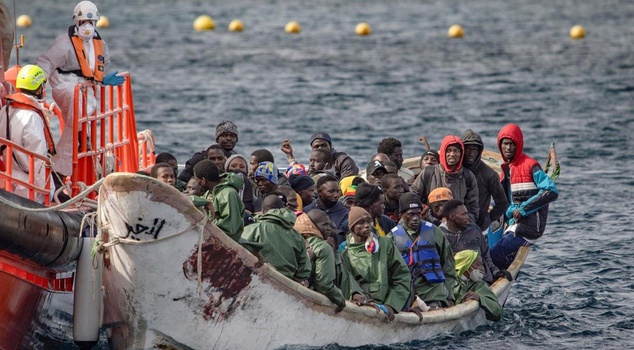
Spain's Canary Islands have faced a heavy influx of irregular migrants arriving from the coasts of West Africa. Over the weekend, 2,331 people reached the islands in 22 boats, while the 1,488 arrivals recorded on Saturday, November 14 alone were the highest daily figure since 2020. The Spanish government declared a migration emergency in the region due to increasing migration pressure and allocated additional resources.
Migration activity has regained pace in the Canary Islands, one of Spain's tourism centers. Thousands of people trying to cross the Atlantic Ocean in small wooden boats from the West African coast reached the islands over the weekend.
According to data reported by Euronews, a total of 2,331 people arrived in the Canary Islands in 22 boats on November 14-15. The 1,488 arrivals recorded on Saturday surpassed the previous daily record of 1,461 people on November 7, 2020.
THOUSANDS REACHED EL HIERRO ISLAND IN 2 DAYS
One of the points where the migrant influx was most intense was El Hierro Island, with a population of approximately 12,000.
On Saturday, November 14, 1,235 people reached El Hierro in 12 large wooden boats. Another 203 people in a boat were identified in Gran Canaria, and 50 more people in Tenerife. On Friday, 843 people had also arrived on the islands in eight boats.
It was reported that among those who reached the islands on Saturday were 108 women and 167 children.
SPANISH GOVERNMENT DECLARED MIGRATION EMERGENCY
Following the increasing migration activity, the Spanish government declared a migration emergency for the Canary Islands on November 10. The Madrid administration allocated an additional 15.18 million euros to increase the capacity of reception centers and to transfer migrants between the islands or to mainland Spain.
An additional support of 1 million euros was also decided to strengthen the Red Cross's health and first response services. In addition, it was decided to assign the rescue ship Guardamar Calíope to increase maritime rescue capacity in the region.
“THE CANARY ISLANDS CANNOT CARRY THIS BURDEN ALONE”
Fernando Clavijo, President of the Regional Government of the Canary Islands, stated that migration activity creates serious pressure on local resources and requested urgent support from the Spanish government and Europe.
Clavijo emphasized that the islands cannot manage this process alone and said that the central government and Europe must assume more responsibility.
The El Hierro Island Council had also declared a social emergency after more than 8,000 people reached the island in the last five weeks.
MORE THAN 13,000 MIGRANTS REACHED THE CANARY ISLANDS IN 2026
According to data from the Spanish Ministry of the Interior up to October 31, 13,327 people reached the Canary Islands by sea in the first 10 months of 2026. In the same period last year, this figure was recorded as 14,099.
However, the intensity in November increased migration pressure in the region again. The Atlantic crossing between West Africa and the Canary Islands is considered one of the world's most dangerous migration routes due to its long distance and sea conditions. It is stated that some journeys last days, even weeks.
A NEW MIGRATION WAVE AFTER THE CEUTA CRISIS
Developments in the Canary Islands also brought back to the agenda the mass border crossings in July in Ceuta, Spain's territory in North Africa. Tens of thousands of people crossed from Morocco to Ceuta within two days, and it was reported that more than 140 people lost their lives in the incident.
While most of those who crossed left the region in the following days, it is estimated that thousands of people remained in Ceuta. The latest activity in the Canary Islands increased the pressure on Spain's migration management.