10.10.2026 15:30
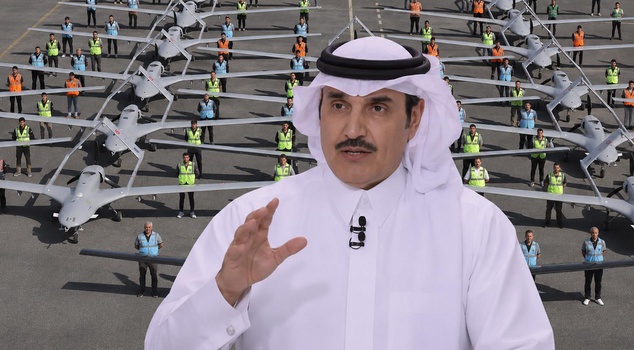
In the Mecca Defense Alliance Agreement between Türkiye, Saudi Arabia, and Pakistan, the period of actual activity in the field has begun. Within the framework of the alliance, whose institutional structure has been completed, Saudi analyst Dr. Ahmed al-Shahri reported that they need Türkiye's UAV experience and technology transfer.
The repercussions on the ground of the Mecca Defense Alliance Agreement signed between Turkey, Saudi Arabia, and Pakistan have begun to become clear. Saudi analyst Dr. Ahmed al-Shahri, stating that the alliance's institutional structure has been completed and actual steps have been taken on the ground, made the statement, "We need Turkey's unmanned aerial vehicle experience."
While ballistic missile and UAV attacks by Iran-backed Houthis against various regions, especially Riyadh, the capital of Saudi Arabia, continue, a critical defense cooperation step has come into play in the region. Following the Mecca Defense Alliance Agreement signed between Turkey, Saudi Arabia, and Pakistan in August and the meeting held in Riyadh on October 5, the implementation phases of the alliance took shape. Evaluating the process on a television program, Political Analyst and Strategist Dr. Ahmed al-Shahri noted that the structure formed by the three countries has left the institutional stage behind and been carried to an advanced dimension.
FIDAN: TURKEY WILL NOT ATTACK ANOTHER COUNTRY
In his assessment on the matter, Foreign Minister Hakan Fidan drew attention to the fact that the Mecca Agreement for Joint Defense is a defense pact and used the expressions, "When a country party to this agreement is attacked, you stand by it for its defense. This is not an attack agreement. Turkey will not send soldiers to another country's territory and carry out an attack there."
THE AGREEMENT WILL BE INTEGRATED INTO DOMESTIC LEGAL SYSTEMS
Referring to the legal infrastructure of the alliance, Dr. Ahmed al-Shahri emphasized that member countries act within the framework of their own domestic legislation. Stating that regulations regarding sending troops abroad are taken into account, al-Shahri expressed that in countries such as Turkey and Pakistan, parliamentary approval is required for these processes and that all these matters are taken into account.
"ACTUAL ACTIVITIES ON THE GROUND HAVE STARTED"
Stating that rapid progress was made in a period as short as two months, al-Shahri conveyed that the alliance's secretary-general has been appointed and its center has been established. Saying that at the last meeting in Riyadh, a phase of carrying out actual activities on the ground in line with Saudi Arabia's security needs was reached, al-Shahri reported that the process does not consist only of military units but also covers intelligence, ammunition sharing, logistics, cybersecurity, technology transfer, and media support.
"TURKEY'S UAV EXPERIENCE PLAYS A CRITICAL ROLE"
Emphasizing the decisive power of unmanned aerial vehicles in modern wars, Dr. al-Shahri drew attention to Turkey's success in the defense industry and noted the following: "Unmanned aerial vehicles have today become an important element in all wars. We can even say that they are often the element that changes the course of war. Even in the war between Russia and Ukraine, unmanned aerial vehicles make a decisive difference. Therefore, we need Turkey to transfer its experience to Saudi Arabia."
DIRECT COMMUNICATION BETWEEN CHIEFS OF GENERAL STAFF
Stating that bureaucratic obstacles will be overcome thanks to this alliance, al-Shahri expressed that defense ministries will share information more freely and that direct communication channels will be established between the chiefs of general staff of the three countries. Al-Shahri reiterated that the structure is not an attack mechanism but a joint defense mechanism against threats.