27.11.2026 18:30
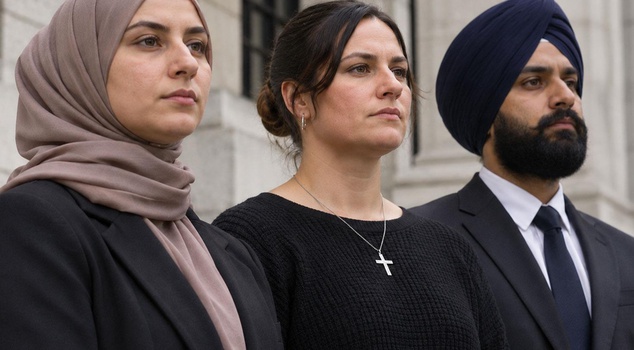
The Supreme Court of Canada largely upheld a regulation in the province of Quebec banning certain public employees from wearing religious symbols such as headscarves, crosses, and turbans. Evaluating the objections of plaintiffs, including Muslim, Sikh, and Catholic teachers, the court invalidated only the face-covering ban aimed at elected representatives in the Quebec Assembly.
In the legal process concerning "Bill 21," which came into effect in 2019 in Canada's province of Quebec and restricts the wearing of religious symbols in public duties, the Supreme Court announced its ruling.
APPROVAL OF THE HEADSCARF BAN
According to a report by Canadian broadcaster CTV News, the Supreme Court found most of the regulation banning certain public employees from wearing religious symbols while performing their duties to be lawful.
The Court ruled that only the provision banning elected representatives in the Quebec legislature from covering their faces is unconstitutional.
MUSLIM, SIKH AND CATHOLIC TEACHERS HAD TAKEN LEGAL ACTION
Numerous individuals and groups, including Muslim, Sikh, and Catholic teachers, had filed a lawsuit against the regulation on the grounds that the ban on religious symbols violated their fundamental rights and freedoms.
When the Quebec government enacted the law in 2019, it invoked the "notwithstanding clause" in the Canadian Constitution, which allows governments to temporarily make regulations exempting them from certain constitutional rights guarantees, including freedom of religion.
BAN ON ELECTED REPRESENTATIVES OVERTURNED
The Supreme Court accepted as valid the Quebec government's invocation of the constitutional clause in question. However, it ruled that the face-covering ban imposed on elected representatives violates democratic rights guaranteed by the Canadian Charter of Rights and Freedoms.
The Court stated that this provision, which restricts the right to run as a candidate in elections, cannot be protected under the "notwithstanding clause."
RULING ON COURTS' POWER OF REVIEW
The Supreme Court also ruled that even if the constitutional clause in question has been invoked, courts may issue an opinion on whether a law is consistent with the Charter of Rights and Freedoms. However, it did not make such a statement in this case.
The ruling in the case, whose hearings were held in March and which was closely followed by the public in Canada, is expected to affect debates on religious freedom and secularism across the country as well as in Quebec.