19.11.2026 06:50
Technical failures that have continued for days in the US have affected aviation, banking, technology, and public institutions, turning into a major crisis. With thousands of flights canceled, passengers were stranded at airports, while disruptions were also experienced in banking and digital services. As successive outages fueled debate in Washington, Congress took action to investigate the causes of the events. US officials announced that no evidence of a coordinated cyberattack had been found.
Digital system failures that have continued for days in the US have turned into a major crisis, affecting the country's most critical infrastructure. As thousands of flights were canceled due to a failure in air traffic control systems, millions of passengers had to change their travel plans. Outages in Microsoft's services were followed by problems in banking transactions, system failures at airline companies, and technical disruptions at intelligence agencies. As the successive incidents magnified security debates in Washington, the US Congress demanded an explanation from officials. The country's aging digital infrastructure and the possibility of a cyberattack moved to the center of the debates.
THE CRISIS IN THE US BEGAN ON NOVEMBER 12
The first major link in the technology crisis in the US in recent days was the outage that occurred in Microsoft 365 services on November 12. Problems in Microsoft's corporate communication services, especially Outlook and Exchange Online, disrupted the daily operations of many companies. As users who could not send or receive emails encountered serious problems in their business processes, other Microsoft services were also affected by the outage. The problem, which lasted about 24 hours, once again revealed how dependent organizations around the world are on shared digital infrastructures.
ON NOVEMBER 13, AIRCRAFT WERE GROUNDED IN THE US
After the failures in the technology sector, one of the largest disruptions in US aviation history occurred on November 13. Due to communication and radar problems that arose in the Federal Aviation Administration's (FAA) air traffic control systems, it was decided to halt flights across the country. For about 4 hours and 45 minutes, new flights were not allowed to take off, while approximately 3,500 aircraft in the air landed safely. According to FAA data, approximately 12,462 flights were canceled the same day. While officials stated that not all cancellations were directly caused by the system failure, major congestion occurred at airports across the country.
TRAVEL PLANS OF MILLIONS OF PASSENGERS WERE THROWN INTO DISARRAY
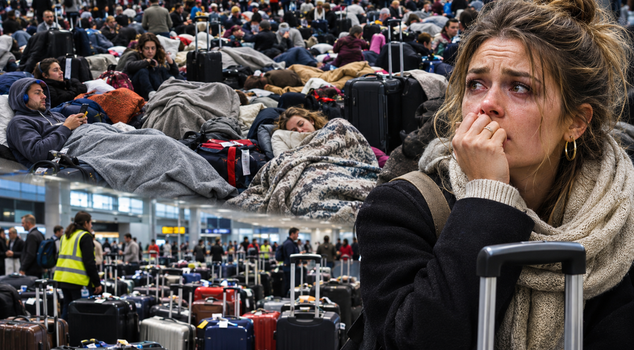
With flights halted, long lines formed at the busiest airports in the US, especially New York, Los Angeles, Chicago, Dallas, and Washington. As passengers waiting in terminal buildings tried to get information about when their flights would take place, many had to spend the night at airports due to cancellations. While some passengers slept on terminal floors with blankets, images of crowds waiting with their suitcases beside them revealed the scale of the crisis. It was reported that more than 1.5 million passengers were affected by travel disruptions in the initial stage.
STRIKING DROP IN AIR TRAFFIC
Flight tracking data laid bare the scale of the aviation crisis. According to information shared by Flightradar24, the number of aircraft in the air heading to the US, which under normal conditions would be expected to be over 3,600 at the same hours, dropped to as low as 336 during the period when flights were halted. The inability of aircraft to take off affected not only travel within the US but also flights connected to Europe, Canada, and Mexico. While departures of aircraft heading to the US were postponed in some countries, airlines had to provide flexibility to their passengers regarding reservation changes.
CAUSE OF THE SYSTEM FAILURE EMERGED
In technical investigations conducted by the FAA, it was determined that instability in the old communications infrastructure connecting air traffic control centers caused the crisis. According to officials, approximately one thousand connection attempts reaching some parts of the system every 4-5 seconds created an overload on the network. A radar facility in Amarillo, Texas, and a communications center in El Dorado, Arkansas, were cited among the likely sources of the problem. While it was assessed that problems experienced during the installation of new router devices in El Dorado affected the system, traffic was rebalanced by disabling some connections in the network.
EFFECTS OF THE CRISIS CONTINUED FOR DAYS
The lifting of the flight ban did not immediately end congestion at airports. The failure of thousands of aircraft to take off at scheduled times also affected flight crews' work schedules and the aircraft's subsequent flights. While airlines tried to rebook passengers from canceled flights onto new flights, disruptions continued in baggage handling and connecting journeys. US Transportation Secretary Sean Duffy warned that similar problems could occur again if aging systems are not renewed.
NEW FAILURE BEFORE THE CHAOS AT AIRPORTS ENDED
While flights across the US tried to return to normal, on November 16 a separate system problem occurred this time affecting United Airlines' operations. Disruptions in pilots' access to flight planning applications and aircraft final weight information caused some of the company's flights to be delayed. On the same day, technical problems also emerged in the systems of JPMorgan Chase, one of the largest banks in the US. Bank customers encountered delays in payment and transaction processes. Thus, the occurrence of disruptions in financial systems after problems in the aviation sector increased debates about the resilience of digital infrastructure across the country.
APPLE AND OTHER TECHNOLOGY COMPANIES WERE ALSO AFFECTED
The outages in the US were not limited to aviation and banking. While the systems of Workday, which provides human resources and payroll services, became unavailable for some customers on November 13-14, connectivity and authentication problems were reported in Amazon Web Services' infrastructure in the US on November 15. Access problems were also experienced on November 17 in Apple's App Store, Apple Music, AppleCare, and some iCloud services. Failures emerging at short intervals at different companies brought to the agenda how fragile critical technological services can be.
US INTELLIGENCE SYSTEM WAS ALSO AFFECTED
One of the most notable developments of the technology crisis was the outage experienced in the internal communications network of the US National Security Agency (NSA). The technical disruption that emerged in the systems of the institution, which is of critical importance for intelligence activities, increased security concerns. While officials assessed that the problem was linked to maintenance and technical changes within the institution, they announced that there was no evidence of an external cyberattack. Nevertheless, the fact that one of the country's important public institutions also experienced a failure in the same period led to tough questions being directed in Congress.
CRITICAL SESSION IN WASHINGTON
Following the successive outages, a critical session was held on November 18 at the US House Committee on Homeland Security. Homeland Security Secretary Markwayne Mullin, Director of National Intelligence Jay Clayton, and FBI Deputy Director Christopher Raia answered lawmakers' questions.
During the session, it was questioned whether the failures affecting aviation, banking, technology, and intelligence systems were linked to one another. While officials stated that they were investigating the incidents, demands were voiced for a more comprehensive review of the security of the United States' critical infrastructure.
"I HAVE NEVER SEEN SO MUCH DISRUPTION"
Secretary of Homeland Security Markwayne Mullin announced that he was 98 percent certain the incidents were not caused by malicious cyber activities carried out by foreign countries. However, he also acknowledged that he had never previously witnessed a technology outage of this scale in such a short time. FBI Deputy Director Christopher Raia, meanwhile, stated that no evidence pointing to a cyberattack had been found in the incidents under review and reported that work with private-sector organizations was continuing.
TOUGH QUESTIONS FOR INTELLIGENCE OFFICIAL
At the session in Congress, Democratic House Member Dan Goldman posed a series of questions to Director of National Intelligence Jay Clayton regarding the cause of the outage in NSA systems. Goldman asked for a clear statement on whether the problem stemmed from software updates within the agency or from external interference. Clayton said no evidence pointing to external threat actors had been found in current investigations. However, Goldman, finding the explanations insufficiently clear, argued that the official did not directly answer his questions.
SUSPICION OF CYBERATTACK INVESTIGATED
The fact that aviation, banking, and intelligence institutions were affected within short intervals raised the question of whether the incidents were part of a coordinated cyberattack. However, U.S. security officials stated that current findings did not point in that direction. Director of National Intelligence Clayton said the outages were being assessed as separate incidents linked to maintenance work and technical changes. The FBI also announced that there was no evidence showing the failures resulted from malicious cyber activities.
THE ARTIFICIAL INTELLIGENCE DEBATE HAS ALSO BEGUN
Following the system failures, the effects of artificial intelligence technologies in the field of cybersecurity also came to the fore. Experts noted that the ability of advanced AI tools to detect vulnerabilities in software more quickly has led technology companies to update more frequently. However, it was noted that new security patches applied to software could in some cases cause unexpected technical problems. This requires companies to strike a delicate balance between the obligation to close security vulnerabilities and the need to ensure uninterrupted operation of systems.
AGING INFRASTRUCTURE IS RAISING ALARMS
One of the most important discussion topics of the system crisis in the U.S. was the continued operation of critical public infrastructure with old technologies. The need to modernize communications and radar systems that have been used for many years, especially in the aviation sector, came to the agenda again. The FAA announced that after the latest failure it had disabled certain functions on more than 60 network routers as a precaution and halted the installation of devices associated with the problem. Officials stated that a more comprehensive infrastructure renewal was important for preventing possible future outages.
THE POLITICAL DIMENSION OF THE CRISIS ALSO GREW
The disruptions in the U.S. went beyond technical problems and also caused political debates in Washington. The investments needed to renew aviation systems, the level of preparedness of federal agencies for crises, and the dependence on private technology companies came up in Congress. Secretary of Homeland Security Mullin was also criticized for traveling by government plane to an American football game immediately after the flight crisis. Mullin, however, argued that the trip in question was a sign of his confidence in U.S. airspace.
EYES TURNED TO WASHINGTON AGAIN
The failures, which began with an outage in Microsoft services on November 12 and then affected airports, banks, technology companies, and intelligence agencies, amplified debates over the U.S.'s digital infrastructure. Although officials emphasize that the incidents were not the result of an interconnected cyberattack, pressure is increasing over the need to renew aging systems and strengthen critical services against outages. As investigations in Washington continue, the disruptions experienced in recent days have once again shown how vulnerable the country's technology-dependent systems are to failures that could have major consequences.
.