23.11.2026 23:14
According to a report prepared by Oxfam and CEOBS, environmental pollution is observed in more than 99 percent of Gaza due to Israeli attacks. The threat of heavy metals, asbestos, dioxins, and biological waste is expected to last for decades. The report's author said there is a high probability of an increase in respiratory diseases, cancer, and birth defects. Israel's Embassy in the UK criticized the report.
According to a new report by the aid agency Oxfam, due to Israeli attacks, Gaza has turned into a “toxic wasteland,” with environmental pollution found in more than 99 percent of it.
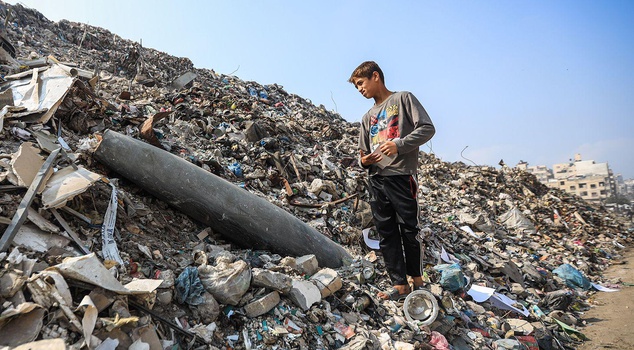
The report states that heavy metals, explosive residues, asbestos from destroyed buildings, dioxins and biological waste pose a threat to Palestinians. It states that this threat is both current and expected to continue for decades to come.
Oxfam International executive director Amitabh Behar said this impact would “fundamentally undermine the environmental conditions necessary for human security and survival” in Gaza.
The Israeli Embassy in the UK said the report “falls below professional standards.” Behar also accused Israel of committing “environmental war crimes as part of the ongoing genocide in Gaza.”
Israel rejects the genocide accusations leveled against it in the ongoing case at the International Court of Justice as baseless and distorted. Israel argues that its military operation in Gaza is an act of self-defense in response to Hamas’s deadly attack on Israel on October 7, 2023, and that it has taken steps to reduce harm to civilians.
EXPLOSIVES EQUIVALENT TO 13 HIROSHIMA BOMBS
Oxfam and the UK-based Conflict and Environment Observatory (CEOBS) prepared the most comprehensive report to date on the severe environmental impacts caused by the three-year intense war in Gaza. For this, they used satellite imagery, remote sensing, spatial analysis and other open-source data.
The report details the environmental impacts of the munitions used in Israel’s intense bombardment, as well as the debris left from destroyed buildings and infrastructure. In February 2026, a United Nations (UN) special rapporteur stated that more than 200,000 tonnes of explosives had been dropped on Gaza in about two years, equivalent to “the total energy of approximately 13 Hiroshima-type nuclear bombs.”
Last year, UN Environment Programme (UNEP) estimates indicated that Israel’s military operations destroying homes and infrastructure had created more than 61 million tonnes of debris across the territory, and that about 15 percent of it carried a high risk of contamination from hazardous substances.
CANCER AND BIRTH DEFECT WARNING
Oxfam report author Lama Abdul Samad told the BBC, “Because most of these pollutants are persistent in the environment, there will be long-term chronic health effects.” The author said Gazans are highly likely to experience increases now and in the future in respiratory diseases, cancers, organ damage, and birth defects and stillbirths.
Because all six wastewater treatment plants in Gaza are out of service, untreated sewage is currently mixing with groundwater and the Mediterranean. The negative health effects have been worsened further recently by severe winter storms, as rainwater mixed with wastewater and flowed through streets and tent areas where displaced people live.
Because laboratories in Gaza have been destroyed and Israel has imposed restrictions on the entry of specialist testing equipment and scientists, it is often not possible to test the types and levels of pollution. The BBC contacted the Israeli military for comment on the matter. UNEP said security concerns had also prevented its staff from travelling to Gaza previously.
The Oxfam report calls for a full and independent environmental assessment in Gaza before cleanup work to identify contamination risks. It states that special emphasis should be placed on protecting workers involved in the work.
ISRAELI EMBASSY CRITICIZES REPORT
The Israeli embassy sharply criticized the report. It argued that it was based on satellite imagery and unverified assumptions and that its methodology lacked the academic rigor needed to withstand serious scrutiny. It said the report drew conclusions about Gaza’s soil and groundwater without taking into account hundreds of kilometres of tunnels dug by Hamas, and was therefore fundamentally flawed.
FIVEFOLD INCREASE IN SKIN DISEASES
Doctors in Gaza report an increase in acute respiratory infections due to dust and pollution from destroyed buildings and displaced people burning plastic, cloth and cardboard for heating and cooking. Digestive diseases are linked to unsafe water and poor hygiene conditions.
Palestinian dermatologist Dr. Alaa Abu Hajar told the BBC that they had seen a fivefold increase in chronic skin diseases since the war began. They added that they attributed this to environmental pollution and to overcrowded, unhygienic living conditions in tents and refugee camps: “Rodents, garbage and sewage waste are spread everywhere in the streets. Unfortunately, children are the most affected.”
Farmers and those engaged in fishing say soil and sea pollution make it impossible for them to produce safe food. Fisherman Abu el-Abed Sultan says, “Sewage and wastewater are being discharged into the sea without treatment, and this is a major disaster,” and adds: “In addition, rubble left from destroyed homes is also being dumped into the sea. When we lower our nets, we catch rubble and garbage. This harms the marine environment; both the fish and the fishermen are affected.”
According to data from the Gaza Ministry of Health, at least 74,746 Palestinians have been killed since the war began. These figures are considered reliable by the UN. The UN says humanitarian conditions remain dire.
Israel has conditioned large-scale reconstruction of Gaza on the complete disarmament of Hamas and other Palestinian armed groups. In July, Hamas accepted a plan presented by the US-led Peace Board to lay down its arms in exchange for the withdrawal of Israeli forces. However, the Israeli government said this offer was insufficient.
We used artificial intelligence in the translation of this article, whose original is in English. A BBC journalist checked the translation before publication.