23.11.2026 17:10
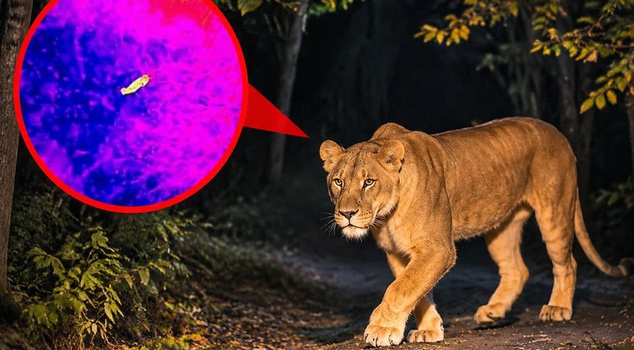
As the female lion that has been sought for hours in Sarıyer caused panic, alarming warnings came from experts. Experts noted that lions do not become domesticated even if raised as cubs and that they instinctively hunt more at night, and warned citizens in the area to be cautious.
A female lion that appeared in Sarıyer, Istanbul, and has not been found for hours caused panic in the area. During search efforts launched after a citizen's report, while the animal reflected in security camera footage was assessed to be a lion, gendarmerie teams warned local residents. The Istanbul Governor's Office announced that the area where the lion is located has been identified and that efforts continue to capture the animal alive. The incident also brought to the agenda questions of why wild animals are kept on private properties and whether they can be domesticated.
SEARCH LAUNCHED IN THE AREA
After a person in Sarıyer reported seeing a lion, security forces and relevant teams sprang into action. While the animal assessed to be a female lion was identified in security camera footage, citizens living in the area were warned by gendarmerie teams. In a statement by the Istanbul Governor's Office, the following statements were included: "The area where the lion is located has been identified, and the necessary sensitivity is being shown to capture it alive."
"I THOUGHT IT WAS A DOG AT FIRST"
Eyewitness Arda Koç, who said he saw the lion, described what happened in these words: "A large dark shape ran toward the forest. At first I thought it was a dog. When all the animals started screaming, I became suspicious. The lion had entered this wooded area and was lying in that area. Immediately afterward, they launched capture efforts."
WHY DO PEOPLE KEEP LIONS AT HOME?
The incident in Sarıyer brought the issue of keeping wild animals on private properties back onto the agenda. It is assessed that predatory animals such as lions are seen by some people as symbols of power and status. It is thought that owning wild animals, like luxury vehicles and ostentatious properties, also sends a message of privilege to those around. However, this approach can cause animals to be torn from their natural lives and turned into an element of show.
THE DESIRE TO ATTRACT ATTENTION ON SOCIAL MEDIA
The fact that photos and videos taken with exotic animals attract interest on social media is also cited among the reasons for this tendency. In particular, the desire to appear different and attract attention can lead some people to keep dangerous animals outside their natural habitats.
THE IDEA "I CAN DOMESTICATE IT" IS A HUGE MISCONCEPTION
Taking in wild animals while they are cubs does not mean they will become domesticated over time. Experts point out that the hunting and defense instincts innate to lions cannot be completely eliminated. It is stated that a lion raised with humans as a cub can also pose a serious danger when it reaches adulthood. It is also stated that lions in their natural lives tend to hunt especially at night, and that their mobility and hunting instincts become more pronounced in the dark. Therefore, it is emphasized that citizens living in the area should be more careful against the risk of encountering the animal at night. This situation puts not only the people who keep the animal at risk, but also the citizens living in the area.
NOT ONLY PEOPLE, BUT ANIMALS TOO BECOME VICTIMS
According to experts, in such incidents not only people but also animals are harmed. Wild animals that are torn from their natural lives, kept in narrow spaces, and expected to adapt to human life can experience stress, aggression, and health problems. The incident in Sarıyer also brought back onto the agenda that the place where predatory species such as lions belong is not homes or private properties, but natural habitats.