29.04.2026 12:54
Approximately 300 paper pieces discovered inside a wall during the restoration of a mosque in Kütahya are being assembled by expert teams in Ankara. Initial examinations suggest the artifact may be an Ottoman-era city plan of Mecca, and once completed, it is planned to be displayed in a museum.
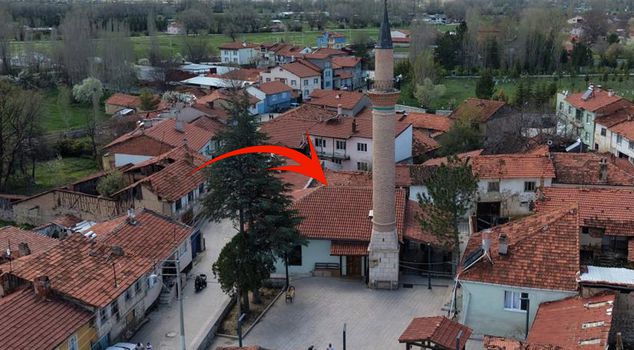
A paper artifact, discovered 2.5 years ago during restoration works in the mosque located in Kütahya's Parmakören Neighborhood and found to be in approximately 300 pieces, is being meticulously reassembled by expert conservation teams in Ankara. Initial examinations revealed that the artifact, crafted using the Ottoman miniature art technique, might be an 18th or 19th century city plan of Mecca.
During the restoration process, a cavity emerged when a stone detected within the mosque wall and determined not to belong to the structure was removed. Numerous paper fragments found in this cavity were carefully collected one by one by expert teams and sent to Ankara. It was identified that the papers were extremely fragile, scattered, and severely deformed, and it was reported that the artifacts were taken into a special conservation process to be examined without damage.
"HAND-SHAPED SCATTERED FRAGMENTS WERE COLLECTED ONE BY ONE"
Mehmet Dinler, the headman of Parmakören Neighborhood, stated that the restoration began in 2024. Dinler said that during inspections by the Regional Directorate of Foundations teams, it was determined that the stone inside the wall did not belong to the structure. Expressing that a cavity emerged inside the wall after the stone was removed, Dinler said, "When the craftsmen opened this cavity, many paper pieces came out. Together with our professors, we carefully spread them on tables. They were decided to be sent to Ankara to prevent damage due to their fragility."
Mehmet Dinler also reported that among the pieces, there were river-like drawings, plants, and various figures, and initially, what the artifact was could not be fully determined.
METICULOUS CONSERVATION PROCESS IN ANKARA
In the studies carried out at the Paper Conservation Laboratory in Ankara, it was determined that the artifacts were severely worn and fragmented. After ensuring the chemical and physical stabilization of the artifacts, experts proceeded with the process of assembling the pieces one by one. It is stated that the conservation process is quite lengthy and requires attention, with the position of each piece determined through microscopic examinations and digital matching methods.
LIKELIHOOD OF MECCA CITY PLAN STRENGTHENS
In initial assessments, the possibility that the pieces together constitute a study showing the settlement plan of Mecca has emerged. The artifact is considered to possibly be a miniature city plan prepared for the holy lands during the Ottoman period. Experts state that once the studies are completed, the artifact could provide important information regarding both art history and the history of Islamic geography and city planning. Following the completion of the assembly process, it is planned to turn the artifact into a panel and display it at the Kütahya Museum Directorate. Thus, the artifact will be both preserved and opened to public visits, enriching cultural heritage.
HISTORY OF THE MOSQUE STILL UNCLEAR
The exact construction date of the Parmakören Neighborhood Mosque has not yet been clarified. It is stated that regional records indicate the building underwent a repair in the 1840s, but the original construction date cannot be determined. Although some research suggests the possibility that the structure dates back to the Seljuk period, there is no definitive academic conclusion on this matter. Experts note that both architectural examinations and the found artifacts may shed light on the mosque's history.
Following the completion of the ongoing conservation and assembly studies in Ankara, clearer information about the content and historical identity of the artifact is expected. Experts suggest that this discovery could be a rare and significant finding within Anatolian religious architecture.