29.11.2026 10:41
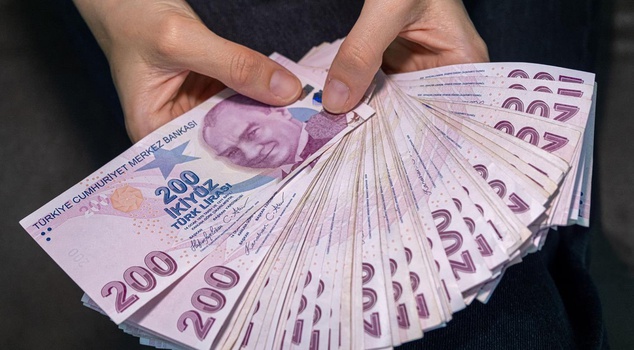
This week, the Grand National Assembly of Turkey General Assembly will discuss a bill that envisages the cancellation of the General Health Insurance (GSS) premium debts of 2 million 199 thousand 869 people, totaling 5 billion 627 million liras. The 15-article bill also includes employment incentives, vocational training supports, and energy and tax regulations. The controversial article, which the opposition has reacted to and which grants legal, administrative, and financial immunity under certain conditions to persons involved in the liquidation of investment funds, will also be on Parliament's agenda.
The General Assembly of the Grand National Assembly of Turkey (TBMM) will work overtime in the new week on regulations concerning millions of citizens. A bill envisaging the cancellation of a total of 5.6 billion liras in General Health Insurance (GSS) premium debts of approximately 2.2 million people will be discussed. The bill, consisting of 15 articles in total and envisaging amendments to 10 separate laws, contains many important changes ranging from employment incentives to vocational education, and from energy investments to tax regulations. The article that the opposition has criticized, which grants legal, administrative and financial immunity under certain conditions to persons involved in the liquidation of investment funds, will also be on the General Assembly's agenda.
INTENSE WORK BEGINS IN PARLIAMENT
The Plan and Budget Committee stage of the 2027 budget negotiations at the TBMM was completed on Friday. While the budget bill is expected to come to the General Assembly on December 7, lawmakers will continue their work to enact other regulations on the agenda until that date.
Discussions will continue on the Bill on Amendments to the Law on the Use of Renewable Energy Resources for Electricity Generation Purposes and to Certain Laws, which began to be debated in the General Assembly last week but whose articles could not be reached.
The bill, which also includes regulations prepared in line with the annulment decisions of the Constitutional Court, envisages amendments to 10 separate laws.
GSS DEBTS OF 2 MILLION 199 THOUSAND PEOPLE TO BE CANCELLED
One of the most striking articles of the bill covers the General Health Insurance premium debts of millions of citizens from past years.
According to the regulation, collection of GSS premium debts belonging to the period before January 1, 2017 will be waived. All ancillary receivables related to these debts, such as late payment penalties and late payment interest, will also be cancelled.
If the bill becomes law, the total premium debt of 2 million 199 thousand 869 people, amounting to 5 billion 627 million 666 thousand liras, will be eliminated.
While the regulation covers debts belonging to the period before 2017, it does not contain a general cancellation provision regarding premium debts after this date.
EMPLOYMENT INCENTIVES TO BE EXTENDED UNTIL 2028
The bill also includes regulations aimed at reducing unemployment and increasing employment.
With the amendment envisaged to the Unemployment Insurance Law, support provided to employers who create additional employment will continue.
The duration of incentives supporting the employment of especially women, young people and unemployed persons holding a vocational or technical training certificate will be extended until December 31, 2028.
The President will be granted the authority to extend the duration of the said practice until December 31, 2029.
NEW ERA IN STATE SUPPORT PROVIDED TO APPRENTICES AND INTERNS
Within the scope of the Vocational Education Law, a change will also be made to the state contribution provided for the wages paid to candidate apprentices, apprentices, students receiving vocational training in enterprises, doing internships and continuing complementary education.
With the regulation, the duration of the extension authority granted to the President will be increased to 15 academic years, with each extension being one academic year.
The President will also have the authority to determine the procedures and principles regarding the implementation of the state support.
The said provision will enter into force on the day the law is published, to be effective from September 14, 2026.
NEW REGULATION IN GENDARMERIE, COAST GUARD AND POLICE SCHOOLS
The bill also includes changes regarding the personnel recruitment processes of security institutions.
The qualifications that active-duty officer and non-commissioned officer candidates to be employed in the General Command of the Gendarmerie and the Coast Guard Command must possess will be re-regulated.
The basic principles and framework regarding the application conditions of candidates to be admitted to faculties and vocational schools and the procedures and principles of the examinations to be applied will be determined.
With the amendment to be made to the Police Higher Education Law, the conditions to be sought in students to be admitted to police vocational schools and restrictions regarding the right to education and training will be regulated.
COMPETITION ERA IN RENEWABLE ENERGY INVESTMENTS
Changes regarding the energy sector are also among the important headings of the bill.
The allocation of renewable energy resource areas and the connection capacities related to these areas will be carried out through a competition method.
The methods to be applied in the competitions will be determined by taking into account the technical and administrative characteristics of the relevant energy areas and the connection capacity.
Which of the sealed bid, open descending bid or open auction methods will be used will be explained in the competition specification.
The scope of the competition, its technical and administrative conditions and other details will also be included in the specification.
DUTY LOCATIONS OF FLOATING LNG TERMINALS MAY CHANGE
The bill also contains an important regulation in terms of natural gas supply security.
Accordingly, floating LNG terminals may be allowed to leave their current locations and serve in other regions for a specified period and scope.
This permission will be granted by the Energy Market Regulatory Board after obtaining the opinion of the Ministry of Energy and Natural Resources.
Thus, a legal framework will be created for the use of floating LNG terminals in different regions where needed.
SOME COMPANIES WILL NOT BENEFIT FROM REDUCED CORPORATE TAX
The bill also envisages changes regarding tax practices.
Precious metal and petroleum refineries engaged in production activities, as well as tobacco products and alcoholic beverage producers, will be excluded from the application of the reduced corporate tax rate.
The provision envisaging that these companies cannot benefit from the said tax advantage will apply to earnings obtained in the 2027 and subsequent taxation periods.
For institutions subject to a special accounting period, the regulation will cover earnings obtained in the special accounting period beginning in 2027 and subsequent periods.
The provision will enter into force on the date the law is published.
CONTROVERSIAL FUND ARTICLE ON PARLIAMENT'S AGENDA
One of the most debated regulations of the bill is in Article 13.
The amendment envisaged to the Law on Certain Investment Funds Decided to Be Liquidated grants legal, administrative and financial immunity under certain conditions to persons and institutions involved in the liquidation process of funds.
According to the regulation, persons assigned to work and transactions within the scope of the law, as well as deposit banks, participation banks, development and investment banks carrying out liquidation, transfer and acquisition transactions and the persons they assign, will not be held legally, administratively and financially liable for the decisions they take and transactions they carry out related to their duties.
However, this protection will not cover acts that constitute a crime.
The regulation will be applied to cover decisions taken and transactions carried out from September 17, 2026.
The provision will enter into force on the date the law is published but will apply as of September 17, 2026.
OPPOSITION REACTION: 'WE SMELL A RAT HERE'
The legal protection to be introduced for persons tasked with the liquidation of investment funds drew the reaction of opposition parties.
Yeni Yol Group Deputy Chair Selçuk Özdağ questioned the rationale of the proposal, stating that the regulation limited the responsibilities of those tasked in the liquidation process.
Özdağ reacted to the regulation with the following words:
"There is no need for those who have no concern about fund looting to introduce legal immunity for those responsible for fund liquidation. If you are trying to provide legal protection to those who will do this job, we smell a rat here and ask you, 'To whom will you have which irregularities and which unlawful acts committed that you are taking these people under protection?'"
Article 13 of the proposal is among the topics expected to be discussed in the General Assembly debates.
ZIRAAT BANK'S ACCOUNTS TO BE DISCUSSED IN COMMITTEE
In addition to the work in the General Assembly of the Grand National Assembly of Turkey, parliamentary committees will also continue their work in the new week.
In the State Economic Enterprises (KİT) Committee, discussions of the balance sheets and final accounts of public institutions for 2023 and 2024 will continue.
This week, the committee will take up the accounts of Türkiye Cumhuriyeti Ziraat Bankası Inc. and its subsidiaries.
TOURISM PROMOTION AND DEVELOPMENT AGENCY REPORT TO BE TAKEN UP
In the Public Works, Reconstruction, Transport and Tourism Committee, the Court of Accounts report on the Turkish Tourism Promotion and Development Agency will be discussed.
Within the scope of Law No. 7183 on the Turkish Tourism Promotion and Development Agency, the Court of Accounts Memorandum stating that the 2025 report prepared by the Court of Accounts Presidency has been submitted will be on the committee's agenda.
Following the intensive work to be carried out in the Grand National Assembly of Turkey before the budget debates, the 2027 budget proposal will come to the General Assembly agenda on December 7.
.