09.08.2026 07:30
With the regulation accepted and enacted by the Turkish Grand National Assembly, a comprehensive change was made to the penal system for children. While paving the way for the non-application of age reduction and the imposition of life imprisonment for intentional homicide and certain aggravated assault offenses in the 15-18 age group, it was decided that juvenile convicts would begin serving their sentences in closed prisons. The sale of knives to those under 18 was also prohibited.
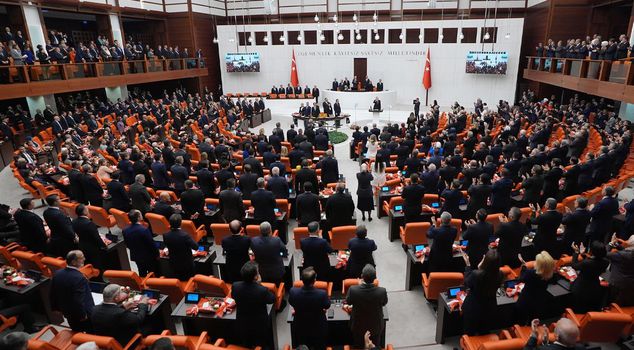
The bill amending the Child Protection Law and certain other laws, containing significant regulations concerning children, was accepted and enacted in the Turkish Grand National Assembly (TBMM) General Assembly.
With the new regulation, for individuals who have completed the age of 15 but not the age of 18 at the time of committing the crime, prison sentences of 19 to 27 years will be given for crimes requiring aggravated life imprisonment, and 15 to 18 years for crimes requiring life imprisonment.
A one-third reduction will be applied to other penalties, and in this case, the prison sentence for each act cannot exceed 15 years.
AGE REDUCTION MAY NOT BE APPLIED FOR CERTAIN CRIMES
With the provision added to the Turkish Penal Code, the way has been opened for not applying age reduction in certain serious crimes committed by children in the 15-18 age group.
The judge may consider the severity of fault based on intent in the specific case, the purpose and motive of the crime, the manner of its commission, and whether the perpetrator has previously received a prison sentence for an intentional crime.
In this context, age reduction may not be applied for intentional killing and aggravated injury crimes that cause the victim to enter an incurable disease or a vegetative state, lose the function of one of their senses or organs, lose the ability to speak or procreate, or cause permanent disfigurement of their face.
Injuries committed against a pregnant woman resulting in miscarriage and aggravated injuries resulting in death are also within the scope of the regulation.
Thus, if the conditions are met, the way has been opened for persons under the age of 18 to be sentenced to life imprisonment.
DISCRETIONARY AUTHORITY FOR JUDGES IN THE 12-15 AGE GROUP
The regulation also brings changes to the penal regime for children in the 12-15 age group.
Judges will be granted discretionary authority to apply the penal regime of the upper age group to children in this age group.
EXECUTION WILL DIRECTLY START IN CLOSED CHILDREN'S PRISONS
With the amendment to the Law on the Execution of Penalties and Security Measures, the practice of executing the prison sentences of juvenile convicts directly in children's education houses has been changed.
Juvenile convicts will begin serving their sentences in closed children's penal institutions. Children found to be of good conduct may later be separated to education houses.
Children in the 12-18 age group will be accommodated in separate sections of closed children's penal institutions, taking into account their gender, physical development, and the types of crimes they committed.
THE EXPRESSION "DRIVEN TO CRIME" IS CHANGING
The expression "driven to crime" used in the Child Protection Law will also be changed to "in the judicial process".
In the event a public lawsuit is filed against the child, notification will be made to the provincial or district directorates of the Ministry of Family and Social Services and the Ministry of National Education in order to take necessary administrative measures.
"Orientation measures" may also be applied to children in the judicial process who do not have criminal responsibility.
MANDATORY SOCIAL INVESTIGATION FOR THOSE UNDER 15
With the new regulation, conducting a social investigation will become mandatory for children who have not completed the age of 15.
If the public prosecutor, court, or juvenile judge does not have a social investigation conducted for a child who has completed the age of 15, they will need to state the justification in the indictment or decision.
In line with the amendment to the Criminal Procedure Code, an indictment prepared without conducting a social investigation for a child under the age of 15 will be returned to the Chief Public Prosecutor's Office by the court, indicating the deficiencies or errors after reviewing the investigation documents.
PRISON FOR THOSE WHO LET CHILDREN OBTAIN THEIR GUNS
The law also introduces a new penalty regarding the custody of firearms.
A person who causes a child to obtain their firearm by failing to store it with the required care and diligence will face a prison sentence of 1 to 3 years, provided the act does not constitute another crime requiring a heavier penalty.
SALE OF KNIVES TO THOSE UNDER 18 WILL BE PROHIBITED
With the regulation brought under the title "carrying knives outside their purpose", the sale and display of knives and cutting, piercing, or injuring tools not covered by the law will be prohibited outside designated licensed places and workplaces. This provision will enter into force on December 1, 2026.
The sale of these tools to persons under 18, as well as the purchase or carrying of these tools by children, will also be prohibited.
An administrative fine of 5,000 liras will be imposed on those who do not comply with the prohibition. If the knives or tools are serious in terms of number or nature, the fine will increase to 10,000 liras.
NEW "ORIENTATION MEASURES" FOR CHILDREN
Orientation measures that can be applied for children in the judicial process who do not have criminal responsibility have also been determined in detail.
The measures will consist of headings: "social and community services", "protection from digital risks", "books and libraries", "respect for the environment and environmental cleanliness", and "tobacco, nicotine, alcohol, gambling, drugs and stimulants, and behavioral addiction".
DUTIES CAN BE ASSIGNED FROM 20 HOURS TO 300 HOURS
Within the scope of the "social and community services measure", it may be decided that children undertake duties in sports clubs, youth centers, sports facilities, and relevant public institutions that will contribute to their psychosocial development.
The duration of duties implemented by the Ministry of Youth and Sports, the Ministry of Culture and Tourism, and local governments may vary from 20 hours to 300 hours.
MONITORING MEASURE FOR DIGITAL DEVICES
Within the scope of the "protection from digital risks measure", notification of the phone, phone line, computer, tablet, and similar devices used by the child may be requested.
Device movements after the measure decision may be opened to the supervision of the Information Technologies and Communication Authority and the Cyber Security Presidency for a period of not less than 3 months and not more than 2 years.
Additionally, it may be decided to block access to certain channels, applications, and digital platforms defined as risky.
BOOK READING AND ENVIRONMENTAL CLEANLINESS MEASURES
Within the scope of the "book and library measure", it may be decided that children take on duties in libraries and reading halls for 20 to 300 hours or read works determined by the authorities.
Within the scope of the "respect for the environment and environmental cleanliness measure", children may be made to clean the environment in designated areas such as parks, gardens, and beaches for 20 to 300 hours. Children may also participate in plant care, afforestation, and flowering activities.
ADDICTION FIGHTING PROGRAMS WILL BE IMPLEMENTED
Within the scope of the measure regarding tobacco, nicotine, alcohol, gambling, drugs and stimulants, and behavioral addictions, it may be decided that children complete treatment and rehabilitation programs.
These programs will be carried out by the Ministry of Health, the Ministry of Family and Social Services, and the Turkish Green Crescent Society (Yeşilay).
Assistance from law enforcement may be requested against resistance or difficulties that may arise during the implementation of diversion measures.
FIRST STATEMENT FROM MINISTER GÖKTAŞ
In her statement following the enactment of the regulation, Minister of Family and Social Services Mahinur Özdemir Göktaş said, “We are placing our efforts, which prioritize the best interests of our children, support their healthy development, and strengthen our protective and preventive mechanisms, on a more solid legal foundation.”
Göktaş also made the following assessment regarding the regulation:
“This step we have taken will not only protect the present of our children but will also lay the foundation for a safer, fairer, and stronger Turkey. I wish that the law will be beneficial for our country, our nation, and all our children who are the guarantee of our future.”