04.11.2026 23:01
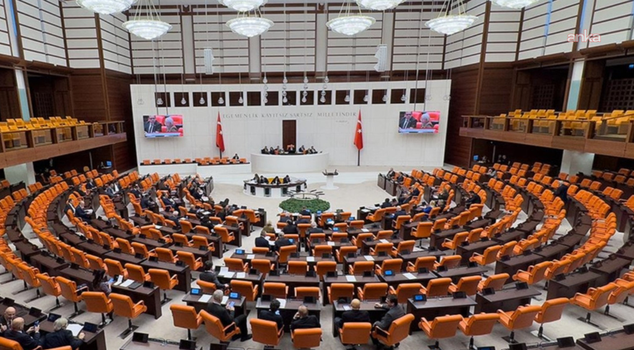
In the Grand National Assembly of Turkey, a bill regarding the ratification of the Mecca Agreement for Joint Defense among Türkiye, Pakistan, and Saudi Arabia was discussed. Under the agreement, an armed attack on one of the parties shall be deemed to have been made against all three countries, and the ordinary withdrawal mechanism cannot be used for the first 10 years. The İYİ Party and Yeni Yol criticized the uncertainty of military obligations, the DEM Party opposed it, and the MHP announced that it would support it.
At the General Assembly of the Grand National Assembly of Türkiye, the bill for approval of the Mecca Agreement for Joint Defense signed between Türkiye, Pakistan and Saudi Arabia was discussed. İYİ Party MPs Lütfü Türkkan and Metin Ergun criticized the agreement’s disabling of the ordinary withdrawal mechanism for 10 years and the uncertainty of the military obligations Türkiye would assume. Hasan Karal of the New Path Party demanded clarification of the provisions on sending troops and parliamentary oversight. Ceylan Akça Cupolo of the DEM Party said, “We refuse to go to war blindfolded.” Kamil Aydın of the MHP announced that they would support the agreement.
In the General Assembly of the Grand National Assembly of Türkiye, debates began on the entirety of the Bill on Approval of the Mecca Agreement for Joint Defense between the Republic of Türkiye, the Islamic Republic of Pakistan and the Kingdom of Saudi Arabia. During the debates, MPs spoke on behalf of political party groups.
WITHDRAWAL PATH CLOSED FOR 10 YEARS
İYİ Party Kocaeli MP Lütfü Türkkan said the agreement was not limited to defense cooperation among the three countries, but also concerned Türkiye’s national security, foreign policy choices, military obligations and the war risks it might face in the future.
Stating that they were not opposed to Türkiye developing friendly relations with Pakistan and Saudi Arabia, cooperation in the defense industry, joint military training and intelligence sharing, Türkkan said, “But friendship is one thing, and placing Türkiye’s future under uncertain military obligations is something entirely different. Our objection is not to cooperation, but to the current form of this agreement, which does not sufficiently safeguard Türkiye’s national interests and whose legal and military consequences are not clearly defined.”
Recalling that the agreement envisaged the first secretary-general as a Pakistani citizen, Türkkan stated that the institutional and political consequences this would create for Türkiye had not been sufficiently discussed.
Reacting to the indefinite validity provision in Article 16 of the agreement and the fact that the parties would be unable to use the ordinary withdrawal mechanism for the first 10 years, Türkkan made the following assessment:
“What a monstrous provision this is. The parties will not use the ordinary withdrawal mechanism for ten years, for ten years. Just think, how many wars could occur in the Middle East within ten years, how many governments could change, how many alliances could be formed and dissolved, where could this relationship between Pakistan and India go, how will Saudi Arabia’s regional policies change, how will Türkiye’s priorities change and be shaped? With all this uncertain, why is Türkiye entering into an obligation under which it cannot withdraw from this agreement by natural means for ten years?”
AN ATTACK ON ONE COUNTRY WILL BE DEEMED AN ATTACK ON ALL THREE
İYİ Party Muğla MP Metin Ergun also stated that there were question marks regarding the content of the agreement and said that his party did not categorically oppose every regulation coming from the government.
Ergun said, “As the İYİ Party, we do not categorically say ‘no’ to everything coming from the government, but we also do not say ‘yes’ to everything like some do; we examine, we look, and if it is right according to our accumulated knowledge, we say ‘Yes.’; if it is wrong, we say ‘No.’ In other words, the İYİ Party is not a sworn yes-sayer or a sworn no-sayer; we examine.”
Ergun used the expressions, “Esteemed gentlemen, the Turks have no need for an agreement to defend Mecca and Medina; let me say this first. In other words, we have no need for any agreement; we have done this throughout history and will continue to do so.”
Stating that they were not opposed to Türkiye’s international defense and security cooperation, but that such agreements should be implemented with sufficient legal guarantees, democratic oversight and strategic assessment, Ergun noted that the agreement envisaged broad cooperation ranging from joint defense to counterterrorism, from intelligence sharing to military deployment, and from the defense industry to logistical support.
Questioning why the agreement was not discussed in the National Defense Commission, Ergun spoke as follows:
“Why was an agreement that is military from beginning to end, whose every word and every provision relates to the military, not discussed in the National Defense Commission of the Grand National Assembly of Türkiye? I think this needs to be clarified.”
Stating that the agreement envisaged that an externally sourced armed attack against one party would be deemed an attack on all parties, Ergun drew attention to the fact that the scope of military assistance was left to the parties’ means and capabilities. Ergun said, “In this case, under what conditions will Türkiye be obliged to provide military support? This must be explained. What will be the limit of the support? In which situations will military, political or logistical contributions be expected? These questions must be answered. Because in security agreements, not only political will but also the concrete obligations this will create must be foreseeable.”
MHP ANNOUNCED IT WILL SUPPORT
MHP Erzurum MP Kamil Aydın announced that his party would support the bill. Stating that Türkiye’s place in world politics was the center and its direction was wherever humanity is, Aydın said they aimed for Türkiye to be a harbor of trust and stability in a world experiencing chaos and conflicts.
Aydın argued that the agreement signed in Mecca on August 7, 2026 would increase trust, cooperation and solidarity among the party countries and contribute to rendering external interventions ineffective in resolving regional problems. Expressing that the agreement aimed to strengthen strategic cooperation dialogue on the basis of a regional ownership approach, a culture of working together based on mutual trust and a security approach based on collective deterrence, Aydın stated that the parties committed to cooperating provided that they protect each other’s independence, territorial integrity and sovereignty.
Arguing that the collective defense provision would not automatically come into effect, Aydın said that agreement would be reached as a result of consultations on this issue. Aydın, stating that the agreement aimed to strengthen collective deterrence against threats and attacks determined by the parties’ joint assessment to affect their defense and security, including terrorism, said, “In line with this objective, this agreement, which is entirely defense-oriented, does not target any country; it also opens the door to the participation of all regional countries that seek to contribute to regional peace, stability and security, respect international law and adopt the principles of territorial integrity, sovereignty, equality and non-interference in internal affairs.”
Stating that other countries could also join the agreement in the coming years, Aydın used the expressions, “In other words, in the coming years, any country that wishes to do so can take part in this formation as long as it meets these conditions.”
THE QUESTION OF SENDING TROOPS AND PARLIAMENTARY OVERSIGHT
Speaking on behalf of the New Path Group, Istanbul MP Hasan Karal said that the bill had been accepted in the Foreign Affairs Commission without amendment, while the National Defense Commission, as the secondary commission, had notified in writing that it would not discuss the bill. Karal described the failure to consider an agreement containing such important military commitments in the National Defense Commission as a serious shortcoming.
Stating that they attach importance to Turkey's cooperation with Saudi Arabia and Pakistan in the field of defense, Karal drew attention to the fact that the agreement goes beyond the existing cooperation and introduces a long-term mutual defense commitment among the three countries.
Recalling the Deputy Minister of Foreign Affairs' statements in the commission that the agreement does not target any country, that military assistance will not be activated automatically, and that decisions will be taken through joint assessment by the countries, Karal said, "However, the text we will approve is not the Deputy Minister's statements but the agreement itself."
Pointing to Article 2 of the agreement, Karal stated that an armed attack against one country would be considered an attack against all three countries and that immediate assistance is envisaged, and said, "So who will decide the scope of this assistance, and how? What will happen if a disagreement arises among the countries? Under what conditions will Turkey assume military responsibility? These need to be clearly determined."
Arguing that the provisions in the agreement concerning threats and dangers should not go beyond the limits drawn by the United Nations Charter, Karal said that a country's escalation of its own conflict should not result in Turkey providing military support in advance.
Conveying that the Deputy Minister of Foreign Affairs stated that Article 92 of the Constitution would be complied with in sending the Turkish Armed Forces abroad, Karal asked for clarification on how this provision would be implemented in practice.
Pointing to Article 92 of the Constitution and Law No. 2941, Karal stated that they were not arguing that a separate parliamentary motion was absolutely required for every troop deployment, and said, "Therefore, we are not saying that a separate parliamentary motion is absolutely required for every troop deployment, but we want it to be clearly set out which missions will be considered directly within the scope of this agreement and in which situations parliamentary permission will be sought."
DEM PARTY: WE REFUSE TO GO TO WAR
DEM Party Diyarbakır MP Ceylan Akça Cupolo stated that they oppose the defense agreement between Turkey, Pakistan and Saudi Arabia and warned that the world is entering a new period of war.
Pointing to the conflicts in Ukraine, Libya, Iran, Gaza, Sudan and Yemen, Cupolo noted that many experts say the world is moving toward a third world war with its eyes closed or in a sleepwalking manner. Arguing that growing conflicts at regional and global scale may deepen further with new military pacts, Cupolo said:
"There is no guarantee that you will not use those fists after signing many pacts and being ready for war, just as they did in the Second World War—that is, after learning a kind of boxing, there is no guarantee that the war will not happen after this pact is made."
Explaining the reason for their opposition to the agreement with an emphasis on regional and global peace, Cupolo said, "Now once again, so that we are not considered not to have lost when the Germans lose, so that Saudi Arabia does not win when the poor lose, so that Pakistani warlords do not win when poor Yemenis die, so that Pakistanis do not win when poor Baloch children die, so that Saudis do not win when poor Sudanese die, so that the poor do not die when the oil-rich in the region get richer, so that hegemons do not win—with all our belief in regional and global peace, we reject this pact."
Recalling that today is November 4, Cupolo noted that operations against HDP politicians on November 4, 2016 were carried out in the night hours and criticized the postponement of the agreement's discussions to the night hours as well.
Arguing that the possible consequences of the agreement would mostly affect the poorest segments, Cupolo used the following statements:
"We say we are against these pacts so that there will not be wars in which the poorest—Turkey's poorest—are again driven to battlefields and die for nothing, and when they say at a commission meeting, 'Look, we also passed a motion for Libya and no one died,' journalists are arrested because the news of a death was reported, and some intelligence officers, even some officials, are not even mentioned."
Cupolo said, "We refuse to go to war blindly. I say that we will continue to use this podium to defend the people's right to peace, the poor's right to peace."
.