21.06.2026 08:00
A critical phase has been reached in US-Iran talks, which the world is watching closely. As US and Iranian delegations land in Switzerland ahead of peace negotiations, the situation in the Strait of Hormuz and ongoing conflicts in Lebanon cast a shadow over the mediation process. The parties are preparing to sit down at the table today to transform the ceasefire declared after four months of war into lasting peace.
Following approximately four months of war between the US and Iran, the parties are expected to begin peace talks in Switzerland under a temporary ceasefire agreement. Iranian state media announced that senior Iranian officials have arrived in Switzerland for the talks.
US Vice President JD Vance has also reportedly left Washington to participate in the negotiations. During the process mediated by Pakistan, a 60-day ceasefire is in effect between the two countries, and the terms of a permanent agreement will be discussed.
STRAIT OF HORMUZ DISPUTE CASTS SHADOW OVER TALKS
Prior to the negotiations, the announcement by Iran's Islamic Revolutionary Guard Corps that the Strait of Hormuz was closed sparked a new crisis. However, US officials denied this claim.
The US Central Command (CENTCOM) announced on Saturday that 55 commercial vessels transited the strait, carrying over 17 million barrels of oil to global markets. The command stated that necessary measures were being maintained to ensure the safe continuation of commercial ship traffic. The Strait of Hormuz, through which a significant portion of global oil trade passes, is critically important for global energy supply.
TRUMP'S STATEMENT ON HORMUZ
US President Donald Trump stated that no tolls would be collected for passage through the Strait of Hormuz during and after the ceasefire. However, Trump indicated that if peace talks fail, the US could impose transit fees in return for the security services it provides in the region. Trump's statement was closely monitored in energy markets and diplomatic circles.
IRAN ARGUES AGREEMENT NOT IMPLEMENTED
Mohammad Mokhber, an advisor to Iran's leader Ayatollah Mojtaba Khamenei, alleged that the US has not fulfilled its obligations under the interim agreement.
Mokhber argued that the ceasefire conditions in Lebanon in particular have been violated, saying the agreement remains only on paper and that as long as this situation continues, Middle Eastern energy flows cannot fully return to normal.
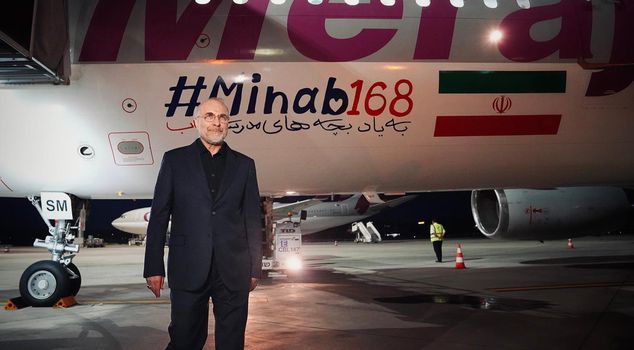
It was stated that the Iranian delegation is led by Parliament Speaker and chief negotiator Mohammad Bagher Ghalibaf, along with Foreign Minister Abbas Araghchi and senior figures from security, central bank, and energy sectors.
CONFLICTS CONTINUE ON LEBANON FRONT
The Lebanon ceasefire, which played a critical role in initiating US-Iran talks, remains fragile. Lebanon's Civil Defense announced that 20 people were killed in Israeli attacks on Saturday. The Israeli military reported that the attacks were in response to actions carried out by Hezbollah.
Israel stated that it is not a party to the agreement between Iran and the US and will not withdraw from areas it controls in Lebanon. Hezbollah declared that it would not allow Israel to operate freely in Lebanon.
SUPPORT FOR WAR DECLINES IN ISRAEL
According to a study shared by Reuters and conducted by the Hebrew University of Jerusalem, the majority of Israelis believe the war's objectives have not been achieved.
92% of survey respondents stated that Iran benefited more from the joint US-Israeli military operation, while only 8% shared the view that Israel emerged victorious from the war. Approximately 90% of participants expressed that the war's goals were not realized.
EYES ON TALKS IN SWITZERLAND
The parties will discuss the nuclear program, regional security, energy corridors, and the ceasefire in Lebanon. US Vice President JD Vance stated that he believes progress will emerge from the talks and expressed hope for concrete steps, particularly on the nuclear file and Lebanon.
The talks, expected to continue over the next few days, are considered one of the most critical diplomatic engagements in the Middle East in recent years.