06.08.2026 00:01
In the Aksu district of Antalya, a study has been initiated with a team of geologists and biologists to re-determine the protection status of Karataş Cave, which has been the subject of legends such as Alexander the Great hiding his weapons there during war and treating his soldiers with its mud, and which has come to the forefront with loud parties. The cave's current protection group is 'D'.
A new process has been initiated regarding the protection class of Karataş Cave, known as St. Paul's Cave until 930 AD in the Yeşil Karaman neighborhood of Antalya's Aksu district, which remained closed for 1081 years, was opened to visitors in 2011, and has recently come to the fore with loud techno parties or Ancient Greek-themed musical entertainments.
PROTECTION GROUP 'D' MAY CHANGE
Previously designated as protection group 'D', the cave's protection group is being redefined by the Ministry of Environment, Urbanization and Climate Change following reactions to the presence of bats and water sources inside the cave and the organization of loud parties within it. A team of geologists, biologists, and expert figures has initiated a technical inspection of Karataş Cave. According to the report to be prepared as a result of the experts' work, the cave's protection group will be redefined.
PARTIES WILL BE OUTSIDE THE CAVE
The 'techno party' organization announced to be held inside the cave on January 10, 2026, caused controversy and the event was cancelled by relevant public institutions. This time, an event named 'Temple of Rising' with an Ancient Greek concept, scheduled for August 8, was announced. Cave operators stated that there will be no loud event inside the cave or near the bats' habitats, and that musical events will take place in the operator-owned area outside the cave.
LEGENDS OF THE CAVE
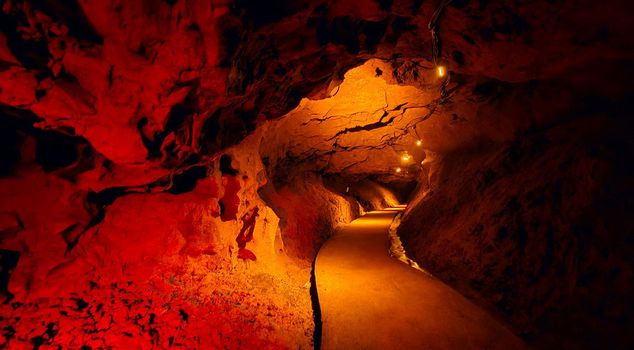
The cave, located within the 30-acre land purchased by the Karataş family through tender in 1998, remained closed for 1081 years and was restored in 2011 by forest senior engineer Nasuh Karataş with permission from the Ministry of Tourism. After restoration, it was leased to a company for operational purposes. The 500-meter-long cave, whose interior is illuminated and of which 213 meters is open to visitors, also contains a lake and a small waterfall. It is stated that Alexander the Great hid his weapons in the cave during battle and treated his soldiers with its mud, and that St. Paul held two meetings with the local people in the cave to spread Christianity in 46 and 47 AD while traveling from Aspendos along the Aksu River to Yalvaç.
CLASS D CAVES
Group D caves include cavities or dens that lack significant geological, ecological, or visual qualities, do not harbor flora/fauna, and are not deemed worthy of registration. No protective legal restrictions or registration procedures are applied to such places.