16.10.2026 08:41
The flying car Elon Musk has dreamed of for years has come one step closer to becoming reality. Tesla introduced its next-generation Roadster model, equipped with special thrusters utilizing SpaceX's rocket technology, in a show that astonished viewers.
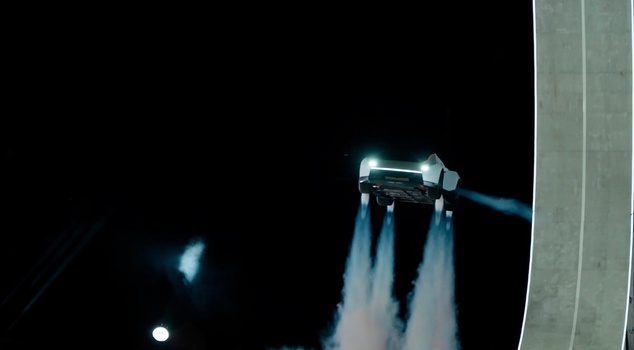
Tesla CEO Elon Musk on Thursday unveiled the new Tesla Roadster model with flying capability that has been the subject of science fiction and cartoons. In a driverless demonstration held at the Texas test facility belonging to SpaceX, another of Musk’s companies, the two-seat sports car was showcased.
IT GOES FROM 0 TO 100 IN UNDER 1 SECOND
According to information provided by Musk, the new Roadster model can go from 0 to 100 kilometers per hour in under one second. The vehicle can climb a steep ramp using suction force beneath it, can hang upside down before launching, can somersault in the air, and can land using air jets. During the demonstration, the same jets were also used to jump over Tesla models parked side by side.
Emphasizing that the demonstration was carried out without a driver for safety reasons, Musk said, “Success is not guaranteed. I’m serious. It will probably work, but if it doesn’t, we are at a safe distance.” Describing the technology as “a collaboration between the world’s best car company and the world’s best rocket company,” Musk explained that 10 nozzles and ultra-high-pressure air tanks are used to enable the vehicle to move through the air and accelerate on the ground.
Stating that they needed an audience to prove the event was not a simulation or artificial intelligence, Musk said the vehicle would enter production in 2028. However, it is known that Tesla has delayed its promises regarding target dates by years in the past.
EXPERTS ARE SKEPTICAL THAT THE VEHICLE CAN “FLY”
Despite the staged demonstration, experts are cautious about whether the vehicle can actually perform long-range flight. Although there have been advances in recent years in “eVTOL” vehicles capable of electric vertical takeoff and landing, there are serious engineering obstacles to producing a road-legal and flying vehicle.
Roger Conner, curator of vertical flight at the Smithsonian National Air and Space Museum, noted that aircraft are extremely sensitive to weight, while land vehicles require bumpers and crumple zones, and stated that combining the two concepts would create a vehicle that both performs poorly and is quite expensive. For this type of car that can legally be used on the street, Conner commented, “We are not talking about uninterrupted flight. We are talking about literally hopping.”
Jim Dukhovny, CEO of the Alef startup developing flying vehicles with eight propellers, said that the Tesla Roadster taking off would not surprise him, but that this would not mean the vehicle actually “flies.” Noting that the hardest part in eVTOL vehicles is the transition from vertical ascent to forward motion, Dukhovny emphasized that lift must be maintained and balance must be ensured.