02.03.2026 07:21
Following the operations of the US-Israel against Iran and the attacks on at least three ships in the Strait of Hormuz, Brent crude oil briefly rose by 10%, while gold also increased due to safe-haven demand. Although OPEC+ decided to increase production, experts warned that if the conflicts prolong, prices could rise above 100 dollars and gasoline prices could increase.
After the military operations initiated by the USA and Israel against Iran on February 28, the attack on at least three ships in the Strait of Hormuz shook global energy markets. With increasing geopolitical risks, oil prices rose rapidly.
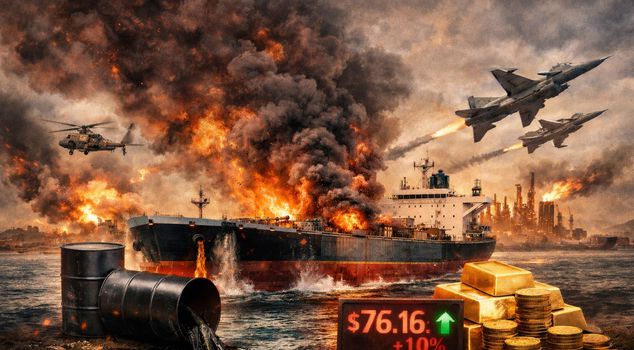
On the morning of March 2, Monday, the price of Brent crude oil briefly increased by 10 percent in Asian markets. As of 05:00 GMT, prices rose by 4 percent, reaching 76.16 dollars.
The USA and Israel announced that they had killed high-ranking figures, including religious leader Ayatollah Ali Khamenei, in the attacks in Iran, while Iran responded with retaliatory attacks across the Middle East. US President Donald Trump stated in an interview with the British press on March 1 that the conflicts could last for about four weeks.
ATTACK ON SHIPS IN HORMUZ
The targeting of at least three ships near the Strait of Hormuz contributed to the rise in oil prices. The UK Maritime Trade Operations (UKMTO) reported that two ships were hit, and an unknown explosion occurred "very close" to a third ship.
Iran had previously warned against ships passing through the Strait of Hormuz, where approximately 20 percent of the world's oil and natural gas is transported. With the increase in risk levels in the region, insurance costs for ship passage rose rapidly, and it was reported that maritime traffic came to a standstill.
RISING GOLD PRICES
The expectation that military conflicts would prolong directed investors towards safe havens. The price of gold per ounce rose by 1.4 percent to 5,350 dollars.
Saul Kavonic, head of energy research at MST Research, stated in an interview with the BBC, "The market is not panicking." Kavonic added, "So far, there is more clarity that the oil transportation and production infrastructure is not a primary target for either side."
Kavonic also assessed, "The market will watch for signs of the resumption of passage through the Strait of Hormuz; this could lead to a decrease in oil prices again."
OPEC+ DECISION TO INCREASE PRODUCTION
On March 1, a group of oil-producing countries including Saudi Arabia and Russia, known as OPEC+, agreed to increase daily production by 206,000 barrels to ease price increases. However, some experts indicate that this increase may only balance the rise in the market to a limited extent.
Some analysts warned that if the conflicts last long, oil prices could rise above 100 dollars.
GASOLINE PRICES MAY RISE
Edmund King, President of the UK Automotive Association, stated that the rise in oil prices could be reflected in gasoline prices. King expressed that the extent of the increase would depend on the duration of the conflicts.
The ongoing security risks in the Strait of Hormuz and military tensions indicate that uncertainty in global energy markets may continue in the coming days.