18.11.2026 14:42
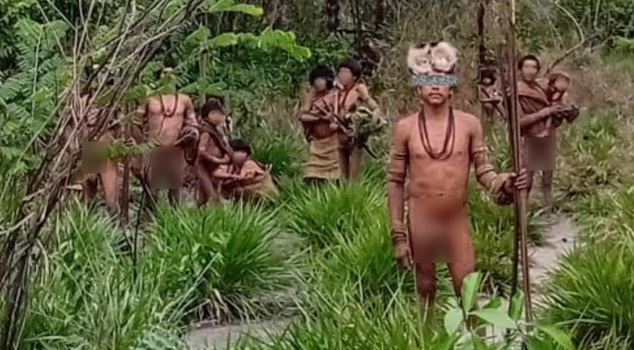
The emergence after years of about 20 members of the Awá tribe, who live isolated from the outside world in Brazil's Amazon forests, made a big impact, and it also became clear what the tribe members wanted. It was learned that the group, which included women and children, approached the settlement area and requested food, especially root vegetables. While some tribe members appearing quite thin caused concern, experts stated that this situation could be linked to deforestation and the decline in food sources.
Approximately 20 members of the Awá tribe, who live in Brazil's Amazon forests avoiding contact with the outside world, approached a settlement area after years in a rare occurrence and asked for food. While images of the group, which included women and children, caused concern, experts stated that deforestation and illegal activities threatened the tribe's life.
THEY CAME OUT OF THE FOREST AND ASKED FOR FOOD
The incident occurred on November 16 in the Arariboia Indigenous Land in Brazil's Maranhão state. Approximately 20 Awá indigenous people, who live without sustained contact with the outside world, approached a government checkpoint near Tawari village. The tribe members, seen with bows and arrows in their hands, asked local people for yam, a type of root vegetable. The group took the food given to them and soon returned to the depths of the forest.
THE CONDITION OF THE CHILDREN AND ELDERLY CAUSED CONCERN
In images taken during the encounter, some tribe members appeared to be quite thin. Organizations defending indigenous rights announced that the physical condition of especially children and the elderly was concerning. However, it has not yet been definitively determined why the group approached the settlement area. Experts assess that they may have had difficulty finding food.
"THIS IS A MOMENT OF CRISIS"
The organization Survival International, which defends the rights of indigenous peoples, assessed the encounter as a serious warning. The organization's Brazil representative, Sarah Shenker, stated that the forests where the Awá people live are gradually shrinking due to illegal logging, hunting, and livestock activities. According to experts, the destruction of natural habitats also threatens the food sources of tribes that live by hunting and gathering.
THE GOVERNMENT ACTIVATED AN EMERGENCY PROTECTION PLAN
Brazil's National Foundation for Indigenous Peoples (Funai) dispatched protection and health teams to the region after the rare encounter. Authorities warned that communities with limited contact with the outside world may be vulnerable to infectious diseases. The government announced that it does not aim to establish permanent contact with the Awá people and that it is trying to protect the tribe's right to maintain its own way of life.