16.10.2026 16:42
Unexpected enemies have emerged against the invasive Burmese pythons that were released into the Everglades Swamp in the US state of Florida and have disrupted natural life over the years. The giant snakes, which hunt many animals from deer to raccoons, this time became the target of the region's native predators. A lynx destroying 42 python eggs at once drew attention.
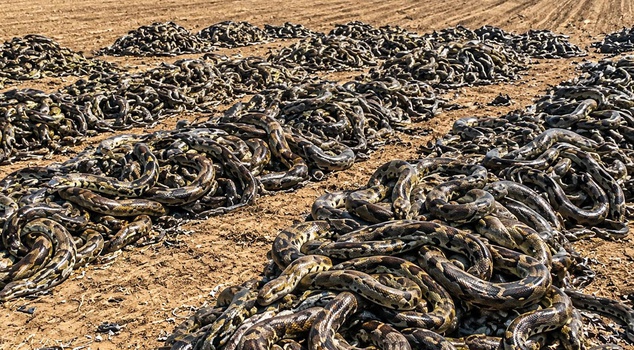
The Everglades swamp in the US state of Florida has for years been struggling with invasive Burmese pythons. The giant snakes, native to Southeast Asia, have caused serious declines in the numbers of many animal species in the region, while scientists' research has revealed that the balance in the swamp has begun to change. The pythons, which have been in the position of predator for years, are now being hunted by the region's native predators.
RELEASED INTO THE SWAMP, THEY DISRUPTED NATURAL LIFE
Burmese pythons were brought to the US through the pet trade. When snakes that were purchased while small but became difficult to care for as they grew were released into the wild, an invasive population formed in Florida.
Over time, the pythons spread through the Everglades swamp and seriously affected the region's wildlife. As the giant snakes, which prey on animals such as raccoons, rabbits, and deer, spread, there were major declines in the frequency of sightings of some mammal species.
A study published in 2012 revealed that after the spread of the pythons, raccoon observations in the region decreased by 99.3 percent, while white-tailed deer observations decreased by about 94 percent.
GIANT SNAKES ENCOUNTERED AN ENEMY THEY NEVER EXPECTED
Scientists investigating the unexplained deaths of young pythons they tracked with radio transmitters reached striking results. Examinations determined that American alligators, water moccasins, and some native mammals can prey on young pythons. It was even recorded that a bobcat killed an adult Burmese python about 3 meters long.
A BOBCAT DESTROYED 42 EGGS
One of the most striking findings of the research was recorded in June 2021. A camera that scientists placed near a python nest captured the moments when a bobcat attacked the nest. The bobcat, which returned to the nest several times, did not move away despite coming face to face with the female python. Researchers later determined in their examination that 42 eggs in the nest had been destroyed. The study published in 2022 presented the first documented case in Florida of a native animal consuming Burmese python eggs. In another study published in 2026, it was reported that a vulture attacked eggs in a python nest.
THE BALANCE IS CHANGING
The hunting of invasive pythons by native predators gave scientists hope in the fight. However, experts note that it is not yet known whether this will be enough to reduce the total number of pythons. Different methods are also being tried in Florida to combat the giant snakes. In 2025, solar-powered robots that imitate rabbits began to be used in the Everglades. These devices, equipped with heaters and cameras, are intended to draw pythons out of their hiding places and detect them. Researchers are also trying to identify breeding areas with the help of transmitters placed on male pythons and to collect eggs before they hatch. According to experts, although native predators hunting pythons is an important development, human-led efforts must continue in order to bring the invasion under control.