20.11.2026 16:00
In Russia's Yakutia region, where temperatures drop to minus 56 degrees, a pack of hundreds of wolves killed more than 30 horses in 4 days.
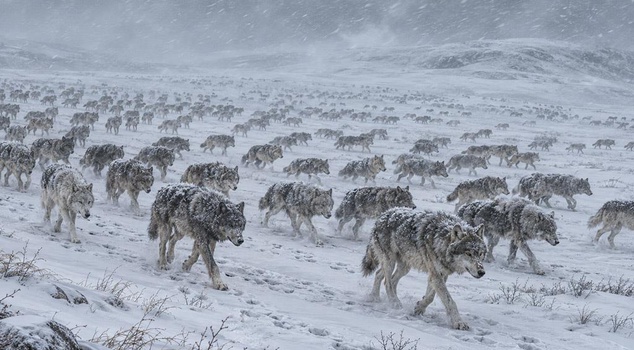
Verkhoyansk, in Russia's Yakutia region, one of the coldest inhabited places in the world, faced an extraordinary event in the winter of 2010-2011. In the town, where temperatures dropped to minus 56 degrees, a giant pack consisting of hundreds of wolves appeared. But what was truly frightening was that the pack soon turned its attention to the horses in the area.
THEY KILLED MORE THAN 30 HORSES IN FOUR DAYS
In the region, where the freezing cold continued to have an effect, the wolves began attacking horse herds when they had difficulty finding food. According to local authorities, more than 30 horses were killed in just 4 days. After what happened, 24 hunter teams supported by snowmobiles and helicopters were sent to the region.
HUNGER DROVE THE WOLVES TOWARD LARGE PREY
According to experts, a food shortage was behind the gathering of hundreds of wolves in the same area. The number of hares, one of the wolves' main food sources, had decreased seriously, and harsh winter conditions had made finding prey almost impossible. The hungry wolves were forced to turn to large animals such as horses, which they normally avoided.
16 THOUSAND REINDEER AND 300 HORSES LOST
The scale of the losses reported in connection with what happened in the region also drew attention. However, the killing of 16 thousand reindeer and 300 horses was not an attack carried out by a single wolf pack. These figures pointed to animal losses across Yakutia in 2012. These losses, associated with the thousands of wolves estimated to be in the region, once again revealed the impact of harsh winter conditions on wildlife.
WHY DO WOLVES WALK IN A SINGLE FILE IN THE SNOW?
An important reason why wolves often move in single file across snowy terrain is energy conservation. The wolf at the front of the pack breaks through the deep snow and opens a path for itself. The other wolves following behind use the same tracks, expending less energy. This makes it easier for the pack to move, especially during the winter months when finding food becomes difficult and long distances must be covered. However, the accounts frequently shared on social media about this walking order—that elderly and sick wolves walk at the front and the pack leader walks at the very back—are not true. According to experts, in a pack moving in single file, the wolf at the front opens the way and helps the others save energy. Nor can it be said that a wolf left alone at the back is necessarily the leader of the pack. This animal may have fallen behind the pack for any reason.