18.10.2026 07:40
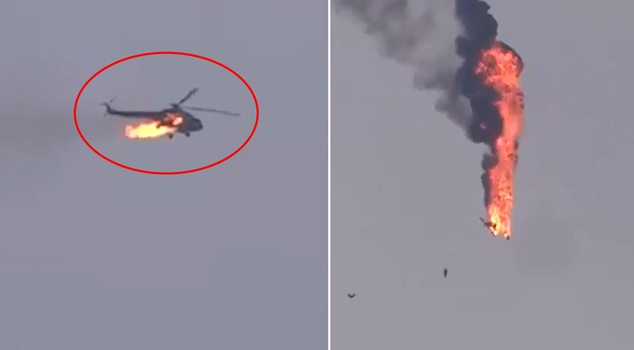
In Yemen, Iran-backed Houthis shot down a Saudi Arabian Apache helicopter. In a statement by the Saudi-led coalition, however, it was stated that the helicopter crashed due to a technical malfunction and that 2 soldiers lost their lives.
As clashes between Iran-backed Houthis and Saudi-led coalition forces in Yemen intensify again, the crash of a Saudi military helicopter has heightened regional tensions. The Houthis announced that they had shot down an Apache helicopter in the Najran region near the Yemeni border. The Saudi-led coalition's statement that the helicopter crashed due to a technical malfunction and that 2 crew members lost their lives brought debates about the cause of the incident.
HOUTHIS ANNOUNCE THEY SHOT DOWN SAUDI HELICOPTER
Houthi military spokesman Yahya Saree, in a statement on October 17, claimed that a Saudi-owned Apache attack helicopter was shot down near the Najran region in the south of the country.
In the statement, also carried by the Houthi-affiliated SABA news agency, Saree argued that the helicopter was targeted while carrying out military activity against Houthi positions along the Yemen-Saudi Arabia border.
Saree, stating that an "appropriate weapon" was used in the attack, did not share details about which air defense system the operation was carried out with.
SAUDI ARABIA ISSUES TECHNICAL MALFUNCTION STATEMENT
In the reported statement by the Saudi-led coalition forces, it was said that the helicopter crashed due to a technical malfunction and that 2 crew members lost their lives in the incident.
THEY ALSO SHOT DOWN A SAUDI UAV
In the statements of Houthi military spokesman Saree, it was claimed that a Saudi-owned armed unmanned aerial vehicle flying over the Hajjah province in northwestern Yemen was also shot down. While military movement continues along the Saudi Arabia-Yemen border due to air operations and mutual attacks in the region, the Houthis' claim regarding the unmanned aerial vehicle could not be independently verified.
SAUDI ARABIA'S AIRPORTS AND OIL FACILITIES TARGETED
Regional tension in recent months has not remained limited to the Yemeni border. In August, the Houthis announced that they had targeted the airport in Saudi Arabia's city of Najran and facilities belonging to the oil company Aramco with unmanned aerial vehicles.
Houthi military spokesman Yahya Saree argued that the attacks in question were carried out in response to Saudi-owned unmanned aerial vehicles violating Yemeni airspace.
In October, King Khalid International Airport in the Saudi capital Riyadh was the target of attacks carried out with missiles and unmanned aerial vehicles. At least 13 people lost their lives in the attack, while more than 300 people were injured.
The Saudi administration launched an investigation after the attacks to determine why its air defense systems were insufficient.
THE WAR IN YEMEN HAS CONTINUED SINCE 2014
The civil war in Yemen deepened when Iran-backed Houthis seized control of the capital Sanaa and a large part of the country in 2014. The Saudi-led military coalition intervened in the conflict in 2015 to support the Yemeni government recognized by the international community.
The ceasefire achieved under United Nations leadership in 2022 led to a significant reduction in clashes in the country. However, permanent peace could not be reached because a political solution could not be achieved and disagreements between the parties continued.
With the renewed intensification of clashes in July 2026, the Houthis increased their attacks on Saudi Arabia's military points as well as airports and energy infrastructure.
TENSION IN THE REGION IS ESCALATING
The latest helicopter incident occurred at a time when Saudi Arabia's air defense capacity and military operations along the Yemeni border are being debated again.
While the Houthis' claim that they shot down the Apache helicopter has not yet been independently verified, the parties' mutual attacks are increasing concerns that the conflict in Yemen could spread to a wider region.