18.10.2026 19:52
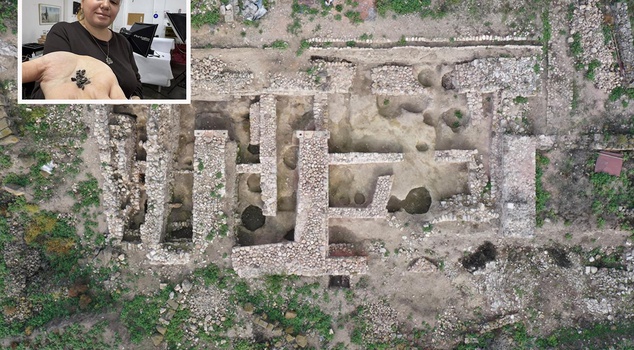
In the oven unearthed during excavations at the ancient city of Daskyleion, located on the shore of Lake Manyas in the Bandırma district of Balıkesir and bearing traces of many civilizations that ruled in Anatolia, 2,600-year-old carbonized seeds were found. It was stated that the seeds are still intact.
Excavation work that began in 1954 in the ancient city in Ergili Neighborhood, whose history dates back 3,000 years, continues under the leadership of Prof. Dr. Kaan İren, a faculty member of Muğla Sıtkı Koçman University's Department of Archaeology.
NEW OVENS FOUND
The work, started in July this year, is being carried out with the support of the Ministry of Culture and Tourism, the Balıkesir Governorship, Balıkesir Metropolitan Municipality, Manyas Municipality, and Muğla Sıtkı Koçman University. Archaeologists investigating the dietary and culinary habits of the city's inhabitants have concentrated their work in the area called the "Lydian Kitchen."
In work carried out by the team with small and delicate tools, new ovens were reached in the Lydian Kitchen. During the work, einkorn, gernik (a type of hulled wheat), and wheat, along with six-row barley, broad beans, black vetch, chickpeas, peas, lentils, grass pea (a plant from the legume family), and grape seeds were found.
In the bedrock pit at the excavation site, where numerous seeds were encountered, it was determined that grains were stored.
2,600-YEAR-OLD SEEDS UNEARTHED
The excavations reveal not only where food was cooked, but also how products were stored about 2,600 years ago, which plants were consumed, and how the kitchen operated in daily life.
"PRESERVED IN A CARBONIZED STATE UNDER THE SOIL"
Expert archaeologist Yeşim Kirman, a member of the excavation team, told an AA correspondent that they had reached the end of this year's excavation season.
Noting that excavations in the Lydian Kitchen were progressing pleasantly, Kirman said, "We find all the items that should be in a kitchen just as they are, as if they were still in their proper places. This year, we carried out our excavation work in the pantry section of the kitchen. During the work, we found one more oven and have thus uncovered a total of 7 ovens."
Kirman explained that while excavating the soil inside the oven, they reached fish bones, bird bones, and seeds belonging to the foods they used, and emphasized that the type of the seeds and the period to which they belonged were determined in a laboratory setting.
Underlining that they reached many seeds such as wheat, barley, chickpeas, and lentils from the layer inside the oven, Kirman said, "We find these seeds in a carbonized state. These seeds have been preserved in a carbonized state under the soil for 2,600 years???????. Under normal conditions, preserving organic material is very difficult, but if it is in a closed layer, we can recover it in a carbonized state."
Stating that the Lydians cooked their meals in ovens made of adobe, Kirman said that, looking at the recovered materials, the kitchen was used by people from the upper class.
Kirman added that they experienced great excitement when finding the materials obtained in the excavations.