01.11.2026 18:04
Economist Robin J. Brooks, noting that tension in the Middle East has added a war risk premium of over $25 per barrel to Brent oil prices, calculated that a 10% increase in Brent could reduce gold by about 4% and silver by about 8%. Brooks argued that these losses may be exaggerated and that precious metals could recover if the uncertainty ends. On Friday, spot gold had fallen 3.7% below $4,000 an ounce.
As oil prices rose amid concerns that a hot conflict with Iran could restart, gold and silver suffered sharp losses. Economist Robin J. Brooks shared his calculation regarding the relationship between oil and precious metals.
GOLD FALLS BELOW $4,000
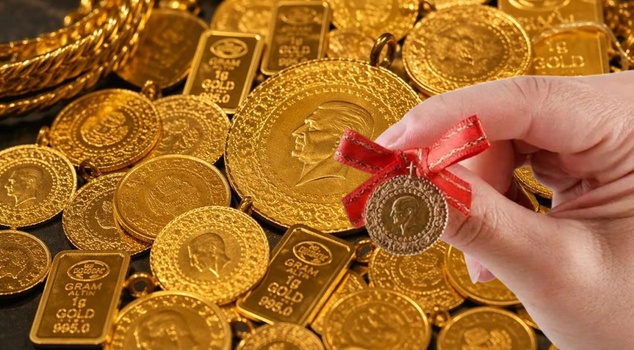
Spot gold lost about 3.7 percent on Friday, falling clearly below $4,000 for the first time this year. Silver fell 5.9 percent the same day. Spot gold thus dropped more than 28 percent below the record level of $5,595 an ounce it saw in January. In the Grand Bazaar, gold per gram fell to 6,295 lira, while the Republic gold coin fell to 41,180 lira.
“THERE IS A WAR RISK PREMIUM OF OVER $25 IN BRENT”
In an assessment in his personal newsletter, Brooks stated that markets were quickly pricing in a restart of a hot conflict with Iran. Noting that although oil exports from the Persian Gulf had returned to pre-war levels, oil prices were approaching previous peaks for the year, Brooks argued that the fair value of Brent crude was around $90 per barrel, meaning there was a war risk premium of more than $25 in prices. Brooks noted that Brent contracts maturing in December 2027 were also trading at this level.
IF OIL RISES 10 PERCENT, GOLD COULD FALL 4 PERCENT
Stating that gold and silver generally fall when oil prices rise, Brooks explained that according to his calculation based on data from the second half of October, a 10 percent increase in Brent corresponded to a decline of about 4 percent in gold and about 8 percent in silver.
“THE LOSSES MAY BE EXAGGERATED”
Brooks suggested that this estimate could be exaggerated for two reasons. Stating that because a high war risk premium was already priced into Brent, a lasting 10 percent increase above the current level was unlikely, Brooks said the calculation was based on data from the last two weeks, when gold and silver were most volatile, and therefore the estimate represented an upper limit.
HE DOES NOT EXPECT A DROP LIKE THE ONE IN FEBRUARY
Reminding that the sharp drop in February was an unexpected development for the markets, Brooks assessed that a restart of airstrikes was widely expected, so a decline as sharp as the one at the beginning of the year did not seem likely. Brooks noted that if the uncertainty ended, gold and silver could recover.
WHAT DOES IT MEAN FOR SMALL INVESTORS?
According to Brooks’s calculation, when oil prices rise, the price of gold can fall, and when oil prices decline, gold can gain value again. This means that gold prices are currently fluctuating largely depending on war news from the Middle East.
According to Brooks, even if oil prices rise a little more, the decline in gold may remain limited, and when war concerns ease, gold prices may recover.
However, this assessment is an economist’s forecast; no one can know for certain when and by how much gold will rise or fall. Experts emphasize that investment decisions should be made taking personal circumstances into account.