19.10.2026 20:32
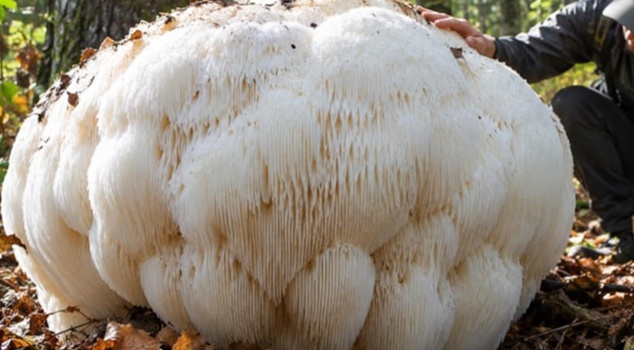
The giant mushroom discovered in the forests of China’s Yunnan province has astonished the scientific world with its extraordinary dimensions. The new species, which can grow up to 50 centimeters and reach a weight of 2.2 kilograms, attracted attention not only for its size but also for its evolutionary history of approximately 65 million years. Scientists state that the discovery offers important information about the diversity and evolution of fungi.
The new mushroom species discovered in the forests of China’s Yunnan province has drawn the attention of the scientific world with its size and millions of years of evolutionary history. The species, which can grow up to 50 centimeters and whose single specimen can reach a weight of 2.2 kilograms, was named “Dianjunus rex.” Researchers state that the discovery expands what is known about the diversity of fungi.
In Yunnan province in southwestern China, scientists discovered a new mushroom species that can reach unusual sizes. Found during research conducted in tropical and subtropical forests, the species stands out with both its physical dimensions and its evolutionary history.
As part of the study led by researchers from the Kunming Institute of Botany under the Chinese Academy of Sciences, a new family was described in the classification of fungi in addition to the new species. The results of the research were published in the journal Frontiers in Fungal Biology.
IT REACHES 50 CENTIMETERS IN HEIGHT AND 2.2 KILOGRAMS IN WEIGHT
The fungus, which scientists named Dianjunus rex, attracts attention with its height ranging from 20 to 50 centimeters. It was stated that most of the specimens weigh between 250 and 600 grams, while the largest specimen examined was 2.2 kilograms.
According to the researchers, the species stands out as one of the specimens with the largest reproductive structure recorded so far within Ascomycota, which forms a large group of fungi. The species, which differs from usual cap mushrooms in appearance, attracts attention with its upright and fleshy structure.
IT HAS A 65-MILLION-YEAR EVOLUTIONARY HISTORY
One of the most striking aspects of the discovery was the history of the lineage to which the fungus belongs. Genetic and evolutionary analyses indicate that the new family Dianjunaceae emerged approximately 65 million years ago.
This period coincides with the aftermath of the Cretaceous-Paleogene mass extinction, in which most dinosaurs disappeared. Researchers evaluate that this timing may offer important clues regarding the evolution of fungi and the reshaping of forest ecosystems.
A NEW FUNGAL FAMILY WAS DESCRIBED
Scientists classified the discovered specimens by examining not only their appearance but also their genetic characteristics. As a result of the analyses, it was determined that the fungus belongs to a previously undescribed family. The new family was named Dianjunaceae, and the new genus in which the species is placed was named Dianjunus.
The word “rex” in the species name means “king” in Latin. This name refers to the fungus’s extraordinary size.
SCIENTISTS WARN: THE NEW SPECIES IS NOT SUITABLE FOR CONSUMPTION
Researchers state that this discovery shows that the diversity of fungi in nature has not yet been fully revealed. Although more than 6,000 mushroom species have been recorded in Yunnan province to date, it is estimated that the region may host many more species.
According to information conveyed by the Chinese Academy of Sciences, it is assessed that the newly discovered species is not an edible wild mushroom. Therefore, the fungus, which attracts attention with its extraordinary size, should not be consumed.