11.05.2026 14:35
While the world discusses the hantavirus, news of a new coronavirus from Thailand has drawn attention. It was announced that the new virus, detected in bats, can interact with human cells but has much lower transmissibility and milder effects compared to COVID-19. Scientists stated that existing vaccines remain effective and the risk of a large-scale outbreak is low. However, experts emphasized that the virus will be closely monitored.
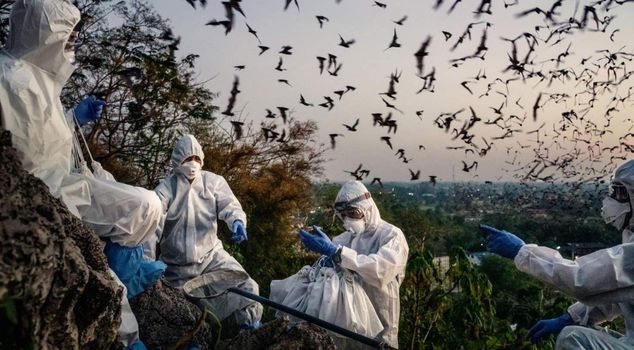
A new coronavirus species discovered in bats in Thailand has drawn global attention. Scientists have stated that the virus can interact with human cells but has much lower transmissibility and milder disease effects compared to COVID-19.
"LOW PANDEMIC RISK"
According to reports in the international press, researchers assess that existing coronavirus vaccines may remain effective against the new virus. Experts note that the risk of a widespread pandemic is low at this stage.
However, scientists emphasize that the virus should be closely monitored due to its ability to connect with human cells.
BATS BACK IN THE SPOTLIGHT
The reappearance of "bat" and "coronavirus" in the same sentence following the COVID-19 pandemic has caused a significant stir on social media. Many users have begun discussing potential pandemic scenarios after the new discovery.
Researchers, however, state that there is no need for panic at the moment, as the virus does not exhibit a structure that spreads as quickly as COVID-19. Experts in Thailand highlight that the new species has a very limited airborne transmission capacity.
VARIANT TRACKING CONTINUES IN THAILAND
Meanwhile, monitoring efforts for different COVID-19 variants have accelerated in Thailand recently. Health authorities have reported that the transmissibility of the XFG and XEC variants has increased, but there has been no significant rise in the risk of severe illness.
Scientists note that the new virus detected in bats has a different structure from existing variants and will be kept under long-term observation.