25.10.2026 10:42
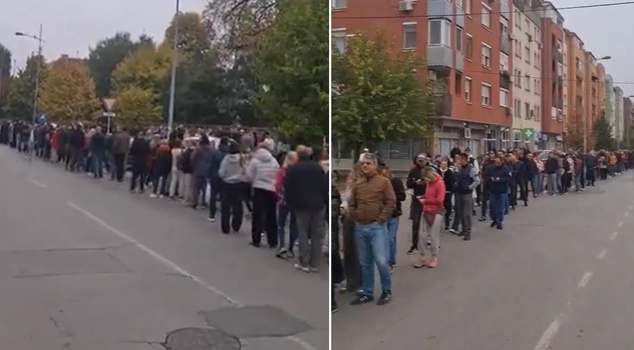
In Serbia, approximately 6.5 million voters went to the polls in early general elections to determine the new members of the 250-seat parliament. Voting is taking place at 8,392 polling stations across the country and abroad, with 18 lists competing in the election. In the election held in the shadow of student protests that have lasted for about two years, the race between the ruling bloc led by Vucic and the list supported by students stands out.
Voting for early general elections in Serbia began at 07:00 local time. According to data from the Republic Electoral Commission of Serbia (RIK), there are 6,450,523 registered voters in the country.
A total of 8,392 polling stations were set up across the country and abroad. Voting will continue until 20:00 local time.
While 102,147 voters registered to vote abroad, the largest number of polling stations outside Serbia was opened in Bosnia and Herzegovina, with 28 polling stations.
A MAJORITY IN PARLIAMENT REQUIRES 126 SEATS
Voters will determine the new members of the 250-seat National Assembly of Serbia.
Members of parliament are elected in a single nationwide constituency under a proportional representation system with closed lists. At least 126 seats must be won to secure a majority in parliament.
National minority lists are exempt from the 3 percent election threshold applied in the election.
18 LISTS ARE COMPETING IN THE ELECTION
There are a total of 18 lists on the ballot, 9 of which have national minority status.
In first place is the "Aleksandar Vucic-United Serbia" list, led by the Serbian Progressive Party (SNS), which has been in power since 2012.
In second place is the "Ivica Dacic-Stability Factor" list led by the Socialist Party of Serbia (SPS), and in third place is the "Student List-Students Win" list supported by students.
Other lists formed by pro-European, right-wing, and minority parties are also competing for parliamentary seats in the election.
ELECTION IN THE SHADOW OF STUDENT PROTESTS
The election is being held in the shadow of protests that began after 16 people lost their lives when a concrete canopy collapsed at the train station in the city of Novi Sad on November 1, 2024.
Student demonstrations that began with demands for those responsible to be prosecuted, transparency in public administration, and early elections gradually turned into a nationwide movement with broad participation.
Poll results are being closely followed because this is the first national election held after protests that have continued for nearly two years.
VUCIC AND THE STUDENT LIST STAND OUT
Public opinion polls published before the election point to a close race between the "United Serbia" list, for which Aleksandar Vucic, who left the presidential office, is the prime ministerial candidate, and the list supported by students.
During the election campaign, Vucic stated that he would accept the results from the ballot box and would congratulate his opponents if they won.
INTERNATIONAL OBSERVERS ARE FOLLOWING THE ELECTION
Observers from various countries and international organizations, primarily the Office for Democratic Institutions and Human Rights (ODIHR) of the Organization for Security and Co-operation in Europe, are monitoring the election process.
The previous parliamentary election in Serbia was held in December 2023.