24.04.2026 11:01
Following the attacks at schools, Minister of National Education Yusuf Tekin announced new measures. A 'Support and Consultation Hotline' for parents will be implemented. Minister Tekin stated in his announcement, 'An artificial intelligence-supported ministry management system will be used for school safety. We will foresee and intervene in risks that may arise in the field.'
A series of new security measures are being implemented in schools following the attacks in Şanlıurfa and Kahramanmaraş.
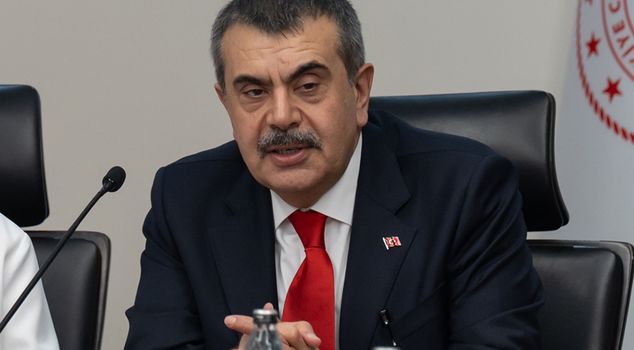
Minister of National Education Yusuf Tekin held a press conference in Ankara regarding the precautions to be taken in schools. Key highlights from Minister Tekin's statements:
"WE HAVE REIMPLEMENTED GRADE REPETITION IN HIGH SCHOOLS"
"First of all, as soon as we took office, we initiated the 'Turkey Century Education Model' studies with a 'From Roots to the Future' approach. With the model we implemented in September 2024, we aimed to develop our students' social-emotional learning skills and literacy skills, and to instill our national and spiritual values through the Virtue-Value-Action Framework. Thus, we centered on the competent and virtuous human being, which is the fundamental element of a peaceful society composed of healthy individuals. Simultaneously, by launching Teachers' Room Meetings, we took every step in consultation with our teachers and administrators, listening to the voices of our educators. We endeavored to strengthen the seriousness, order, and authority of teachers within the school. To benefit from the educational and healing power of play, we initiated efforts to expand traditional play areas in our schoolyards. We imposed restrictions on mobile phones in classes. By implementing the 'Parent Appointment System,' we brought parent visits into a planned structure. We reimplemented grade repetition in high schools. We put into effect the school uniform regulation. We published our 'Prevention of Violence in Schools' circular. Through the regulation we made in the Teaching Profession Law, we began operating a legal support mechanism for our education staff.
Additionally, we did not ignore the pressure exerted by the digital world on our children's minds and hearts. With our Turkey Century Education Model, we integrated media literacy, digital literacy, and information literacy into the curriculum. We strengthened the Digital Citizenship Education approach. We established the Velivision platform. Through the Teacher Information Service and School Parent Assistant systems, we moved the communication between teachers, parents, and schools onto a safer and more controlled ground. Under the leadership of our country, we created a series of measures in line with the 'Convention on the Rights of the Child in the Digital World,' published for the first time in the world. We developed a new awareness to protect our children against cyberbullying, disinformation, and online risks.
Subsequently, we addressed the fight against addiction alongside our children's well-being, character development, and school belonging. With the 'Emotion-Value Based Digital Well-being' project, we established a protection framework that more closely monitors the inner world of our children, which remains vulnerable to technology. We expanded face-to-face and online training for our teachers, students, and parents on digital addiction, technology addiction, smoking and tobacco addiction, and peer bullying. In cooperation with Yeşilay, we provided parent training to recognize early warning signs of addiction. Through emotion-value-based intervention sets, we aimed to help our children develop stronger internal resistance against risk areas, strengthen their character, and gain awareness to protect their own will. Within the scope of School Belonging Strengthening projects, we supported children in feeling like a natural part of the school, acquiring healthy living habits, and developing stronger self-control against harmful substances and behaviors through social, sporting, artistic, cultural, and scientific activities. We addressed the fight against addiction as a holistic opportunity that connects our children to life, strengthens their sense of belonging, and preserves their character.
"THE CHILD'S INNER WORLD IS SHAPED IN THE FAMILY"
We kept the family at the center of education and reiterated our sensitivity on this matter in every setting. Through 'My Educational Journey with My Family,' Family School courses, Maarif Model Parent School, regularly published family education bulletins, the Strong Family Strong Future Congress, and family gatherings on various themes, we established a stronger foundation that reinforces the bond between parents and children. We know that a child's inner world is shaped in the family. This is why we insistently strengthen school-family cooperation.
We placed special emphasis on our children growing up with national and spiritual values, a strong sense of belonging, and shared memory. We tried to carry the virtue-value-action approach of our Turkey Century Education Model into the climate of school life. Our work, starting with the theme 'Every Child a Sapling, First Lesson Green Homeland,' was deepened with activities spread throughout the year. To develop our students' national consciousness and patriotism, we started the second semester with the theme 'Love of Flag.' During the month of Ramadan, we held events such as 'Ramadan in the Heart of Education' and 'Let's Talk at Iftar' for our children to feel and experience our national and spiritual world and cultural richness. Drawing inspiration from April 23 National Sovereignty and Children's Day, we dedicated April to our children with the 'Child in the Heart of Education' approach to instill democratic culture, strengthen independence consciousness, and reinforce our national unity and social solidarity. To draw attention to the drama in Palestine and Gaza, where human life is disregarded, we prioritized our children growing up with conscience, responsibility, awareness of belonging, and national memory by creating a strong cultural and moral foundation ranging from awareness studies like 'From Çanakkale to Gaza: The Spirit of Independence and Love of Homeland' to content that keeps historical consciousness alive on EBA and TRT EBA.
"WE HAVE CREATED A POWERFUL DECISION SUPPORT MECHANISM WITH ARTIFICIAL INTELLIGENCE"
To build a safe school climate, we established an artificial intelligence-supported Ministry Management System to follow the process with a data-based and institutional management approach. With this system, all data belonging to our Ministry is collected and processed in a single center, creating a strong AI-supported decision support mechanism. For example, we implemented monitoring items such as the school security index, absenteeism reports, RAM application status, reports tracking the relationship between RAM and schools, discipline data, analyses showing the relationship between discipline and demographic structure, guidance teacher norm simulation, and tracking of students who are referred to RAM but whose records are not visible. Thus, we established a stronger framework that can predict risks in the field before they arise, detect symptoms early, systematically monitor the school, identify guidance needs, and manage intervention capacity based on data.
We expanded our capacity for guidance, risk monitoring, and early intervention. In our secondary education institutions, we established an AI-supported monitoring structure that evaluates students' absenteeism, academic success, discipline records, and social adaptation indicators together.
We have implemented school dropout and absenteeism tracking projects. We have begun monitoring risk areas based on data through a disciplinary penalty analysis model. We have strengthened prevention, intervention, and guidance mechanisms. Through MEBİ guidance modules, we have supported our students in areas such as empathy, anger management, conflict resolution, coping with peer pressure, and digital safety. We have expanded guidance activities and teacher training within the scope of projects to combat peer bullying and enhance the well-being of our teachers, also activating the National Education Academy. We have more strongly transferred our institutional capacity in this field to the field.
With the Safe School approach, we have strengthened the school climate with concrete and institutional measures in the field. Using the School Situation Assessment Scale developed in coordination with our Ministry of Interior, we have more accurately identified risk areas. Thanks to this scale, we assigned 1,136 school liaison officers and 24,214 safe education coordination officers for the 2025-2026 academic year. We supported the field with 6,105 teams during the entry and exit hours of our 21,103 schools. We worked across a broad spectrum, from student transportation planning and tracking systems to digital-based monitoring efforts, and from strategic action preparations for school safety to inter-institutional coordination.
We developed and implemented a model for safe student transportation to schools using student service tracking systems.
All these steps, diversifying and strengthening according to need, are certainly an important part of our responsibility to raise healthy generations to further improve the safe school climate for our children in every aspect. While judicial and administrative processes are meticulously carried out to ensure no aspect of the incidents remains in the dark, on the other hand, at the last Cabinet Meeting, we also decided on new measures that we evaluated jointly with all relevant Ministries. I would like to share the first phase of these efforts—some strengthening our current practices and some addressing new needs emerging in the field—with our public now.
"WILL GIVE MORE EMPHASIS TO CYBER PATROL ACTIVITIES"
First, we are addressing school security by expanding it to cover digital risk areas along with physical measures. Within this cooperation framework, we will give more emphasis to cyber patrol activities, strengthen the capacity of our relevant units, more closely monitor risks targeting our children in the dark corners of the digital world with artificial intelligence-supported tracking and analysis opportunities, and strengthen our measures based on monitoring results.
ARTIFICIAL INTELLIGENCE-SUPPORTED RISK ANALYSIS AND EARLY WARNING SYSTEM
Second, we will strengthen inter-ministerial data sharing and cooperation; we are immediately implementing new working models ranging from the surroundings of our schools to entry-exit arrangements, and from early intervention in risky situations to inter-institutional coordination. Within this framework, we will integrate the data integration process we are conducting with our Ministry of Interior, Ministry of Justice, Ministry of Health, and Ministry of Family and Social Services with our Ministry Management System, and create an artificial intelligence-supported risk analysis and early warning system. Through this structure, which evaluates indicators such as absenteeism trends, disciplinary data, demographic structure, school risk, and crime tendency risk together, we will be able to holistically read signals that alone have limited meaning and activate our relevant units at an early stage.
"WE ARE FURTHER STRENGTHENING THE COMMUNICATION BETWEEN FAMILY AND SCHOOL"
Third, we are further strengthening the connection between family and school. We aim to make the "Parent Appointment System," which we launched two years ago, more effective and ensure that the school-family-guidance process is more vibrant and functional throughout daily educational life.
SUPPORT AND CONSULTATION LINE
Fourth, we are activating a support and consultation line for our parents against risks such as digital addiction within a short time. We are creating a new support opportunity for our parents to become more familiar with the digital content their children are exposed to, recognize risks earlier, and receive quick support when necessary.
Fifth, we will continue our comprehensive training for our teachers and school administrators on crisis management, in-class intervention, recognizing early warning signs, and responding correctly to risky situations. We will continue to support our teachers as the strongest guides sustaining the school climate.
"WE WILL OPERATE ALL PROTECTIVE, PREVENTIVE, AND RESTORATIVE TOOLS TOGETHER"
Sixth, we will further strengthen psychosocial support mechanisms for our students; we will expand our Emotion and Value-Based Digital Well-being Project, currently piloted in 23 provinces, across the country. We know we can achieve results with approaches that consider the child's inner world. Therefore, we will operate all protective, preventive, and restorative tools together.
"WE WILL MAKE OUR GUIDANCE CAPACITY MORE SENSITIVE"
Seventh, we will make our guidance capacity more sensitive, one that recognizes risks early and produces effective and timely intervention. We will make our guidance system stronger with artificial intelligence support that can predict breakage areas where our children silently withdraw—unnoticeable on the surface but deepening over time—earlier and activate appropriate support mechanisms without delay.
Along with these, some risk areas threatening our children's safety, as factors outside school, require a broader perspective extending from media content to digital platforms, and from legal deterrence to inter-institutional supervision and coordination. Therefore, together with all our relevant ministries, boards, and institutions, we are establishing a stronger monitoring and supervision framework against content that encourages violence, with a holistic struggle approach. Accordingly, we are in comprehensive preparation to take technical and legal measures to protect our children in all media including risky digital platforms, implement new practices in age verification and content security, increase deterrence against risk areas accessible to children, and conduct all these processes within a joint action plan. We will reinforce this framework, shaped by the instructions of our President, with a strong policy set covering all dimensions from school safety to family support, guidance services to digital risk management, and media monitoring to legal protection mechanisms. We will allow no hesitation or gap in building a safe school climate.
On this occasion, I once again wish mercy from Allah for our teacher Ayla and our children we lost, healing for our injured children, and patience and fortitude for their families and our nation.
.