01.03.2026 16:47
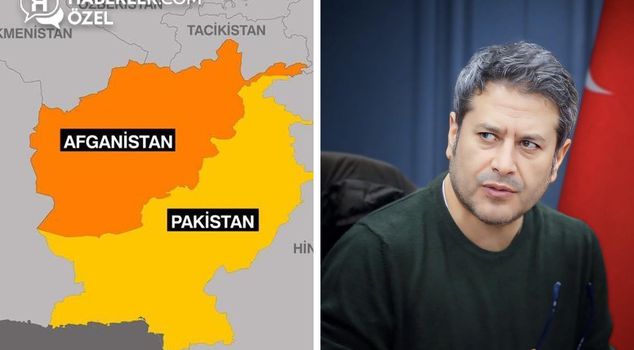
In a live broadcast on Haberler.com, Ali Şahin, the AK Party Gaziantep Deputy and Chairman of the Turkey-Pakistan Parliamentary Friendship Group, evaluated the renewed conflicts between Afghanistan and Pakistan in all their dimensions. Şahin emphasized that the tension experienced is not merely a matter of military movements along the border, but is directly related to historical and global power balances.
AK Party Gaziantep Deputy Ali Şahin stated in a live broadcast on Haberler.com that the increasing attacks of TTP and BLA are at the core of the conflicts related to the Afghanistan-Pakistan tension. He emphasized that the issue is connected to the historical Durand Line and the global power struggle. Şahin expressed that Turkey has taken a stance in favor of diplomacy and stated that he does not expect a large wave of migration.
"THE CURRENT CAUSE OF CONFLICTS IS THE ATTACKS OF TERRORIST ORGANIZATIONS"
According to Ali Şahin, the fundamental reason for the current crisis is the increasing attacks of terrorist organizations targeting Pakistan. He noted that especially the organizations TTP (Tehrik-i Taliban Pakistan) and BLA (Balochistan Liberation Army) have intensified their attacks in many areas, including the capital of Pakistan, and stated that this situation has begun to threaten Pakistan's sovereignty.
Pointing out that the approximately 900-kilometer mountainous Afghanistan-Pakistan border is a difficult line to control, Şahin expressed that after the Taliban took over the administration in Afghanistan, these organizations have been able to operate more freely along the border. He stated that Pakistan's air operations against terrorist elements in Afghan territory have transformed the tension between the two countries into a conventional conflict.
Emphasizing that Pakistan's most significant accusation against Afghanistan is to create a ground for these organizations and to open space for some third countries' efforts to destabilize Pakistan, Şahin articulated that the expectation of the Islamabad administration is that "Afghanistan does not allow its territory to be used against Pakistan."
"THE 100-YEAR-OLD DURAND LINE ISSUE HAS STILL NOT BEEN RESOLVED"
Şahin stated that the crisis cannot be explained solely by current security issues and drew attention to the historical background. He reminded that the border drawn by the British in 1895, known as the "Durand Line," has never been accepted as a natural and legitimate border by Afghanistan.
Noting that Afghanistan historically views this line as controversial due to the Pashtun population living on the Pakistan side, Şahin said that just like the Sykes-Picot borders in the Middle East, this artificial border has also laid the groundwork for regional instability. According to Şahin, this historical fault line plays a significant role in the conflicts experienced today.
Additionally, drawing attention to the China-Pakistan Economic Corridor (CPEC) project, Şahin stated that this massive project worth 65 billion dollars has changed the commercial balances in the region, that the Balochistan route has gained strategic importance, and that some terrorist organizations have targeted this project. He emphasized that this route, which allows China to reach Middle Eastern and European markets in 3 days instead of 12, is at the center of the global power struggle.
"TURKEY DOES NOT WANT THE CONFLICTS TO DEEPEN"
Referring to Turkey's stance, Ali Şahin reminded that Ankara is not on the side of any regional conflicts and has taken on a mediating role between the two countries. He noted that previously, Turkey and Qatar had brought the parties together, and stated that Turkey has prioritized diplomacy in both the Iran-US line, the Russia-Ukraine war, and the Afghanistan-Pakistan tension.
Recalling that Pakistan has hosted 5 million Afghan refugees in the past and that approximately 50,000 Pakistani civilians lost their lives during the US drone operations, Şahin expressed that Islamabad's security concerns should not be overlooked.
Regarding a possible wave of refugees, Şahin stated that under the current conditions, he does not expect the tension along the Afghanistan-Pakistan line to create a significant wave of migration to Turkey directly, but emphasized that every instability in the region should be closely monitored.
According to Şahin, the path to a permanent solution in the region lies in eliminating terrorist elements, preventing interventions from third countries, and keeping diplomatic channels open.