05.03.2026 10:10
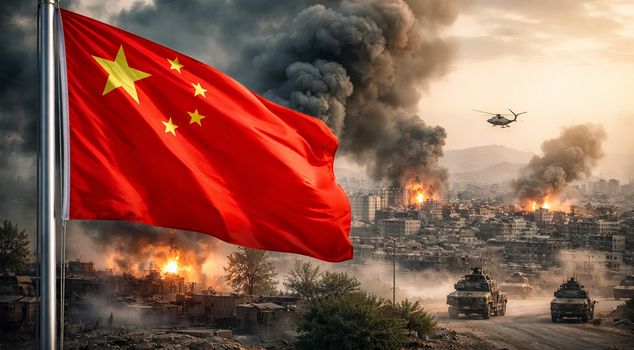
While the war continues in the Middle East, China announced that it will send a special representative to the region to mediate in order to stop the conflict along the US-Israel-Iran line and reduce tensions.
The Chinese Ministry of Foreign Affairs expressed concern that the rapidly escalating war in the Middle East could turn into a broader regional crisis, announcing that it would initiate efforts to resolve the conflicts through diplomatic means. The Beijing administration stated that it plans to send a special representative to the region and will attempt to reduce tensions by establishing direct contact with the parties involved.
Chinese officials emphasized that military tensions in the region have rapidly increased following attacks by the U.S. and Israel on Iran, creating serious risks for global security and energy markets. Beijing called on all parties to cease hostilities, stating that the conflicts should not spread further.
TENSION SOARED IN THE MIDDLE EAST
In recent weeks, mutual attacks between Iran and Israel have significantly raised tensions in the Middle East. The conflicts, which began with Israel's attacks on military and strategic targets in Iran, expanded further with Iran's responses using ballistic missiles and drones. Allegations that the U.S. has supported operations against certain military targets in Iran have led to the crisis gaining an international dimension.
In light of these developments, during emergency meetings held at the United Nations Security Council, many countries called for a de-escalation of tensions, while China argued that a diplomatic solution is necessary to halt the conflict. China's Permanent Representative to the UN, Fu Cong, stated that Israel's attacks on Iran violate the country's sovereignty and called on the parties to "immediately cease fire and end the conflicts."
IF THE WAR DRAGS ON, ALL COUNTRIES WILL BE AFFECTED
The Beijing administration asserts that instability in the Middle East directly affects global security and that if the war prolongs, energy markets and international trade could be seriously harmed. For this reason, the Chinese government aims to initiate a dialogue process by establishing contact with the parties and supporting international efforts for a political solution.
Experts suggest that in recent years, China has been trying to position itself as a "peace mediator" in global crises, and its diplomatic initiatives in the Middle East are seen as part of this strategy. However, some analysts indicate that due to Beijing's close relations with Iran and its criticisms of Israel, it may be difficult for all parties to accept it as a neutral mediator. China's decision to send a special representative came at a time when international diplomatic efforts to prevent the war from escalating into a broader regional conflict are gaining momentum. Beijing continues to call on the parties to halt military operations and return to the negotiating table to resolve the issue.