11.05.2026 21:20
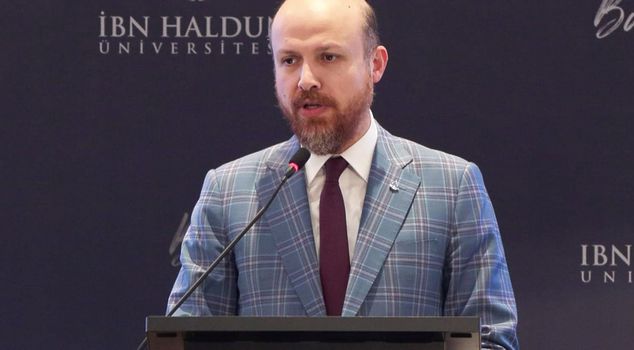
Speaking at the launch program of the student workshop report themed 'Family in the Century of Türkiye', Ibn Haldun University Board of Trustees Vice Chairman Bilal Erdoğan said, 'When Türkiye was poorer, it had more children. In poorer regions of Türkiye, there are families with more children, and as people become wealthier and their opportunities expand, they have fewer children. So economic incentives will perhaps only be a complement to this.'
The launch of the report for the student workshop themed 'Family in Turkey's Century', which constitutes the second part of the 'IHU Century-Valued Student Workshops' series conducted by Ibn Haldun University, was held at Ibn Haldun University.
The program was attended by Deputy Minister of Family and Social Services Adil Çalışkan, Deputy Governor Hasan Gözen, Chairman of the Board of Trustees of Ibn Haldun University İrfan Yıldız, Vice Chairman of the Board of Trustees of Ibn Haldun University Necmeddin Bilal Erdoğan, Rector of Ibn Haldun University Prof. Dr. Atilla Arkan, Rector of Bezmialem Foundation University Adem Akçakaya, Advisor to the Rector of Üsküdar University İsmail Barış, academics, and students. During the program, the evaluations, suggestions, and policy topics put forward by the students during the workshop process were shared.
The workshop series, held for the second time this year, was organized under the title 'Family in Turkey's Century', aligning with the 'Year of the Family' approach declared by the Presidency. In the program centered on the family institution, topics such as preserving family structure, intergenerational communication, family relations in the digital age, young people's perspective on family, and social solidarity were addressed from the students' perspective. It was emphasized that the vision of 'Turkey's Century' should be shaped not only by economic and technological development goals but also by a strong family structure, robust social bonds, and a value-based understanding of the future.
'PESSIMISTIC SCENARIO BRINGS US TO 55 MILLION IN 2100'
Vice Chairman of the Board of Trustees of Ibn Haldun University Necmeddin Bilal Erdoğan stated: 'The situation we have reached regarding the family is dire. Among the scenarios, the pessimistic one brings us to 55 million in 2100, but actually, the pessimistic scenario is the most realistic one. That must be seen. It is not a pessimistic scenario at all; it is the most realistic scenario. Currently, economic incentives are discussed more because we are going through a period of certain economic difficulties.
'TURKEY HAD MORE CHILDREN WHEN IT WAS POORER'
There is a claim that people not having children and the weakening of the family stem from economic conditions; but it is an unsubstantiated claim. Evidence shows the opposite. Turkey had more children when it was poorer. There are families with more children in poorer regions of Turkey, and as people become wealthier and their means expand, they have fewer children. So, economic incentives will perhaps only be a complement to this.'
'WE NEED TO RE-EVALUATE THE MEANING WE ATTRIBUTE TO THE FAMILY'
Bilal Erdoğan continued his remarks as follows: 'What is essential is that we perhaps need to re-evaluate the meaning we attribute to the family. We need to talk about the value we give to parents who have children. Let us face ourselves now; if an educated woman says, "I have six children," or "I have seven children," she would probably be looked upon as "you are a very ignorant woman." So, the real problems start from here. What kind of support and contribution does the father's side provide to the mother's side? It is also evident that this is not an issue concerning only women. I think we need to re-signify the family. Of course, we need to re-signify it by drawing again from our deep history, our faith, and our culture. When we do that, we will see that we also need to re-signify having children. Because in this era, if a twenty-year-old young sibling asks, "Why should I have children?" what answer would they give? We see they do not have many answers. In the past, there was a need for men to work in the fields, and children to work in factories. There are cultures where children are needed for boasting, right? We don't really have that either. There are still some who have children so that grandparents can love them, but when they say, "Oh, how cute, we can play with these children," the agenda shifted; people can also fulfill that with cats and dogs.
'I DON'T KNOW HOW EASILY WE CAN TURN THIS AROUND WITH SUCH POLICY PROPOSALS'
Therefore, when we revalue the human being, placing humans as the most honorable of creation at the center of life, and for that reason, present having children as valuable, as a task more valuable than all other preoccupations, maybe we can turn this around. For that, we need a mindset transformation. I don't know how easily we can turn this around with such policy proposals. May Allah help us, because the world needs Turkey in this dark period and the possibly even darker period ahead. The world needs the accumulated heritage this nation brings from its history. If we are the descendants of ancestors who sustained justice and mercy across many lands for centuries, I think we need to be motivated by the thought that the world will need this again in the future.'
'SOCIETIES WITH STRONG SPIRITUAL SOCIAL SOLIDARITY NETWORKS WILL SURVIVE'
Rector of Ibn Haldun University Prof. Dr. Atilla Arkan said: 'As we all see, we are in a period of extremely accelerated global competition, and we will see this for the next ten years as well. Societies with strong spiritual social solidarity networks will survive. We will experience this clearly. We see it in crises. Therefore, the family is extremely important here. We have a culture that exists together with the family and social networks. This is partly due to our religion, partly to our national traditions, and partly to our geography. So, the family is extremely important.'
'OUR STUDENTS REFLECTED ON ISSUES SURROUNDING THE FAMILY'
Prof. Dr. Atilla Arkan stated: 'The most important feature of this study is that our students reflected on issues surrounding the family. They made determinations about it and, in a manner befitting a University of Social Sciences, considered what applicable solutions could be. On the education side, we place importance on this in our education system, particularly based on skills and competencies. Through club activities, part-time work, and mentorship programs, we believe we are actually investing in our students' character, virtues, morals, and their capacity to build a strong family along with these gains.'