02.09.2026 11:11
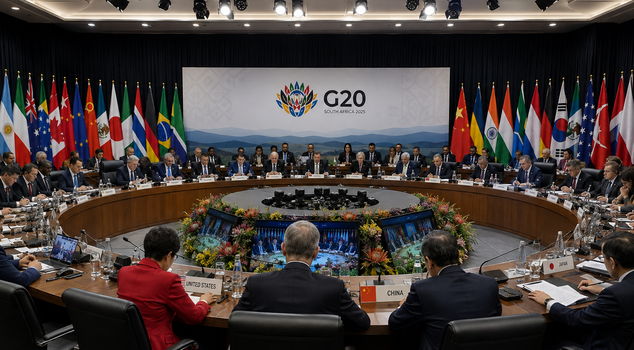
The G20 Finance Ministers and Central Bank Governors Meeting hosted by the United States ended without a joint communiqué due to China's objections to critical items. The United States stated that 19 members had reached consensus, but China blocked it.
The G20 Finance Ministers and Central Bank Governors Meeting, hosted by the US, ended without consensus on a joint communiqué after China lodged reservations on critical economic and geopolitical items.
G20 MEMBERS FAIL TO AGREE ON JOINT COMMUNIQUÉ
The G20 Finance Ministers and Central Bank Governors Meeting, held in Asheville, North Carolina, on August 31-September 1, has concluded.
At the meeting, which addressed issues such as global growth, debt, and global imbalances, G20 members failed to reach an agreement on a joint communiqué text.
In the G20 Presidential Statement issued by the US following the meeting, it was emphasized that the global economy remains resilient despite ongoing conflicts.
CALL FOR REFORM AGAINST GLOBAL IMBALANCES
The statement noted the need to reduce bureaucracy, support artificial intelligence investments, and protect critical supply chains such as energy and food. It was stated that with the participation of private sector representatives in the meetings, the focus was on removing administrative barriers to business growth and innovation.
The statement, which warned that global imbalances threaten economic stability, included a call for countries overly dependent on exports to implement reforms that would boost domestic consumption.
It also expressed that the G20 Common Framework should be implemented more quickly and transparently to alleviate the debt burden of developing countries, and touched upon the importance of increasing financial literacy worldwide.
CHINA RESERVES ON 4 ITEMS
China lodged reservations on the 4th item, which addressed energy trade and geopolitical conflicts; the 10th item, which envisaged the removal of non-market policies hindering domestic consumption regarding global imbalances; the 11th item, which advocated International Monetary Fund (IMF) surveillance over these imbalances; and the 13th item, which dealt with debt restructuring processes, thereby adding reservations to the statement.
"ALL MEMBERS EXCEPT CHINA REACHED CONSENSUS"
US Treasury Secretary Scott Bessent said at a press conference that they had hoped to issue a joint communiqué reflecting the outcome of the talks, but full consensus could not be achieved.
Stating that all but one member of the G20 had reached a consensus, Bessent said the text in the G20 Presidential Statement reflected issues important to the 19 members.
Bessent noted that China, "the country with the world's largest and most unsustainable current account surplus," was opposed to the statement.
INVITATION OF RUSSIA ALSO ON THE AGENDA
When asked about the invitation of representatives from Russia to the meetings, Bessent emphasized that while this left an unpleasant impression on some Europeans, being in dialogue and engagement is of great importance.
According to reports in the country's press, a US Treasury official had previously stated that a joint communiqué text reflecting US priorities on reducing global imbalances and restructuring sovereign debt might not be possible due to some differences of opinion.
The official said, "We are working intensely on a communiqué, but we want to make sure it reflects US interests and 'America First' priorities. If we cannot reach a conclusion, that would not be a problem for us," and noted that the alternative path would be to issue a statement on the talks.
IMF EMPHASIZES "SIMULTANEOUS POLICY"
IMF Managing Director Kristalina Georgieva, in a written statement following the G20 meeting, stated that there are significant differences among countries in terms of the economic outlook and risks.
Georgieva noted that the energy supply shock is not yet over, global public debt has reached approximately 100 percent of Gross Domestic Product (GDP), and disinflation has stalled in many countries.
Emphasizing that central banks should focus on price stability, fiscal authorities should prepare credible medium-term fiscal consolidation plans, and structural reforms should remove obstacles to growth, Georgieva stated that high refinancing needs and rising debt service costs in developing and low-income countries are limiting infrastructure, health, and education spending.
Georgieva called for improving debt restructuring processes and strengthening countries' fiscal resilience.
Additionally, Georgieva stated that global excessive imbalances increased by 0.7 percent of GDP in 2025, recording their largest rise in the last ten years, and emphasized that lasting rebalancing requires simultaneous policy steps in both surplus and deficit countries.