10.03.2026 06:50
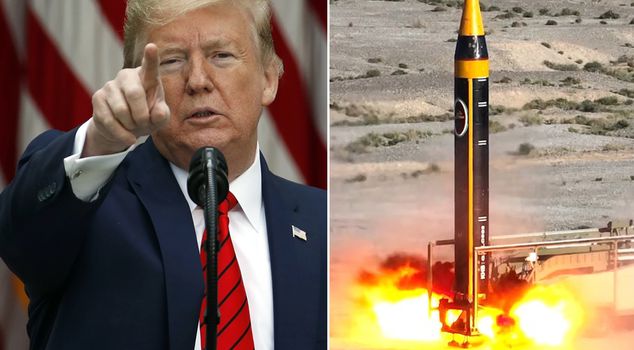
The 11th day of the war between the US-Israel and Iran began with mutual harsh statements. US President Donald Trump stated, "We plan to seize the Strait of Hormuz," while Iran issued a war challenge. The commander of the Air Force of the Revolutionary Guards, Hossein Majid Mousavi, said, "From now on, no missile with a warhead lighter than 1 ton will be launched."
The tension between the US, Israel, and Iran is escalating day by day in the ongoing war that has lasted for days. As the mutual attacks and harsh statements from both sides raise the tension in the region, the 11th day of the conflict began with new confrontations. While the Washington administration brought attention to a notable plan regarding the Strait of Hormuz, there were threatening statements from the Iranian front about the use of heavier weapons.
TRUMP ANNOUNCED HIS NEW PLAN
US President Donald Trump expressed his plans regarding the strategically important Strait of Hormuz in a statement. Emphasizing the critical importance of controlling the strait through which a significant portion of the world's oil trade passes, Trump stated that the US plans to take control of this region.
Trump's statement further increased the already high tension in the region. Experts indicate that the Strait of Hormuz is a vital transit point for global energy supply and that any military activity there could lead to serious fluctuations in world markets.
IRAN RESPONDED HARSHLY
Iran quickly responded harshly to Trump's words. The Commander of the Iranian Revolutionary Guard Air Force, Hossein Majid Mousavi, stated that the war could enter a new phase, announcing that missile attacks would become more destructive.
Mousavi stated that Iran would use heavier warheads in the upcoming period. The Iranian commander signaled that the intensity of attacks could increase in the new era by saying, "From now on, no missile with a warhead lighter than 1 ton will be launched."
TENSION ESCALATES IN THE WAR
This statement was interpreted as Iran being able to reflect its long-range and high-destructive-capacity missile capability more powerfully in the field. Iran's ballistic missile program has long been cited by the US and Israel as one of the biggest security threats in the region.
Meanwhile, on the 11th day of the war, the mutual military activity of the parties continues. It has been reported that the US Navy is increasing its presence in the Gulf region and is operating in coordination with allied countries in the region, while Iran has put its military elements around the Strait of Hormuz on high alert.
A GLOBAL CRISIS IS LOOMING
According to experts, a potential conflict around the Strait of Hormuz could have economic and political consequences not only regionally but also globally. This narrow waterway, through which a significant portion of oil shipments pass, has long been seen as one of the strategic tension points between Iran and Western countries.
The continuation of mutual harsh statements and military preparations strengthens the assessments that it is difficult for the war between the US, Israel, and Iran to end in the short term. The limited nature of diplomatic initiatives raises concerns that the crisis in the region could escalate into a broader conflict.
US-ISRAEL ATTACKS ON IRAN
While negotiations between Tehran and the Washington administration were ongoing, Israel and the US launched a military attack on Iran on February 28. Iran responded with attacks on targets it identified in several regional countries, including Qatar, the United Arab Emirates (UAE), and Bahrain, where US bases are located, in addition to Israel.
In the US-Israel attacks, Iranian leader Ali Khamenei, along with many high-ranking officials, lost their lives. According to Iranian officials, 1,332 people died in the US-Israel attacks. The Iranian Experts Assembly announced that after the death of Ali Khamenei in the US-Israel airstrike on February 28, his son Mojtaba Khamenei was elected to the leadership position "by an overwhelming majority of votes."