15.10.2026 10:59
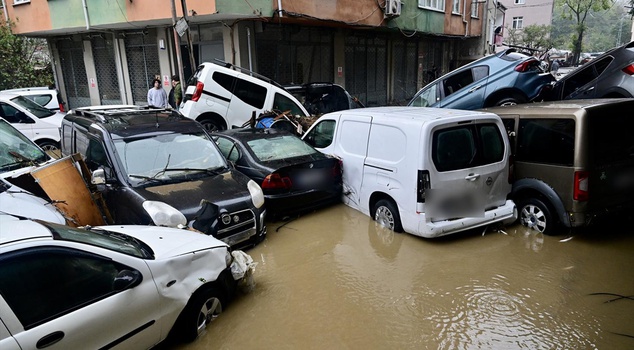
Due to the severe downpour affecting Istanbul, hundreds of vehicles were swept away by floodwaters and damaged. Vehicle owners need to check the flood and water damage coverage in their comprehensive insurance policies and, in the event of damage, apply to insurance companies without delay. Citizens without comprehensive insurance or flood coverage, however, may claim compensation from the relevant public institutions if it is determined that the damage was caused by inadequate infrastructure.
The heavy rains affecting Istanbul caused major damage to many homes, businesses, and cars throughout the city. While some of the vehicles dragged by floodwaters and completely submerged became unusable, some cars with severe damage to their bodywork, electronic, and mechanical systems are expected to be written off.
How the repair costs of damaged vehicles will be covered, however, varies depending on vehicle owners' comprehensive insurance policies and the cause of the damage. Citizens with comprehensive insurance can apply to insurance companies, while legal avenues also exist for those without it.
BE SURE TO CHECK YOUR COMPREHENSIVE INSURANCE POLICY
According to the news on NTV, vehicle owners should first examine their comprehensive insurance policies and check whether they include flood and inundation coverage.
Comprehensive insurance is offered in four different scopes: narrow comprehensive, standard comprehensive, extended comprehensive, and full comprehensive. However, whether damage caused by floods will be covered by insurance is determined depending on the coverages included in the policy. Vehicle owners who have flood and inundation coverage can apply to insurance companies for their damage to be covered.
THOSE WITH FLOOD-DAMAGED VEHICLES SHOULD ACT QUICKLY
It is important for citizens whose cars were damaged due to the flood to apply to insurance companies as soon as possible. In comprehensive insurance claims, notification is generally required within five business days. After the application, an expert assessment is initiated and the extent of the damage to the vehicle is determined.
In the inspections to be carried out, it is determined whether the car can be repaired. While the repair process is initiated for vehicles that can be repaired, for heavily damaged vehicles, write-off procedures and compensation payments come into question depending on the policy conditions.
NEVER START YOUR VEHICLE THAT REMAINED IN THE FLOOD
Experts warn that vehicles exposed to floodwaters should absolutely not be attempted to be started.
Starting the engine of a car that has been flooded can cause the existing damage to reach much more serious levels.
Especially if water enters the engine's piston chambers, serious mechanical failures can occur. In this case, the engine may need to be removed and overhauled or completely replaced.
At authorized services, the cost of a complete engine replacement can exceed 600,000 lira depending on the vehicle's model.
Therefore, vehicles that remained in the flood should not be started, and they should be taken to authorized or private services with the help of a tow truck.
SPECIAL WARNING FOR ELECTRIC VEHICLE OWNERS
In electric vehicles exposed to floodwaters, additional safety risks can arise due to high-voltage battery systems.
Caution is required against the possibility of electrical leakage and electric shock in these vehicles. It is important that intervention in electric cars left underwater be carried out by expert teams and that the vehicles be transported safely to service.
WHAT WILL THOSE WITHOUT COMPREHENSIVE INSURANCE DO?
There is also the possibility for citizens whose vehicles were damaged in the flood disaster but who do not have comprehensive insurance to claim compensation.
Vehicle owners who do not have comprehensive insurance or whose current policy does not include flood and inundation coverage can apply to the relevant public authority if they believe the damage occurred due to inadequate infrastructure or failure to take necessary measures.
In these applications, the claim of “service fault” comes into question on the grounds that the failure to properly perform the public service was effective in causing the damage.
IF THERE IS INADEQUATE INFRASTRUCTURE, COMPENSATION CAN BE CLAIMED
To remedy vehicle damage caused by the flood, legal proceedings can be initiated against the relevant municipality or responsible public institution.
In particular, in damages occurring due to inadequate rainwater drainage systems, infrastructure deficiencies, or failure to take necessary measures, the responsibility of the administration can be debated.
However, for vehicle owners to receive compensation, it is not enough for them to have suffered damage solely due to the flood. It must be demonstrated that the relevant administration had a service fault in the occurrence of the damage and that there is a connection between this fault and the damage.
ADMINISTRATIVE JUDICIAL REMEDY FOR COMPENSATION
Vehicle owners without comprehensive insurance can file a compensation claim by applying to the administration they believe is responsible, in order to have their damage covered.
If no result is obtained from the application, it may be possible to file a full remedy action in administrative court within the legal time limits.
In these cases, the court evaluates the adequacy of infrastructure services, the responsibility of the relevant institutions, and the conditions under which the damage occurred.
If a service fault is determined, it can be decided to compensate vehicle owners' damages. However, it is stated that legal processes may take a long time and that not every application will necessarily result in compensation.
It is important for citizens whose vehicles were damaged due to the flood to document their damage and not lose time in insurance or legal application processes.