22.10.2026 16:01
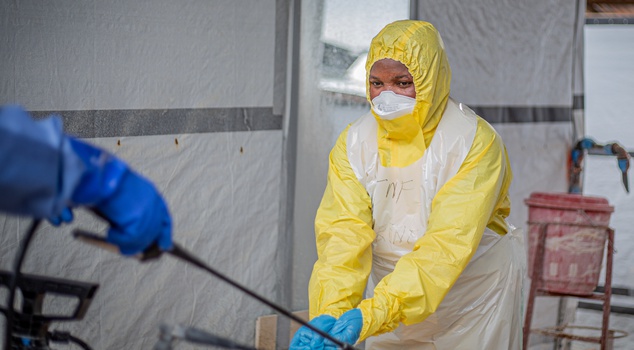
The Ebola outbreak in the Democratic Republic of the Congo (DRC), which has caused approximately 9,500 confirmed cases and more than 4,600 deaths, has spread to Nigeria. The Bundibugyo virus was confirmed in a woman returning to Abuja from Uganda, and 44 contacts have been placed under follow-up. While there is no approved vaccine or specific treatment for this strain, Africa CDC has called health ministers to an emergency meeting on October 28.
The Ebola outbreak that emerged in the Democratic Republic of the Congo (DRC) and spread to neighboring countries has begun to threaten a wider geography across Africa with the detection of the first case in Nigeria as well.
The detection of a case in Nigeria as well in the outbreak that spread from the DRC to neighboring countries has increased concerns that the virus could spread to a wider geography in Africa.
The spread of the outbreak, which has caused serious deaths in the DRC, to three regions of Africa indicates that disruptions in early diagnosis and cross-border health coordination may increase the risk of outbreaks in new countries.
According to information compiled by an Anadolu Agency correspondent from statements by the World Health Organization (WHO), the Africa Centres for Disease Control and Prevention (Africa CDC), the US Centers for Disease Control and Prevention (CDC), and health officials of affected countries, late diagnosis, shortcomings in contact tracing, and difficulties in access to health services stood out in the spread of the outbreak.
In the outbreak caused by the rare Bundibugyo virus, approximately 9,500 confirmed cases and more than 4,600 deaths have been reported in the DRC, while cases have also been detected in Kenya and Nigeria. In Uganda, the outbreak was brought under control after 20 previously confirmed cases.
In the field investigation published by the CDC in August, it was determined that the response to the outbreak in the DRC fell short of targets in areas such as contact tracing, laboratory testing, and transporting patients to treatment centers.
On the other hand, bringing the outbreak under control in Uganda through early intervention and rapid contact tracing demonstrated the importance of regional cooperation and effective health surveillance.
LATE DIAGNOSIS HIDES THE TRANSMISSION CHAIN
According to the research, the number of contacts identified per case in the DRC remained at an average of 10.6. However, to bring the outbreak under control, the target was to identify at least 20 contacts per case.
The fact that only 15 to 20 percent of newly confirmed cases came from previously known contacts also indicated that a significant portion of transmission chains could not be detected at an early stage.
The CDC reported that these findings were among important signs showing that the outbreak continued to spread uncontrollably within the community.
The study noted that 59 percent of confirmed Ebola deaths occurred outside treatment centers.
This revealed that factors such as patients not being able to reach health facilities in time, problems with the capacity of treatment centers, and distrust in health services could make the fight against the outbreak more difficult. Shortcomings in laboratory capacity were also among the obstacles to early diagnosis.
According to the CDC's assessment, laboratory testing could be applied to 72 percent of notifications regarding suspected cases. The target set in the outbreak response was to raise this rate above 90 percent.
These indicators revealed that increasing the capacity of hospitals and treatment centers alone is not sufficient in the fight against the outbreak.
Early identification of suspected cases, their rapid transfer to health facilities, complete monitoring of contacts, and timely receipt of laboratory results are important for breaking transmission chains.
The WHO also emphasizes that to control the outbreak, local surveillance systems must be strengthened, patients must be detected early, and health teams must establish trust-based relationships with affected communities.
CONFIRMED IN A WOMAN RETURNING FROM UGANDA
The outbreak reaching different countries has also raised the question of how long it takes for cases to be detected after symptoms begin, in addition to cross-border human mobility.
The WHO and the Nigerian Ministry of Health confirmed the Bundibugyo virus in a woman who came from Uganda to Nigeria's capital, Abuja.
The patient's symptoms began on October 7, she applied to a private health facility on October 11, and the laboratory test gave a positive result on October 20. Health officials placed 44 people identified as the patient's contacts under monitoring.
The time elapsed between the onset of symptoms and laboratory confirmation demonstrated the importance of early evaluation of suspected cases.
However, the diagnostic time in a single case is not sufficient to evaluate the performance of the entire health system. Examining the patient's travel and contact history, identifying possible sources of transmission, and monitoring contacts are important for preventing the outbreak from spreading to other people.
In Kenya, after a person who traveled from the DRC to Nairobi via Uganda died on October 5, Ebola was confirmed on October 6 in investigations carried out, and new cases were identified among relatives and health workers.
The ability of patients to travel to different regions in the early stages of the outbreak before symptoms appear or before the disease is diagnosed makes rapid information sharing between countries' health systems necessary.
However, border controls alone are not sufficient. To prevent the spread of the virus, suspected cases must be recognized in health facilities, and contact tracing must be continued after travel as well.
CONFLICTS MAKE THE FIGHT MORE DIFFICULT
Long-standing security problems in the east of the DRC are among the factors making the fight against the outbreak more difficult.
Armed conflicts in the region, displacements, limited health infrastructure, and difficulties in reaching some communities affect health teams' efforts to identify patients and bring them to treatment.
In the CDC's study, it was determined that only 49 percent of affected health areas had teams to carry out safe and dignified burial practices.
The safe preparation and burial of the bodies of people who died due to Ebola is valuable for reducing the risk of transmission during funeral processes.
Trust of local communities in health teams also plays a critical role in the fight against the outbreak. People showing disease symptoms applying to health facilities, contacts participating in monitoring efforts, and the adoption of protective measures help break transmission chains.
Therefore, the outbreak response must not be limited to medical treatment alone; local health workers must be supported, and effective communication must be established with communities.
THE UGANDA EXAMPLE: EARLY INTERVENTION WORKED
The outbreak in the DRC reaching neighboring countries does not mean that the same results will occur throughout the region.
The response efforts carried out in Uganda showed how early diagnosis and rapid coordination can contribute to bringing the outbreak under control.
In the CDC study published in October, Uganda's outbreak response was evaluated within a three-stage timeline framework.
In this framework, targets are set at 7 days for the time from the onset of the disease to its detection, 1 day for reporting, and 7 days for completing the initial response steps.
In the review, Uganda met all three targets by detecting the disease in 6 days, reporting it in less than one day, and completing the initial response steps in 2 days.
As of July 8, 20 confirmed cases had been recorded in the country. Of these, 15 were classified as cases coming from the DRC, and 5 as secondary transmissions within the country.
By the same date, 831 contacts had been identified, and more than 2,337 people from 106 districts had been tested as part of suspected viral hemorrhagic fever cases.
The marked slowdown in the rate of increase in cases in Uganda as the response progressed demonstrated the importance of contact tracing and rapid response capacity. The end of the outbreak in the country was later declared by WHO.
THERE IS NO APPROVED VACCINE AGAINST THIS SPECIES
The Bundibugyo virus that caused the outbreak is one of the known species of Ebola virus. The lack of an approved vaccine or specific treatment against this species increases the importance of early diagnosis and supportive health care.
In Ebola infections, fever, fatigue, headache, muscle aches, and gastrointestinal symptoms can be seen. However, since these symptoms can also occur in other diseases, clinical evaluation and laboratory tests are required for an accurate diagnosis.
Scientific studies on vaccine candidates and treatment options against the Bundibugyo virus are ongoing. However, it cannot be assumed that vaccines developed against other Ebola species are also effective against this virus.
Therefore, in addition to outbreak-specific research, the early warning and response capacity of health systems also needs to be strengthened.
AFRICAN COUNTRIES CONVENE URGENTLY
The outbreak reaching different countries brought the strengthening of coordination among health institutions across Africa onto the agenda.
Nigeria's Minister of Health, Muhammad Ali Pate, announced that emergency measures had been put in place to prevent the spread of the outbreak after the first Ebola case in the country was confirmed.
Pate stated that the virus was confirmed by laboratory tests in the female patient who returned to Nigeria on October 7 after traveling to Uganda, and reported that the patient had been placed in isolation and was receiving treatment.
Authorities placed 44 people identified as having been in contact with the patient under follow-up and also increased health screenings at airports and entry points to the country.
Meanwhile, following the detection of the first case in Nigeria and the spread of the outbreak to different regions of the continent, Africa CDC called the health ministers of African countries to an emergency online meeting on October 28.
Experts point out that steps such as strengthening cross-border data sharing, conducting contact tracing without interruption, protecting health workers, and using international resources transparently will be decisive in preventing the outbreak from spreading to a wider geography.
.