29.10.2026 13:21
In Israel's parliamentary elections, with 76.8 percent of votes counted, Netanyahu's bloc reached 54 seats, the opposition 47, and Arab parties 19. By targeting Arab voters on election day and calling his own base to the polls, Netanyahu, despite taking the lead, failed to secure the 61-seat majority needed to form a government. The Arab parties, meanwhile, rose to a pivotal position with a record number of seats.
As vote counting continues after the parliamentary elections in Israel, the bloc led by Prime Minister Benjamin Netanyahu has moved ahead of the opposition. However, according to the latest announced data, neither the governing nor the opposition bloc has reached the 61 seats needed to form a government. It was noteworthy that the Arab parties representing Palestinian citizens of Israel reached 19 seats.
NETANYAHU'S BLOC MOVES AHEAD
Vote counting continues after the parliamentary elections held in Israel on October 27.
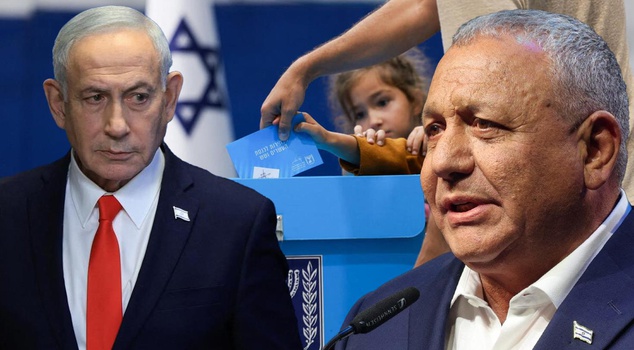
According to data shared for the stage at which 76.8 percent of votes have been counted, the governing bloc led by Prime Minister Benjamin Netanyahu is in a position to win 54 seats, while the opposition bloc led by former Chief of Staff Gadi Eisenkot could win 47 seats.
The total number of seats for the Arab parties is calculated at 19.
In the 120-seat Israeli Parliament, the support of at least 61 lawmakers is required to form a government. In the current picture, neither bloc can reach this majority.
ARAB PARTIES' 19-SEAT BREAKTHROUGH
One of the most striking results of the election was the number of seats won by Arab-majority parties representing Palestinian citizens of Israel.
According to results not yet final, the Joint List, an alliance of three small parties, reaches 13 seats, while the United Arab List (Ra'am) led by Mansour Abbas reaches 6 seats.
Thus, the total number of lawmakers from Arab parties rises to 19, and it is stated that this figure is a record for these parties in the country's history.
LATEST SITUATION IN THE GOVERNING AND OPPOSITION CAMPS
According to the shared estimated seat distribution, on the opposition side, the Together List of former prime ministers Naftali Bennett and Yair Lapid stands at 11 seats, Avigdor Liberman's Israel Our Home Party at 8, and the Democrats Party led by Yair Golan at 8 seats.
In the governing bloc, it is projected that the Shas Party and United Torah Judaism will each secure 7 lawmakers, the Jewish Power Party led by Itamar Ben-Gvir 7, and the Religious Zionism Party led by Bezalel Smotrich 6.
61 SEATS REQUIRED TO FORM A GOVERNMENT
Israel applies an electoral threshold of 3.25 percent. To enter Parliament, parties must win at least 4 seats.
In the 120-seat Parliament, the support of 61 lawmakers is essential to form a government.
If the current distribution is finalized and the parties fail to reach an agreement that would provide a majority, coalition talks may be extended or new elections may be called.
OFFICIAL RESULTS EXPECTED TO BECOME CLEAR BY NOVEMBER 4
It was reported that voter turnout in the country, which has approximately 7.3 million voters, was 77 percent.
It is stated that changes in the distribution of seats may occur after vote counting is completed.
After review and appeal processes, official results are expected to become clear by November 4.
The election is the first general election held after the war that began in Gaza following the attacks led by Hamas on October 7, 2023, and other conflicts in the region.
NETANYAHU TARGETED ARAB VOTERS ON ELECTION DAY
Throughout election day, Netanyahu highlighted the high turnout of Arabs and called on right-wing voters to go to the polls. Netanyahu shared images of polling queues in Arab areas and appealed to his voters through the possibility of a government in which Mansour Abbas and Ahmed Tibi would be influential.
It was also reported that vehicles carrying Likud flags in Jerusalem broadcast the adhan and called voters to the polls with the message ‘Arabs are voting.’
Images showing Arab women in burqas going to the polls were also shared from Netanyahu's social media accounts. Netanyahu, pointing to the high turnout of Arab voters, described the situation in his appeal to his base as ‘a matter of life and death for us.’
HOW WILL THE GOVERNMENT BE FORMED?
After the elections in Israel, attention turned to the coalition scenarios and negotiations of the parties that have earned the right to enter the 120-seat Parliament.
After the official results are announced, President Isaac Herzog will meet with representatives of all parties that entered Parliament and collect their proposals for prime ministerial candidates.
The President is not obliged to give the mandate to form a government to the party that received the most votes, but will assign the leader with the highest probability of securing the support of 61 lawmakers.
The person tasked with forming a government will have a 28-day period for coalition negotiations expected to be tough, and if necessary, 14 more days can be added to this period.
If the person assigned by the President cannot form a government, Herzog may consult again and assign another person within Parliament to form a government. This person must form a coalition within 28 days. If a government still cannot be formed, a 21-day period begins for a person from within the Israeli Parliament to collect the signatures of 61 lawmakers. If 61 lawmakers are secured, this person must form the government within two weeks. If they cannot, Parliament is dissolved and the country must go to elections again within 3 months.
In all these scenarios, the country's current Prime Minister continues in office, even if temporarily. In this process, if Netanyahu cannot form a government or the opposition also cannot secure the support of 61 lawmakers, he may remain in the position of interim prime minister for another 6 months because no government can be formed.
In Israel, where no party has so far been able to secure a majority on its own, completing coalition protocols is of critical importance. If the parties reach an agreement, the cabinet formed will officially take office after receiving a vote of confidence from Parliament; if coalition negotiations fail, the country will go to early elections again.
ISRAELI PRESS: TRUMP WILL PRESSURE NETANYAHU TO FORM A NATIONAL UNITY GOVERNMENT WITH THE OPPOSITION
In its report citing sources close to the US President, Yedioth Ahronoth said that Trump will pressure Netanyahu to form a rotating national unity government that would enable the expansion of the Abraham Accords, which include normalization between regional countries and Israel.
US sources said that US President Trump will not refrain from demanding a return for the support he gave Netanyahu before the parliamentary elections.
Emphasizing that Trump will use all the means at his disposal to prevent the inclusion of far-right National Security Minister Ben-Gvir and Finance Minister Bezalel Smotrich in the government if it is formed, the sources underlined that in Washington, a government that includes Ben-Gvir is not seen as an option.
The Yedioth Ahronoth newspaper recalled that Arab countries in the region, including Saudi Arabia, had clearly stated that they would not normalize relations with Israel under Netanyahu’s premiership.
OPPOSITION LEADER GOLAN IN ISRAEL CALLS FOR FORMING A GOVERNMENT WITH ARAB PARTIES
Yair Golan, leader of the opposition Democrats Party, assessed the election results in a statement made from his account on the social media platform of US-based company X.
Addressing the parties in the opposition bloc led by Yashar Party leader Eisenkot, Golan called on them to come together with the Arab parties representing Palestinian citizens of Israel and form a coalition government, noting that in this way they would achieve a majority in the Knesset.
Golan said, “Netanyahu lost. I know how to count up to 120; 65 is greater than 55.”
Emphasizing that the current picture cannot be ignored, Golan commented, “The facts must teach us a very clear lesson. If we do not stop being afraid, we have no future here. We must also end racism. We can no longer accept Netanyahu’s racist distinction between Jewish votes and Arab votes.”
Finally, Golan noted that there is an opportunity to form a change government in partnership with Israel’s Arab citizens.