22.10.2026 12:12
While discussions continue over the detection of equine meat in the Ministry of Agriculture and Forestry's imitation and adulteration lists, a statement came from Sabri Pamukçu, a preacher on the Directorate of Religious Affairs' Fatwa Line. Stating that consuming donkey and mule meat is not halal, Pamukçu said that even halal products being concealed from the consumer and sold as a different product is not permissible.
Sabri Pamukçu, a preacher at the Diyanet Fatwa Line in Adana, said that eating the meat of animals such as donkeys and mules is not halal, and stated, 'It should be known that even halal products are not permissible if they are sold in a way that deceives people without their knowledge.'
DONKEY AND MULE MEAT IS NOT HALAL
Sabri Pamukçu, who also spoke about the fact that meat from single-hoofed animals has appeared across the country in the imitation and adulteration list published every month by the Ministry of Agriculture and Forestry, underlined that eating the meat of animals such as donkeys and mules is not halal and said the following:
'Our Prophet has forbidden it. In particular, because citizens are not aware of it, there is a separate legal prohibition. It should be known that even halal products are not permissible if they are sold in a way that deceives people without their knowledge. There can be situations where they are sold as if they were different animals. Moreover, the situation of these being sold as dead animals is a separate haram.'
UP TO 1 MILLION QUESTIONS COME TO THE FATWA LINE PER YEAR
The 190 Diyanet Fatwa Line, which serves within the Presidency of Religious Affairs, answers citizens' questions on religious matters through expert personnel. Citizens who call the line, which provides a free service, can get information about religious matters they are curious about.
Through the Fatwa Line, reached by calling 190 from landlines and mobile phones, citizens can direct their religious questions in various areas, from daily life to worship, and from family life to social issues. Incoming calls are directed to the mufti's office of the province where the citizens are located or to the relevant central units and are answered by expert personnel.
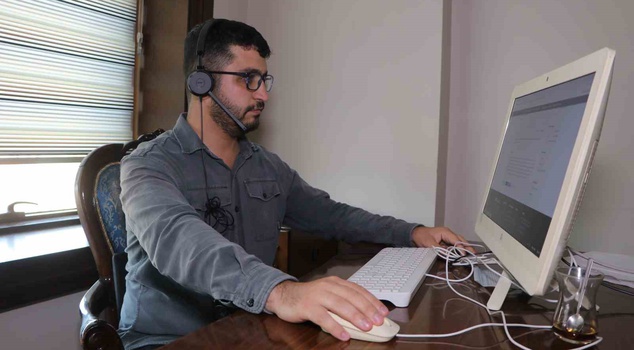
Sabri Pamukçu, a preacher at the 190 Diyanet Fatwa Line, who made statements to an İHA reporter, said that between 800,000 and 1 million questions come to the line each year, and stated, 'We answer these questions with great care during the conversation. If there is a situation requiring detailed research, we carry out the necessary research and immediately give the answer to our citizen who asked the question. The busiest period for the line is especially the month of Ramadan. Holiday times are also busy.'
Pamukçu stated that the types of questions change from period to period and said, 'For example, during the month of Ramadan, questions are asked about fasting, fitra, and zakat, while apart from that, many questions come about family. Questions also frequently come on subjects such as bank practices and promotions. We try to approach every question our citizens ask with care.'
CHILDREN WHO SING A HYMN AND ASK FOR AN OPINION
Sabri Pamukçu, noting that various questions come in, said, 'Questions that seem strange to us can seem normal to them. We answer every question seriously. There are also nice memories. Last Ramadan, the hymn "Hacılar Hu Der Allah" in the Kaaba had become quite popular. During this period, a call came one evening. The children sang this hymn on the phone and then asked, "How was it, hodja?" I said, "Very nice, I liked it very much." When I asked whether they had a question, they said they had called about the hymn.'